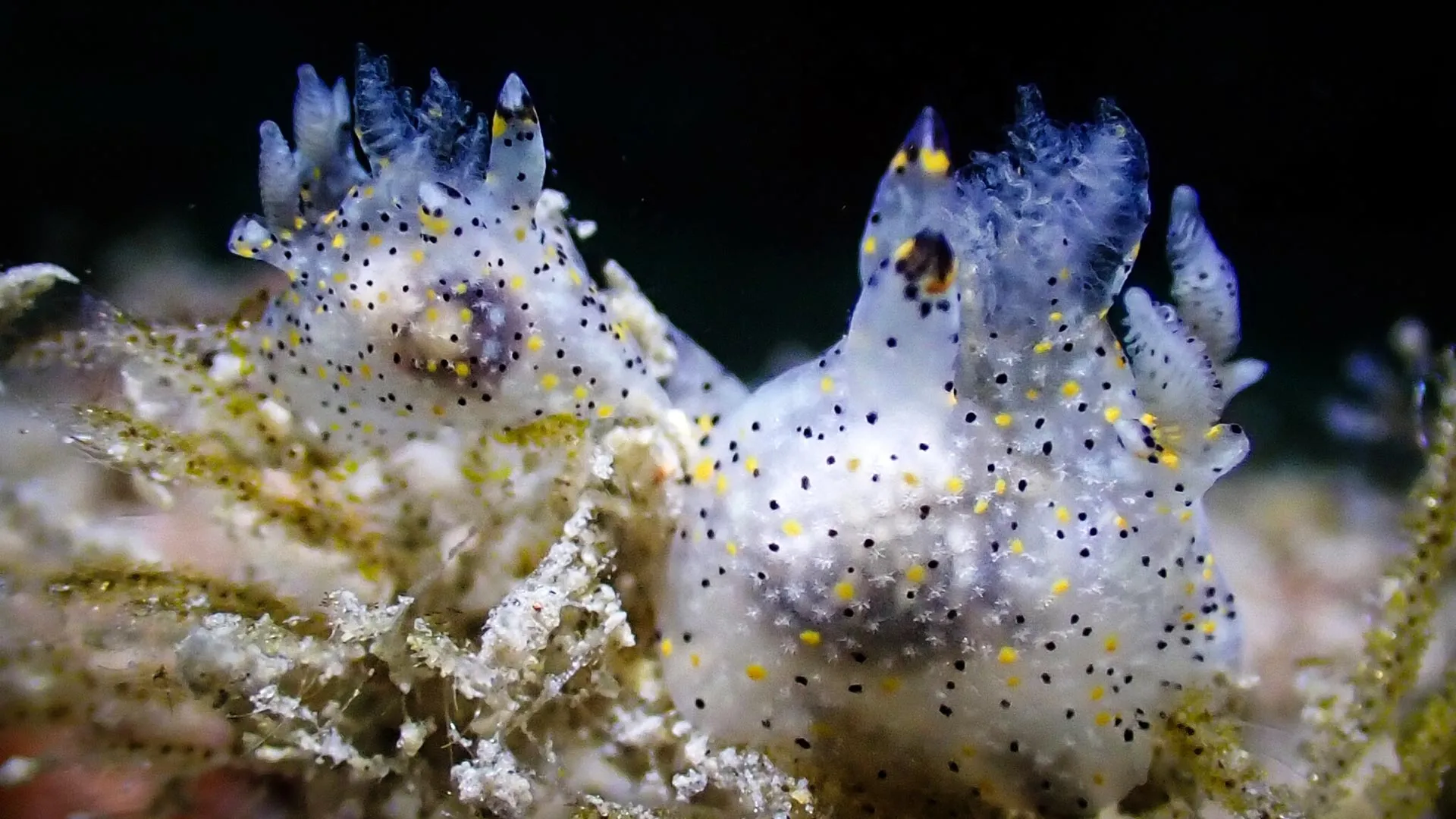
A new species of sea slug, smaller than a grain of rice and with a striking resemblance to a sesame seed, has been discovered off the coast of Keelung in northern Taiwan. Researchers from National Taiwan Ocean University, the National Museum of Natural Science, and National Taipei University of Education have formally named the translucent critter Thecacera sesama - because when life gives you tiny ocean slugs, you name them after the thing they look like.
The discovery happened in 2019 when lead author Ho-Yeung Chan, then an undergraduate student, went for a recreational dive and accidentally stumbled upon the nudibranch. At first, Chan had no idea he'd found a species unknown to science. The breakthrough came the old-fashioned way: he consulted a sea slug expert on Facebook. Because in 2019, that's how you identify a new species - not through a peer-reviewed journal, but through a Facebook friend named "Hsini Lin teacher."
Studying the species turned out to be almost as difficult as finding it. Taiwan's northern coastline is a moody place: summer brings typhoons, winter brings monsoon-driven waves and water temperatures that can drop below 16 degrees Celsius. Researchers get only about four months per year to conduct nudibranch surveys, and locating animals smaller than three millimeters long is largely a game of luck.
Despite these challenges, scientists observed that T. sesama leads a surprisingly focused life. Its daily agenda consists of exactly four activities: feeding, searching, mating, and laying eggs. Perhaps the most relatable creature in the ocean.
The slug was found living on bryozoans - tiny aquatic invertebrates known as "moss animals" - and the researchers suspect the bryozoan species itself may be previously unknown to science. So it's possible we've discovered two new species for the price of one.
Nudibranchs may be tiny, but they punch above their weight in marine ecosystems. "They are extremely colorful and can be spotted on coral reef ecosystems," the team noted, adding that many are so small they're nearly invisible to the naked eye. The discovery of Thecacera sesama, published in the open access journal ZooKeys on May 11, 2026, suggests that Taiwan's waters are hiding even more minuscule marine marvels - just waiting for someone with good eyesight, a diving mask, and a Facebook account.
The Good Times
News in your inbox.
One sardonic roundup, delivered on your schedule. Free. Unsubscribe whenever your tolerance for wit runs out.
Already subscribed but we never reach your inbox? Check your spam folder and hit 'Not spam' (or 'Remove from spam') to bust us out of junk-mail purgatory. You'll be helping everyone else too.
Don't open any of our emails for a month and you'll be automatically removed from the mailing list.
Rewrite Article
Select parts to regenerate with a fresh AI pass. Translations will be updated automatically.
Generate AI Image
Creates a sardonic version of the article image using OpenAI.