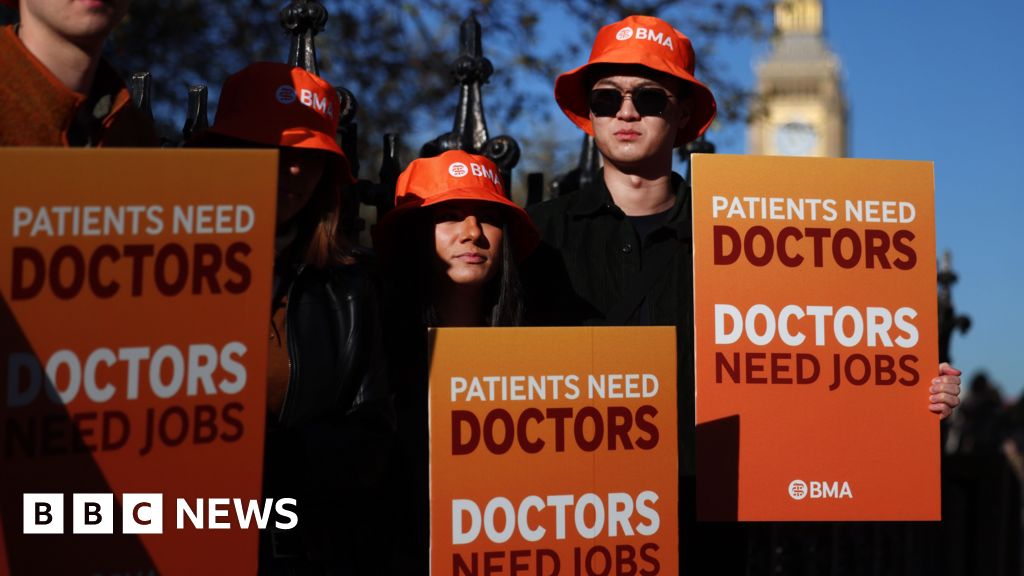
Resident Doctors Cancel Strike After Government Makes Offer It Could Have Made Months Ago
England's resident doctors cancel 16th strike after government makes a new offer at the last minute, proving that the best time to negotiate is when everyone's bags are packed.
Resident doctors in England have called off strikes scheduled to start Monday, proving that the threat of not showing up for work remains a powerful negotiation tactic.
The British Medical Association (BMA) announced that the government had produced a last-minute offer, which will now be put to members for a vote. The walkout, which would have been the 16th in the ongoing pay dispute, was set to run from 07:00 BST on Monday 15 June until 06:59 Friday 19 June.
Health Secretary James Murray described the new offer as a "good deal for resident doctors" and a "chance to draw a line under the damaging disputes of recent years." He added that it was "a positive and welcome development - especially for patients - that the BMA have called off these unnecessary strikes."
"The country simply cannot afford to increase the pay offer for this year," Murray said. "I am pleased that the BMA have recognised this, which has allowed us to make progress in other areas, such as training places and working conditions."
Dr Jack Fletcher, chairman of the BMA's resident doctors committee, was less effusive but still diplomatic. "We have always been clear that no strikes needed to go ahead if we received an offer appropriate to put to our members," he said. "This should not have been left to the last moment, but we hold up our end of the bargain when the government shifts its position."
The BMA said the new offer covers "jobs, pay and progression." Resident doctors - formerly known as junior doctors - have received pay rises worth 33% over the past four years, including a 3.5% increase this year. Starting salaries are now just over £40,000, with the most senior resident doctors getting £76,500 in basic pay, plus thousands more for unsociable hours and overtime.
But the BMA argues they are still being paid a fifth less than in 2008 once inflation is factored in - which explains why the phrase "good deal" might come with a slight eye roll.
The Good Times
News in your inbox.
One sardonic roundup, delivered on your schedule. Free. Unsubscribe whenever your tolerance for wit runs out.
Already subscribed but we never reach your inbox? Check your spam folder and hit 'Not spam' (or 'Remove from spam') to bust us out of junk-mail purgatory. You'll be helping everyone else too.
Don't open any of our emails for a month and you'll be automatically removed from the mailing list.
Rewrite Article
Select parts to regenerate with a fresh AI pass. Translations will be updated automatically.
Generate AI Image
Creates a sardonic version of the article image using OpenAI.