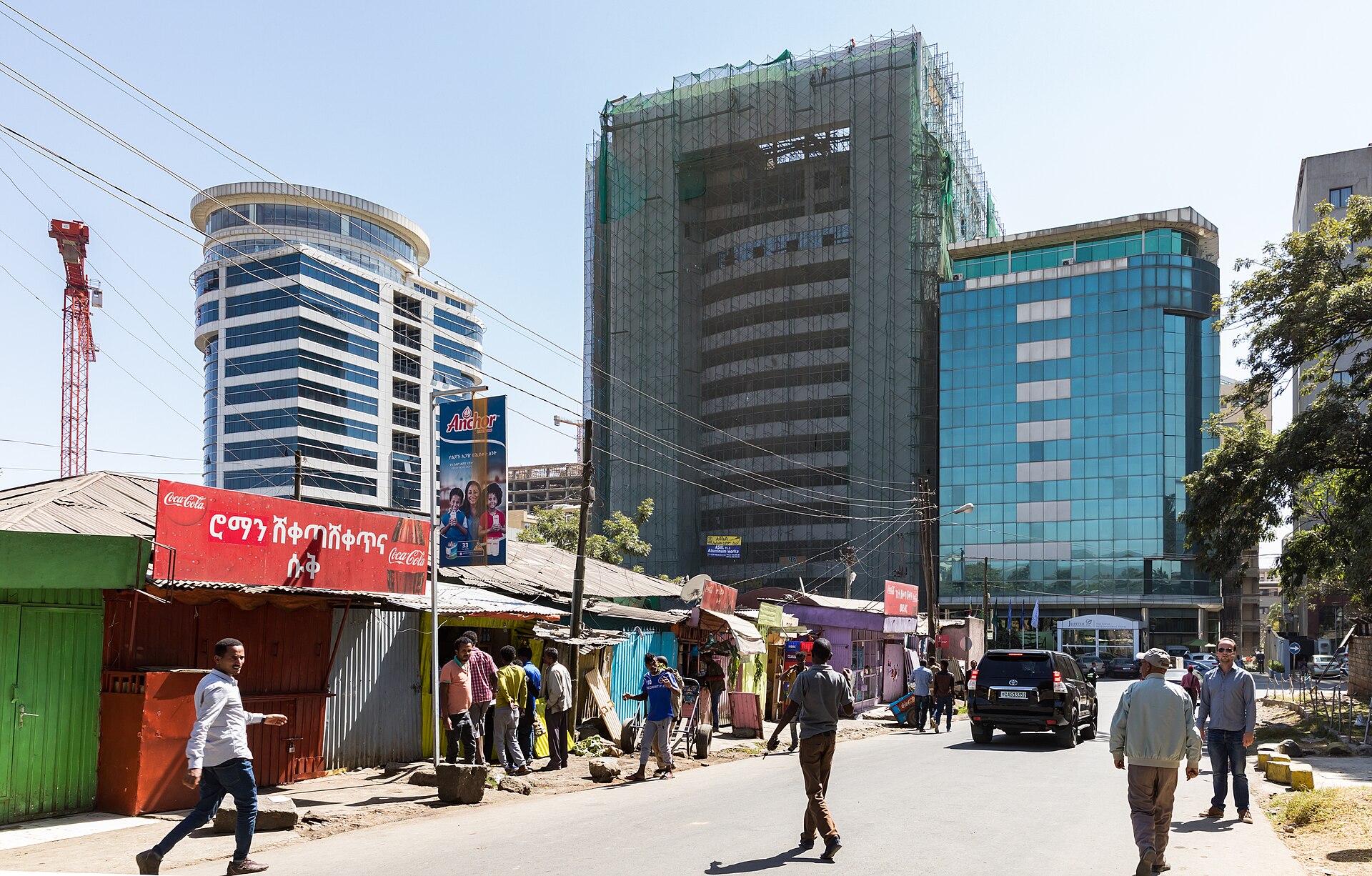
NASA's Air Pollution Study in Ethiopia Reveals Soot Levels That Make LA Look Like a Health Spa
NASA's MAIA mission finds Addis Ababa's air is three times dirtier than EPA standards, with soot levels that dwarf U.S. cities - but hey, at least Ethiopia banned gas cars.
NASA's latest air quality mission has delivered a rather sobering postcard from Addis Ababa: the Ethiopian capital's air is thick with black carbon, and the long-term monitoring data shows exactly when and why. The findings, published in ES&T: Air, are based on measurements from 10 air-quality monitoring sites deployed by NASA's Multi-Angle Imager for Aerosols (MAIA) project, which tracked pollution between 2022 and 2025.
Turns out, Addis Ababa's three-year average PM2.5 concentration was 30 micrograms per cubic meter - more than three times the U.S. Environmental Protection Agency's health-based annual standard. And the black carbon levels? Four to nine times higher than those measured in Los Angeles, Atlanta, and Boston, the three U.S. cities MAIA is also monitoring. So, if you thought LA traffic was bad, think again.
The study, led by Kyan Shlipak (who interned at JPL) and coauthored by Sina Hasheminassab, MAIA's deputy principal investigator, is the first long-term, multisite look at PM2.5 and black carbon in Ethiopia. The data captures pollution spikes during rush-hour traffic and holiday bonfires, and even at night, when charcoal burning keeps emissions high. "Even at night, when traffic dies down, you see high emissions from the burning of charcoal and other fuels," noted Araya Asfaw of Addis Ababa University, the project's lead Ethiopian collaborator, who charmingly described the city as "Africa's version of Brussels."
Ethiopia, for its part, is trying to clean up its act. In 2024, it became the first country to ban imports of internal combustion engine vehicles, and cities are adding bike lanes and EV infrastructure. The MAIA data provides a baseline to track progress as Addis Ababa grows - its population of nearly 6 million is projected to surpass 10 million by 2050.
PM2.5 is no joke: the 2025 State of Global Air Report estimates exposure is linked to about 4.9 million deaths worldwide each year. Black carbon, a component of PM2.5, is particularly concerning for health. MAIA's ground sensors and future satellite observations will help identify different particle types and their sources, which could revolutionize how air quality is studied and managed.
The MAIA mission, which includes a JPL-built camera set to launch on an Italian Space Agency satellite no earlier than late 2027, is the first NASA project to include public health researchers on its team. They'll combine PM2.5 maps with health data to explore links between particle types and health outcomes. As Shlipak put it, "combining the sensor network and satellite observations will be a game-changer."
So, while Addis Ababa's air might currently be more soot than oxygen, at least science is on the case - and the city is taking steps to breathe easier.
The Good Times
News in your inbox.
One sardonic roundup, delivered on your schedule. Free. Unsubscribe whenever your tolerance for wit runs out.
Already subscribed but we never reach your inbox? Check your spam folder and hit 'Not spam' (or 'Remove from spam') to bust us out of junk-mail purgatory. You'll be helping everyone else too.
Don't open any of our emails for a month and you'll be automatically removed from the mailing list.
Rewrite Article
Select parts to regenerate with a fresh AI pass. Translations will be updated automatically.
Generate AI Image
Creates a sardonic version of the article image using OpenAI.