Human Blood Is Quietly Shifting Chemistry as CO2 Rises, Scientists Report
New research reveals that rising atmospheric CO2 is already altering human blood chemistry, with bicarbonate levels climbing and calcium/phosphorus dropping - a trend that could push some markers to the edge of healthy ranges within decades.
In a finding that adds a whole new layer to ‘climate change affects everything,’ scientists have detected a surprising shift in human blood chemistry that appears to track rising atmospheric carbon dioxide. The research, published in Air Quality, Atmosphere and Health, suggests that our bodies may already be adjusting to the air we breathe - and not necessarily in a good way.
Researchers from The Kids Research Institute Australia, Curtin University, and The Australian National University (ANU) analyzed more than 20 years of U.S. population health data from the National Health and Nutrition Examination Survey (NHANES), looking at blood test results from roughly 7,000 people at two-year intervals between 1999 and 2020.
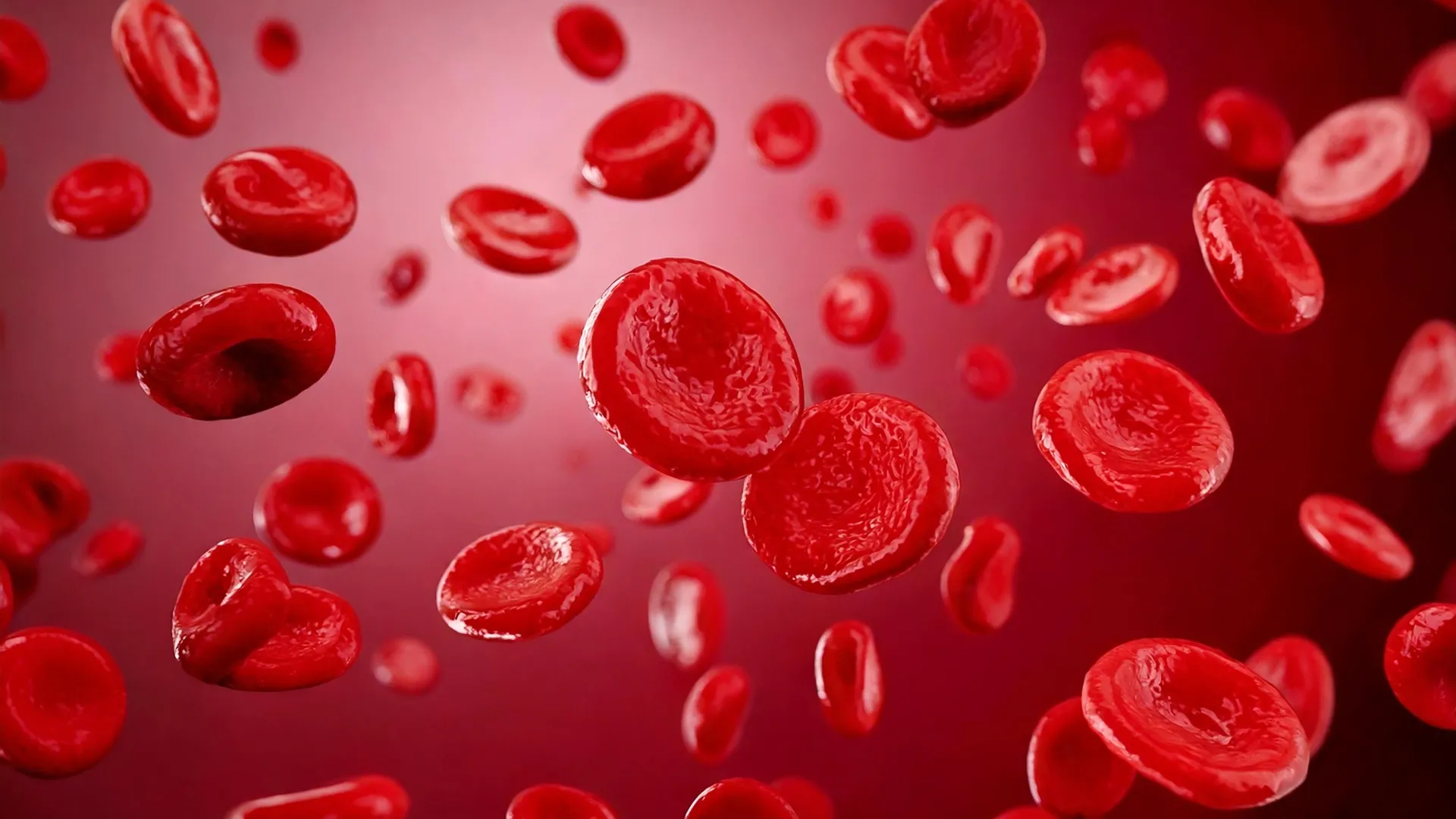
What they found: since 1999, average serum bicarbonate levels have increased by about 7 percent. Bicarbonate, as any biology nerd will tell you, is a blood marker closely tied to carbon dioxide in the body. Meanwhile, average levels of calcium and phosphorus decreased. All this happened as atmospheric CO2 climbed from about 369 parts per million (ppm) in 2000 to more than 420 ppm today.
“What we're seeing is a gradual shift in blood chemistry that mirrors the rise in atmospheric carbon dioxide, which is driving climate change,” said study author Associate Professor Alexander Larcombe, in what might be the understatement of the century.
Bicarbonate is essential for regulating the body's acid-base balance. As CO2 increases, the body retains extra bicarbonate to keep blood pH stable. That’s all well and good in the short term, but maintaining this balancing act over decades could have physiological effects. The modeling suggests that if current trends continue, average bicarbonate levels could approach the upper limit of today's accepted healthy range within 50 years, and calcium and phosphorus could dip to the lower end of their healthy ranges later this century.
Humans evolved when atmospheric CO2 was around 280 to 300 ppm. In the past decade, levels have risen by an average of about 2.6 ppm each year, with 2024 alone seeing a jump of 3.5 ppm. So, we’re venturing into territory our bodies have never seen before.
Dr Phil Bierwirth, a retired environmental geoscientist affiliated with the ANU Emeritus Faculty, was blunt: “I actually think that what we are seeing is because our bodies are not adapting. It appears we are adapted to a range of CO2 in the air that may now have been surpassed. The normal range maintains a delicate balance between how much CO2 is in the air, our blood pH, our breathing rate and bicarbonate levels in the blood. As CO2 in the air is now higher than humans have ever experienced, it appears to be building up in our bodies. Maybe we can never adapt such that it is vitally important to limit atmospheric levels of CO2.”
The researchers stress that this isn’t about people suddenly keeling over when we cross a certain threshold. Rather, it’s a gradual, population-level physiological shift that could be worth monitoring as part of climate policy. They recommend tracking atmospheric composition alongside biological markers to see how slow environmental changes affect human biology over decades.
And here’s the kicker: cutting CO2 emissions isn’t just about saving the polar bears - it might also be about saving our blood chemistry. The findings raise the possibility that lowering emissions could have an additional role in protecting long-term human health. So, next time you hear about climate policy, remember it’s not just about heatwaves and sea-level rise; it’s about the very stuff coursing through your veins.
Associate Professor Larcombe is part of the Wal-yan Respiratory Research Centre, a partnership between The Kids Research Institute Australia, Perth Children's Hospital and Perth Children's Hospital Foundation. The study was published in Air Quality, Atmosphere and Health, and materials were provided by The Kids Research Institute Australia.
The Good Times
News in your inbox.
One sardonic roundup, delivered on your schedule. Free. Unsubscribe whenever your tolerance for wit runs out.
Already subscribed but we never reach your inbox? Check your spam folder and hit 'Not spam' (or 'Remove from spam') to bust us out of junk-mail purgatory. You'll be helping everyone else too.
Don't open any of our emails for a month and you'll be automatically removed from the mailing list.
Rewrite Article
Select parts to regenerate with a fresh AI pass. Translations will be updated automatically.
Generate AI Image
Creates a sardonic version of the article image using OpenAI.