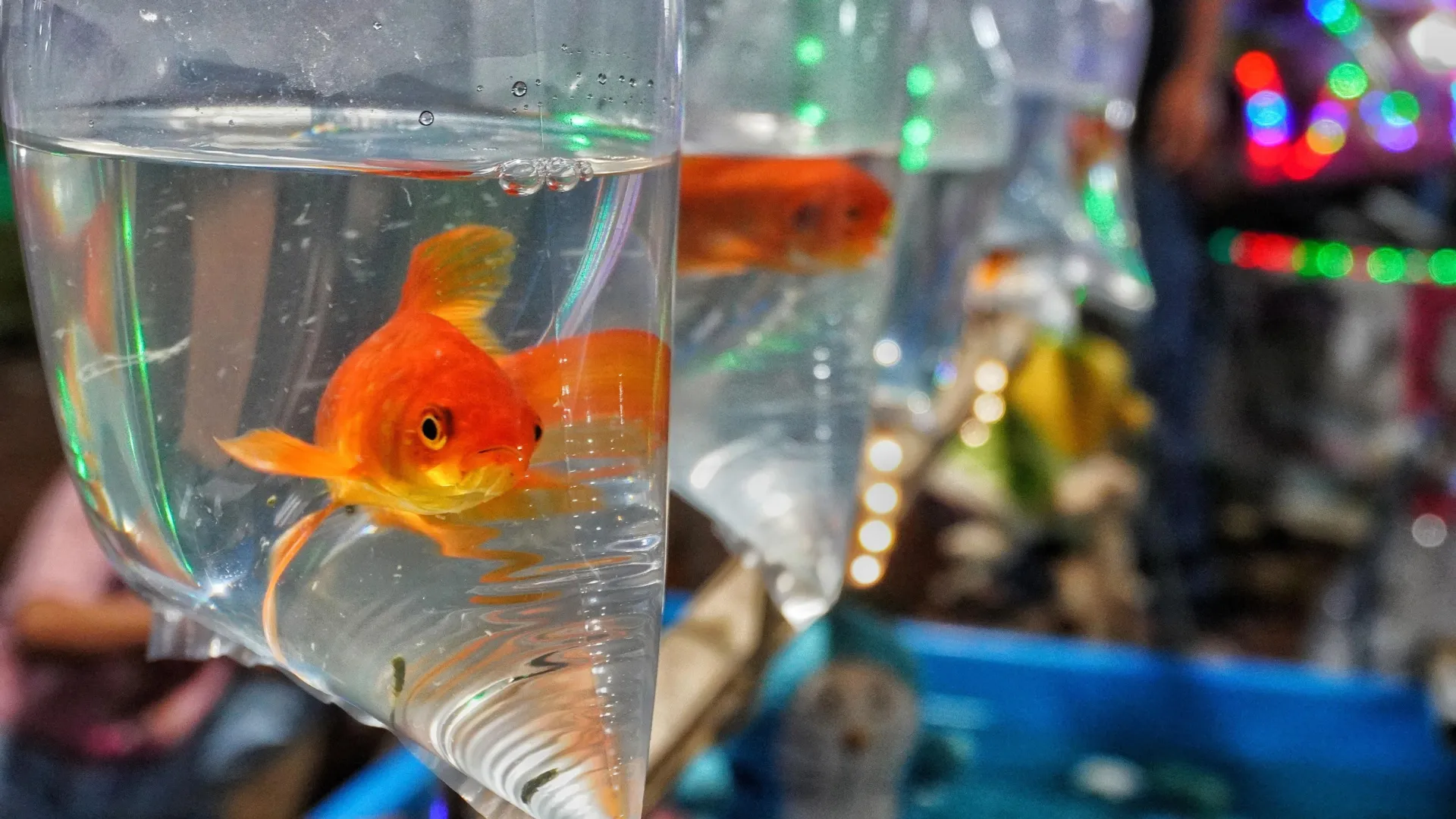
Goldfish: Cute at Home, Ecological Wrecking Ball in the Wild
Goldfish aren't just cute; they're invasive ecosystem destroyers. A new study reveals they cause regime shifts in lakes, turning them into murky messes. Think twice before releasing Fido into the wild.
A new peer-reviewed study from researchers at The University of Toledo and the University of Missouri has confirmed what many ecologists have long suspected: goldfish are adorable at home but absolute terrors when released into the wild. Published in the Journal of Animal Ecology, the research provides some of the strongest experimental evidence to date that invasive goldfish can dramatically alter lake environments, turning them from serene aquatic havens into murky, degraded messes.
"It is critically important to inform the public that their pets can become pests that will harm freshwater ecosystems," said Dr. William Hintz, associate professor at UToledo's Department of Environmental Sciences and Lake Erie Center and lead investigator. "The evidence is now clear - releasing a goldfish into the wild might be seen as an act of kindness, but it can turn into a major ecological threat." The study used large outdoor freshwater mesocosms designed to mimic real-world lake conditions, introducing goldfish (Carassius auratus) into both nutrient-poor (oligotrophic) and nutrient-rich (eutrophic) waters. In both environments, goldfish caused substantial ecological disruption, including a "regime shift" - a point where an ecosystem rapidly reorganizes into a fundamentally different and often degraded condition. Once these shifts occur, restoring an ecosystem can be extremely difficult and expensive.
"If goldfish are released into the wild, they rapidly grow into very large fish that stir up lake sediments, consume large numbers of prey and compete with native fish," said Rick Reylea, professor at the University of Missouri and co-author of the study. The researchers recommend that goldfish be treated as a high priority invasive species, and that natural resource agencies focus on prevention, early detection, and control efforts. For pet owners who no longer want their goldfish, the options are clear: return them to a pet store, find another aquarium owner, or contact local wildlife authorities. Just don't flush them - or the ecosystem.
The Good Times
News in your inbox.
One sardonic roundup, delivered on your schedule. Free. Unsubscribe whenever your tolerance for wit runs out.
Already subscribed but we never reach your inbox? Check your spam folder and hit 'Not spam' (or 'Remove from spam') to bust us out of junk-mail purgatory. You'll be helping everyone else too.
Don't open any of our emails for a month and you'll be automatically removed from the mailing list.
Rewrite Article
Select parts to regenerate with a fresh AI pass. Translations will be updated automatically.
Generate AI Image
Creates a sardonic version of the article image using OpenAI.