Evolution Repeats Itself in Galápagos, Because Apparently One Version Wasn't Enough
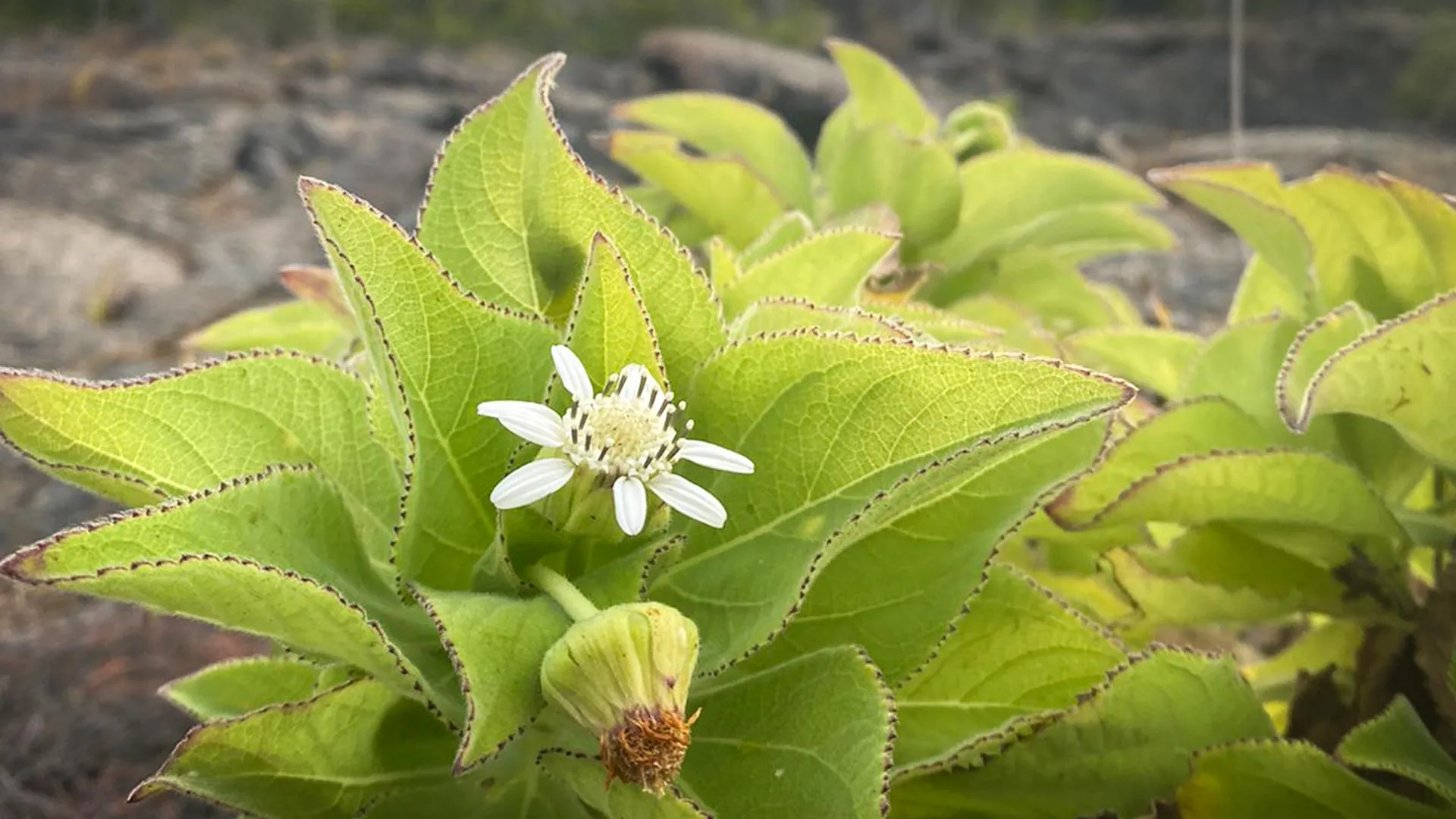
Galápagos giant daisies are caught evolving the same leaf shapes over and over - but through different genes each time, proving evolution's creativity knows no bounds.
The Galápagos Islands have long been the poster child for evolutionary biology, ever since Charles Darwin swung by in 1835 aboard the HMS Beagle and scooped up a bunch of birds that he initially mistook for sparrows, woodpeckers, finches, and a single tit. Turns out, they were all finches, just with beaks shaped by evolution to handle different menus. That little mix-up became cornerstone evidence for natural selection, and the islands have been showing off ever since.
Now, over 150 years later, a team of international researchers - including folks from the Norwegian University of Science and Technology (NTNU), the Royal Botanic Gardens, Kew, the University of California, Davis, and the Charles Darwin Foundation, among others - has found that the Galápagos giant daisies (genus Scalesia) are doing the same party trick as the finches: evolving rapidly and repeatedly, but with a twist that would make Darwin raise an eyebrow.
Scalesia plants, which arrived from mainland South America, have diversified into species ranging from low shrubs to towering trees, with leaves that go from large and smooth to small and deeply lobed. The lobed leaves are thought to help the plants cope with hot, dry conditions by reducing water loss and shedding heat. But the genetic machinery behind this adaptation has been a mystery - until now.
By sequencing the complete genomes of every known Scalesia species, the researchers discovered that deeply lobed leaves evolved independently several times in different branches of the family tree. And here's the kicker: each time, it happened through different genes, even though all those genes belong to the same leaf-development network. That's parallel evolution in action - nature finding the same solution multiple times, but taking different genetic routes to get there.
"Instead of being controlled by a single 'master gene', evolution appears to draw on an entire network of interacting genes, tweaking different components to produce similar outcomes," said Vanessa Bieker, first author and researcher at Kew.
The findings, published in Nature Communications, also suggest that Scalesia's evolution is far from over. Many populations show large genetic differences and have been isolated for ages, meaning new species might be in the making. The researchers argue these distinct lineages should be treated as separate conservation units - because if you're going to protect evolution's greatest hits, you need to protect all the remixes too.
This study also gives a rare, detailed look at adaptive radiation, where one ancestral species rapidly spawns a bunch of specialized forms. And it all started with Darwin's plant collections - 78 of which turned out to be new species, including four Scalesia. So next time you're in the Galápagos, remember: the plants are just as good at evolution as the birds, and they've got the genetic receipts to prove it.
The Good Times
News in your inbox.
One sardonic roundup, delivered on your schedule. Free. Unsubscribe whenever your tolerance for wit runs out.
Already subscribed but we never reach your inbox? Check your spam folder and hit 'Not spam' (or 'Remove from spam') to bust us out of junk-mail purgatory. You'll be helping everyone else too.
Don't open any of our emails for a month and you'll be automatically removed from the mailing list.
Rewrite Article
Select parts to regenerate with a fresh AI pass. Translations will be updated automatically.
Generate AI Image
Creates a sardonic version of the article image using OpenAI.