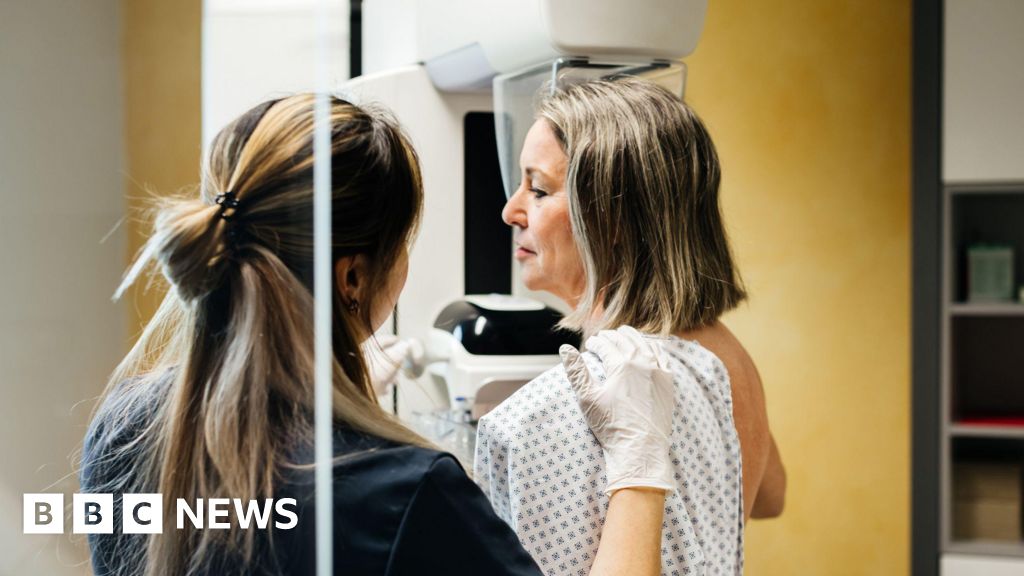
DNA Test Spares Millions of Breast Cancer Patients the 'Joy' of Chemotherapy
A new DNA test lets over two-thirds of breast cancer patients skip chemotherapy and its charming side effects, with survival rates nearly identical to those who endure it.
Millions of people with breast cancer may soon be spared the dubious pleasure of chemotherapy, thanks to a DNA test that separates those who benefit from those who just get the side effects. An international study found that over two-thirds of participants could safely skip the chemo and stick with hormone therapy alone - no nausea, hair loss, or weakened immune system required.
The study, led by University College London (UCL), enrolled more than 4,000 newly diagnosed patients over 40 across the UK, Norway, Sweden, Australia, New Zealand, and Thailand. Scientists deployed a gene test called Prosigna to measure the activity of 50 genes involved in breast cancer growth, calculating each patient's risk of the disease returning. Those who scored low - two-thirds of the group - skipped chemotherapy entirely. Their five-year survival rate was 93.7%, versus 94.9% for those who had chemo. That 1.2% difference is apparently not worth the 'brutal' side effects, as one patient put it.
Karen Bonham, a 64-year-old Cardiff participant, called the results an 'immense relief' and 'like Christmas.' She avoided chemo thanks to Prosigna, receiving only radiotherapy and hormone therapy over eight years. 'Cancer diagnosis and treatment can be shocking,' she said. 'It certainly propels you into a world of uncertainty. Life priorities realign - you simply want to survive.'
The findings will be presented at the American Society of Clinical Oncology's annual meeting in Chicago on Saturday. Professor David Miles, a leading cancer specialist, described them as 'practice-changing.' He noted, 'We used to give chemotherapy to 100 women to benefit 10, knowing that 90 didn't need it.' Now, the test allows doctors to 'confidently define a large population of women who simply aren't going to benefit and don't need to go through all that unpleasantness for no benefit at all.'
Tanya Hutson, diagnosed in 2022 and subjected to chemotherapy, called the test 'absolutely amazing.' 'It just proves what happens when money is put into research,' she said, adding that chemo had been 'brutal.' UCL estimates more than 5,000 NHS patients a year could avoid chemotherapy as a result. However, the findings don't apply to people under 40 yet - that result is still several years away, presumably while scientists figure out how to test younger patients without ruining their holiday spirit.
The Good Times
News in your inbox.
One sardonic roundup, delivered on your schedule. Free. Unsubscribe whenever your tolerance for wit runs out.
Already subscribed but we never reach your inbox? Check your spam folder and hit 'Not spam' (or 'Remove from spam') to bust us out of junk-mail purgatory. You'll be helping everyone else too.
Don't open any of our emails for a month and you'll be automatically removed from the mailing list.
Rewrite Article
Select parts to regenerate with a fresh AI pass. Translations will be updated automatically.
Generate AI Image
Creates a sardonic version of the article image using OpenAI.