
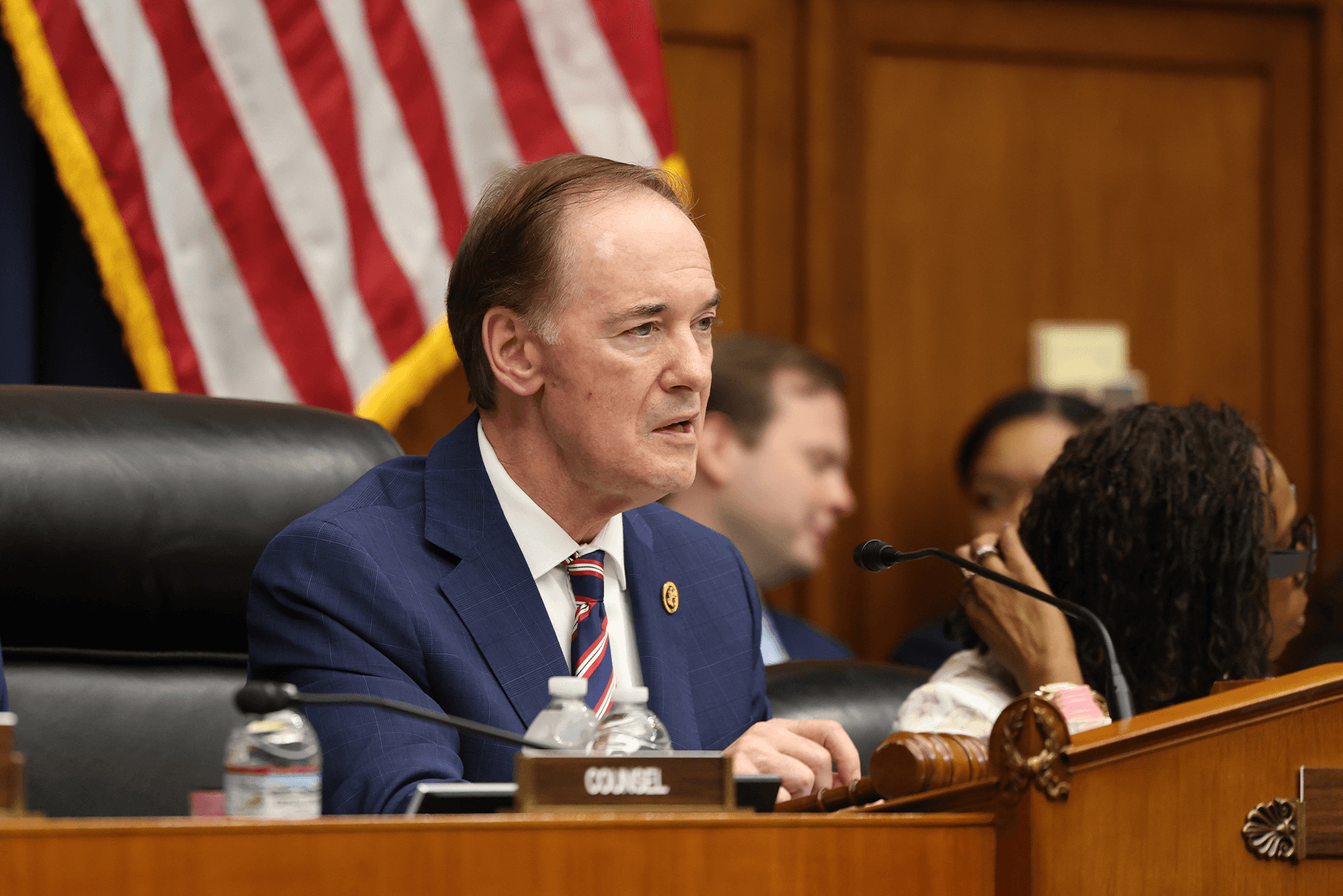
Members of a congressional subcommittee this week grilled utility leaders and state officials about their knowledge of preexisting problems with the sewage line that collapsed on Jan. 19 near the Potomac River - because nothing says "oversight" like waiting until after 242 million gallons of untreated wastewater have already made their way into a major waterway.
According to the University of Maryland’s School of Public Health, the incident was “one of the largest sewage spills in U.S. history.” More than 242 million gallons of untreated wastewater spilled into the Potomac River after a section of the 72-inch-diameter Potomac Interceptor sewer line collapsed. That's enough sewage to fill about 366 Olympic-sized swimming pools, if you were hoping to put a number on your disgust.
Answering questions from Rep. John Joyce (R-Pa.), the head of the utility that oversees the Potomac Interceptor said at the House Subcommittee on Oversight and Investigations hearing Wednesday that the sewage pipe was debilitated by “boulders that fell into the pipe.” David Gadis, chief executive officer of DC Water, added that he was not aware of the dangerous potential they posed to this part of the pipeline but knew about the existence of boulders around the pipes since 2018. So they knew about the boulders for seven years and apparently just hoped they’d get bored and roll away.
“We’re hopeful that we do not have another break like this one,” Gadis said. “But there are no guarantees when dealing with aging infrastructure that’s more than 60 years old.” Translation: The pipe was built during the Johnson administration, and it shows.
Rep. Frank Pallone (D-N.J.) said the country’s water infrastructure desperately needs investments in repairs and system upgrades. He said President Donald Trump is ignoring water system infrastructure, noting that his proposed Environmental Protection Agency budget cuts the clean water and drinking water state revolving funds that would provide water systems with “resources to make necessary repairs and improvements.”
“Rather than gutting our water infrastructure programs, we should be investing in them, so that instances like the Potomac Interceptor collapse are less common than they already are,” Pallone said. “But that’s not what’s happening with this president and this administration. They simply don’t care about infrastructure or the public’s financial situation.”
Almost a month after the incident, Trump announced the federal government would respond to the spill if asked, calling it a “Democrat-caused disaster” in a Truth Social post and blaming the governors of Virginia and Maryland, and the mayor of Washington, D.C. Because, naturally, a 60-year-old pipe collapsing under the weight of boulders is a partisan issue. The Maryland Department of the Environment does not regulate DC Water, but it does play a role in the clean-up, agency officials told Maryland lawmakers at a virtual briefing on Feb. 13.
The EPA’s assistant administrator for the Office of Water, Jessica Kramer, said at the hearing that “there’s no question the country has an aging infrastructure issue.” She said the agency has prioritized assessing the vulnerabilities of current infrastructure and renewing the water infrastructure workforce. Which is great, assuming the workforce doesn't retire before the pipes do.
Rep. Yvette Clarke (D-N.Y.) said luck played a “large part in keeping D.C.’s drinking water safe.” The spill did not affect drinking water, as the main intake for the metro area is located upstream. So, phew - at least the city’s residents can still enjoy tap water that hasn't been pre-seasoned with sewage.
The Maryland Department of the Environment held a hybrid community meeting on Monday with staff from DC Water and the Montgomery County Department of Health and Human Services to update residents about the ongoing restoration project and public health guidelines following the incident.
One resident, who said she uses the C&O Canal Towpath every day, asked the speakers, “Why does it still smell and it’s getting worse?” Montgomery County Health Officer Kisha Davis said she could not answer the question because she had not been there. She assured the resident the towpath is safe. So, in other words: "We haven't checked, but trust us."
Residents also had questions about the water quality and whether it is usable for recreation. Eric Nothman, race director for the Potomac Whitewater Racing Center, asked when it would be safe for people to put their kayaks and canoes back in the water. Davis said the county did not have enough data yet to make that determination. Which is a bureaucratic way of saying, "Maybe never, maybe next week - who can say?"
Hugh Hilliard, chair of the Canoe Cruisers Association, wanted to know when the area around Lockhouse 10, near the point of collapse, would be open to the public, after he heard from Davis that the cleanup was already done. “That area around Lock 10 is a very popular area for many canoists, kayakers and other people just going down to the river,” he said. Currently, signs there say, “Do not enter this area.” So the cleanup may be done, but the message to the public is: "We said do not enter."
DC Water’s Gadis, at the community meeting, was also questioned by a resident about the boulders that sit on top of portions of the pipeline. Gadis said DC Water has begun to look at the pipeline’s entire 54 miles, studying the objects on top of the pipe and using techniques such as core drilling. Better late than never, unless you're the 242 million gallons of sewage.
“At its core, this incident is about aging infrastructure in America,” Gadis said at the hearing with congressmembers. “The 54-mile Potomac Interceptor was constructed by the federal government in the 1960s, before many of today’s construction standards existed, and long before modern inspection technologies were available.” In other words, the pipe was built in an era when "inspection" meant tapping it with a wrench and hoping for the best.