Blue Origin's Moon Lander Survives Vacuum Chamber, Remains on Track to Do Moon Stuff
Blue Origin's uncrewed Moon lander Endurance passed thermal vacuum testing at NASA, will deliver science payloads to the lunar South Pole, and maybe inspire a bigger crewed version later.
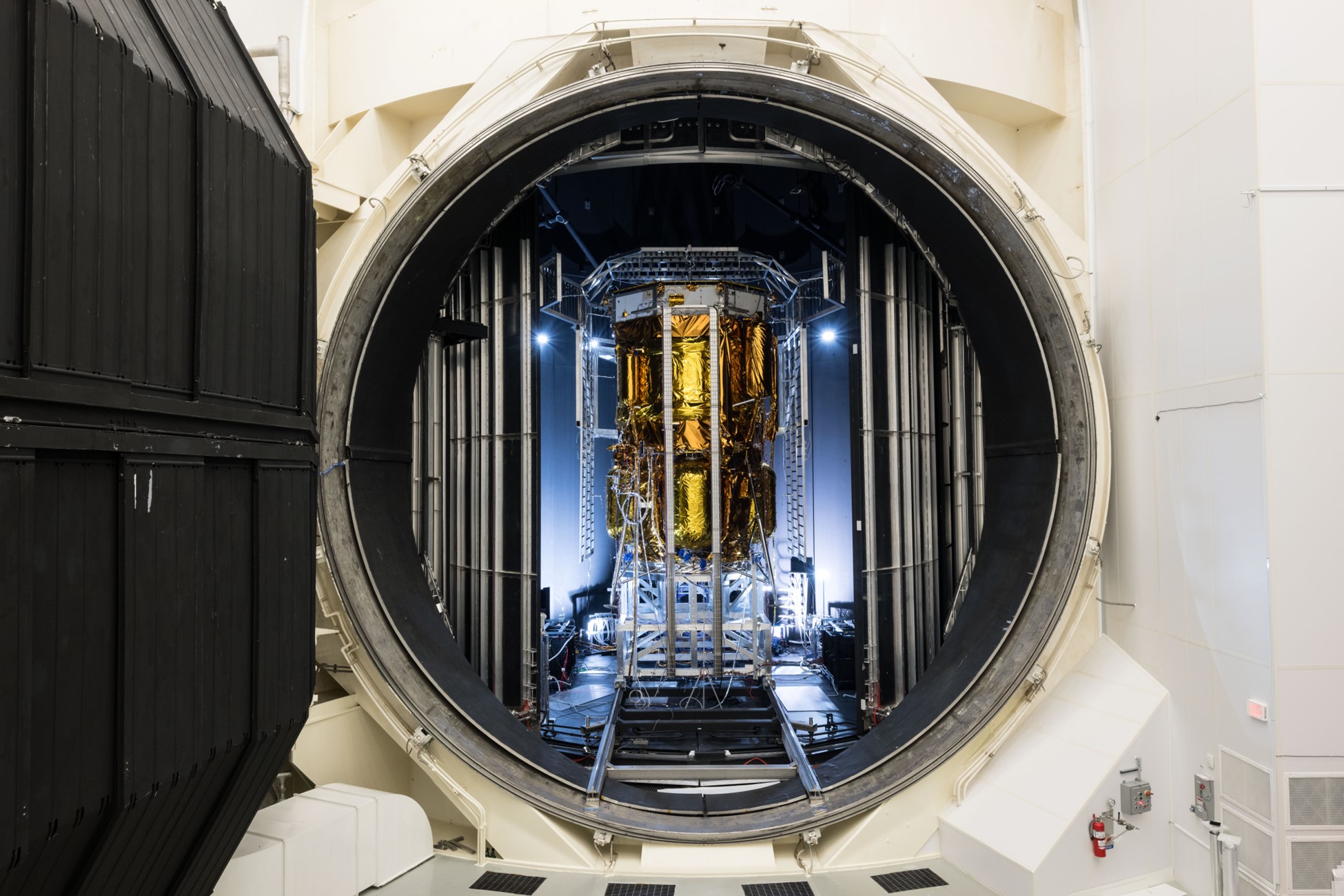
Blue Origin's uncrewed cargo lander, Endurance (also known as MK1), has completed testing in NASA's Chamber A, one of the largest thermal vacuum test facilities on Earth, proving it can handle the vacuum of space and extreme temperatures without spontaneously disassembling. The tests, conducted under a reimbursable Space Act Agreement, represent a public-private partnership model that lets NASA borrow commercial hardware and Blue Origin borrow NASA's very expensive vacuum chamber.
Endurance will demonstrate precision landing, cryogenic propulsion, and autonomous guidance, navigation, and control capabilities in support of future lunar surface operations - because landing on the Moon without crashing is still considered a valuable skill. In addition to its primary objectives, MK1 will carry two NASA science and technology payloads under the CLPS initiative to the lunar South Pole region this year: the Stereo Cameras for Lunar Plume-Surface Studies, an array of high-resolution cameras that will collect imagery of the interaction between the lander's engine plume and the lunar surface during descent and landing, and the Laser Retroreflective Array, which helps orbiting spacecraft determine a more precise location using reflected laser light - essentially a cosmic cat's eye for orbital navigation.
Through CLPS, NASA partners with American companies to deliver science investigations and technology demonstrations to the Moon, advancing understanding of the lunar environment and supporting future crewed missions as part of the agency's Artemis campaign. Testing in Chamber A enabled engineers to model the vacuum of space and the extreme temperature conditions the spacecraft would experience during flight, recreating conditions on the ground to evaluate system performance and verify structural and thermal integrity prior to launch. NASA and Blue Origin will incorporate lessons learned from MK1's design, integration, and testing to support future Artemis missions that will return American astronauts to the Moon - presumably with better luck than the last few attempts.
MK1's development contributes to technology maturation and risk reduction for future human-class systems, including Blue Moon Mark 2 (MK2), a larger crewed landing system designed to safely transport astronauts from lunar orbit to the surface and back, enabling sustained human exploration at the Moon's South Pole region. Testing of MK1 at NASA Johnson is enabled through the agency's “front door” approach - a coordinated process that provides commercial partners access to NASA facilities and technical expertise while maintaining safety, mission assurance, and alignment with agency objectives. For those keeping score, this means Blue Origin gets to use NASA's stuff to build a lander that might one day compete with SpaceX's stuff.
The Good Times
News in your inbox.
One sardonic roundup, delivered on your schedule. Free. Unsubscribe whenever your tolerance for wit runs out.
Already subscribed but we never reach your inbox? Check your spam folder and hit 'Not spam' (or 'Remove from spam') to bust us out of junk-mail purgatory. You'll be helping everyone else too.
Don't open any of our emails for a month and you'll be automatically removed from the mailing list.
Rewrite Article
Select parts to regenerate with a fresh AI pass. Translations will be updated automatically.
Generate AI Image
Creates a sardonic version of the article image using OpenAI.