Baristas Behind Bars: Thai Prisoners Brew a Second Chance at Life
Thailand's prisoners are learning to brew coffee - and a new life - as part of a UN-backed rehabilitation push that's more about second chances than just locking people up.
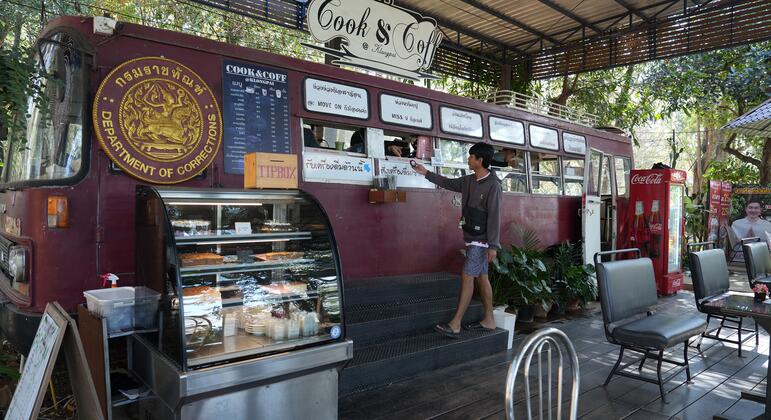
It looks like a regular coffee shop, albeit one housed in an old red bus, with jaunty messages like “My one and only love: Americano” and “Miss you a latte” adorning the side. But Cook & Coff, located in Khao Khuen Lan, eastern Thailand, is no ordinary café: it’s managed by the Department of Corrections and run by prisoners.
Tup, 26, spent six months in a maximum-security prison in Khlong Phai before transferring to Khao Khuean Lan, where he learned to be a barista. Every day after his shift ends at 3pm, he returns to prison, gradually relearning the outside world. In 20 days, he’s due for release and hopes to invest in a coffee machine and start his own business - if his mother can help.
The stigma incarcerated people carry in Thailand makes reintegration challenging. To reduce reoffending, Thailand is embracing rehabilitation over punishment, guided by the Kyoto Model Strategies adopted by UN Member States in December 2025. These emphasize addressing root causes like poverty, lack of education, and social exclusion.
“The real problem lies in society,” said Thitiphan Manuchantrarut, director of the Khao Prik Agricultural and Industrial Correctional Institution. “Lack of money leads offenders to drug trafficking. If they learned the skills we teach them here at an early age, they would probably not have ended up in prison.”
Reoffending remains a challenge. “Most prisoners go back to their context,” Manuchantrarut added. “If they are given the opportunity to work elsewhere, to change their initial circumstances, they will be less likely to recommit.”
The UN Office on Drugs and Crime (UNODC) works with Thai authorities to support skills training and improve prison conditions. In Tup’s former facility, UNODC installed a water purification system turning lake water into potable water - a step up from prisoners having to pay for drinking water.
The improvements follow the Nelson Mandela Rules, the universally acknowledged blueprint for prison management, which focus on training officers and promoting based on performance. “You will never waste a penny if you invest in the Nelson Mandela rules,” said Sukanya Thainoy, a former training academy director.
Thailand’s prison system holds 310,000 people across 143 facilities. “If prison officers are smiling, prisoners will be smiling, then society will smile,” said Permpol Thiendusit, president of Songkhla Central Prison.
The Good Times
News in your inbox.
One sardonic roundup, delivered on your schedule. Free. Unsubscribe whenever your tolerance for wit runs out.
Already subscribed but we never reach your inbox? Check your spam folder and hit 'Not spam' (or 'Remove from spam') to bust us out of junk-mail purgatory. You'll be helping everyone else too.
Don't open any of our emails for a month and you'll be automatically removed from the mailing list.
Rewrite Article
Select parts to regenerate with a fresh AI pass. Translations will be updated automatically.
Generate AI Image
Creates a sardonic version of the article image using OpenAI.