Ancient Egyptians Pioneered Coffin-Sharing, Study Finds
Ancient Egyptians turned tomb-sharing into an art form, stacking bodies vertically and ditching coffins as trends evolved - proving that even in death, you can't escape real estate issues.
Egypt’s Theban necropolis, home to over 400 tombs, has long been a goldmine for archaeologists - or, more accurately, a mummy mine. A new paper in Frontiers in Environmental Archaeology reveals that burial trends in ancient Thebes evolved from lavish individual coffins to a rather cramped, communal approach. The study, focusing on Tomb 209 in the western necropolis, shows that over centuries, Egyptians went from 'my own coffin' to 'excuse me, is this spot taken?'
The tomb, dating to the early 25th Dynasty (754 - 656 BCE) and abandoned by the Ptolemaic period (305 - 30 BCE), originally belonged to a Nubian high official named Nisemro. Located inconveniently in an active drainage channel, it suffered repeated flash floods - nature's way of saying 'stop piling up bodies here.' Yet, the site proved perfect for what researchers call an 'integrated archaeothanatological approach,' which sounds fancy but basically means they looked at bones, coffins, and their positions to piece together the burial sequence.
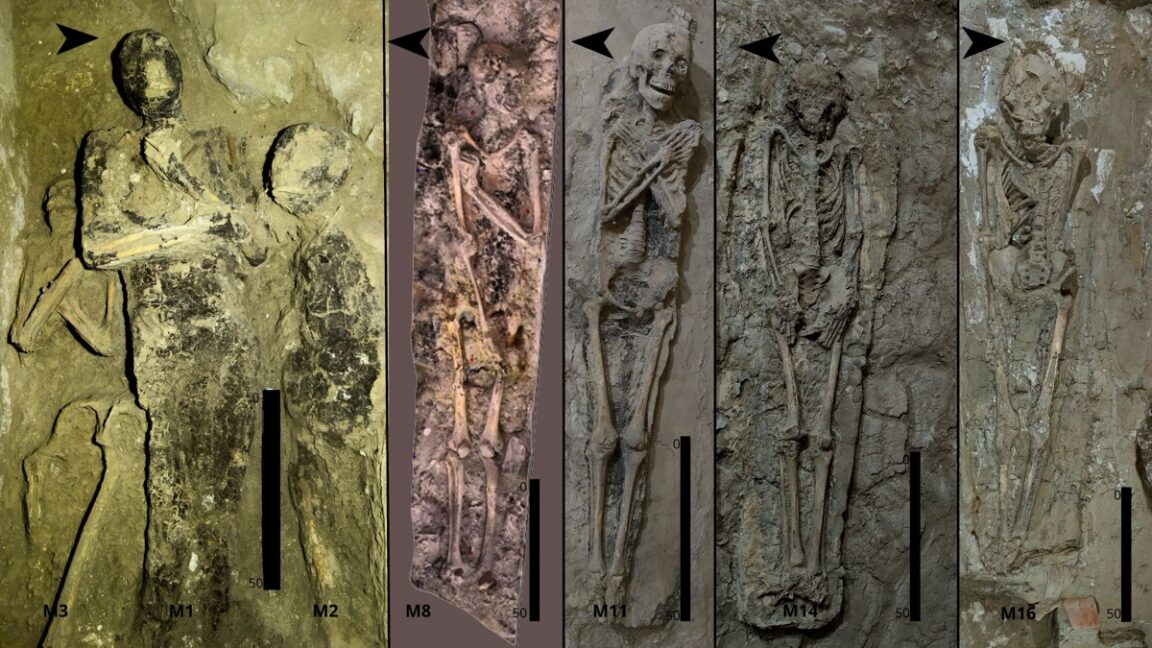
Excavations in Side Chamber 3 yielded 16 mummified people (1,444 bones), one mummified dog, and a chamber with disarticulated remains (1,775 bone fragments) of at least four others. Lead author Jared Carballo-Perez of the University of La Laguna (Spain) noted, 'The detailed study of the bodies indicates neither chaotic accumulation nor a loss of the original ritual over time. Rather, there was a spatial logic in which each new deposition was adapted to the presence of previous bodies - a kind of funerary memory in the processes of reuse.' In other words, the ancients had a system: a 'you snooze, you lose' approach to burial plots.
Initially, burials were individual, with men and women separated (though the authors caution against overinterpreting that). Later, new bodies were shoehorned into already occupied spaces, increasing density. This matches other Theban tombs from the first millennium BCE, about 80% of which show remains from different periods sharing space. Coffin use declined, bodies were stacked vertically rather than laid out horizontally, and some coffins were dismantled or rotted away. The authors see this as part of a broader shift: 'The growing density of deposits and the reuse of earlier funerary structures reduced the capacity of coffins to act as the sole organizing frame of burial space,' shifting focus to 'the integrity of the body and the symbolic efficacy of the ritual, rather than the container itself.'
Arms also trended from extended to folded over time, and early grave goods - amphorae, incense cups, amulets, beads - became more scattered in later phases. Early individuals were high-status, buried with coffins, funerary nets, amulets, and Phoenician amphorae full of pricey items. Later, vertically stacked bodies lacked coffins but were carefully mummified and associated with upright jars, suggesting a new ritual. One chamber showed signs of fire damage, with remains heated to 550°C (1,022°F), particularly crania and lower limbs - perhaps an ancient cremation mishap or just a very bad day.
The authors conclude that the tomb was 'a funerary space with an accumulative biography,' where reuse transformed the organization, materiality, and meaning of the space itself. The chamber wasn't a passive container but 'a dynamic mortuary environment where bodies, objects, sediments, and architectural constraints shaped the material construction of funerary continuity over time.' So, next time you complain about cramped quarters, remember: ancient Egyptians were stacking mummies like Tetris blocks - and they made it work.
The Good Times
News in your inbox.
One sardonic roundup, delivered on your schedule. Free. Unsubscribe whenever your tolerance for wit runs out.
Already subscribed but we never reach your inbox? Check your spam folder and hit 'Not spam' (or 'Remove from spam') to bust us out of junk-mail purgatory. You'll be helping everyone else too.
Don't open any of our emails for a month and you'll be automatically removed from the mailing list.
Rewrite Article
Select parts to regenerate with a fresh AI pass. Translations will be updated automatically.
Generate AI Image
Creates a sardonic version of the article image using OpenAI.