Ancient City Flips the Script on Inequality, Makes Historians Rethink Everything
A 4,000-year-old city proves that 'grow rich, grow unequal' isn't a universal law - brick drains and equitable housing, apparently, were the original flex.
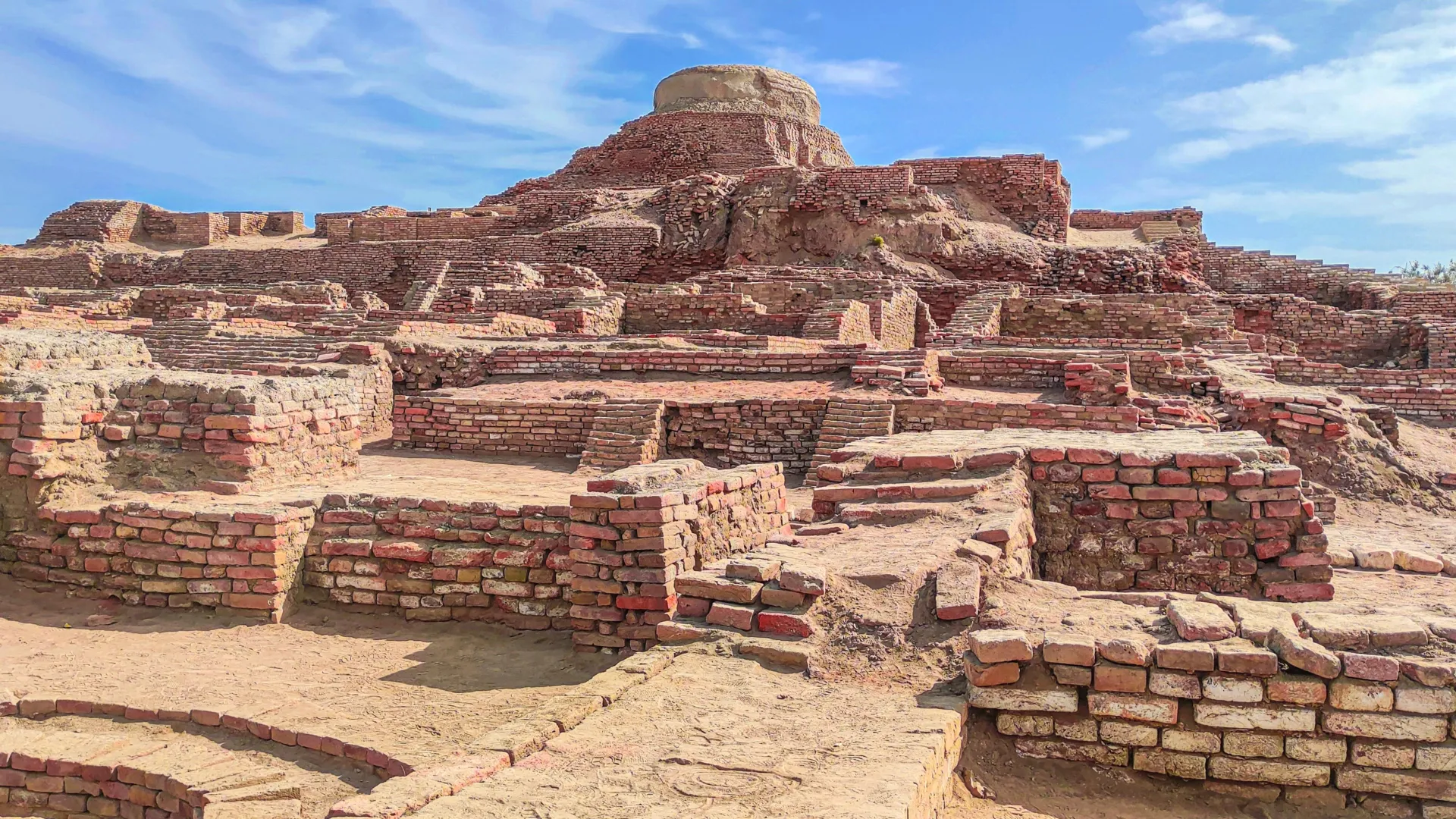
In a stunning twist that will surely ruin a perfectly good lecture slide, a new study suggests that a 4,000-year-old city called Mohenjo-daro was doing something practically unheard of: as it got bigger and richer, its society got more equal. Historians have long clung to the idea that when you take a bunch of farming villages and pack them into a city, you inevitably get a king, a priest, and a whole lot of people eating dust. But this city apparently missed that memo.
The University of York study, published in the journal Antiquity, took a hard look at Mohenjo-daro, the largest city of the Indus civilization, and found that as the city matured, the gap between the largest and smallest houses narrowed. By its later years, the wealth gap had dropped to levels typical of the first farming villages. That's right: a massive urban center with brick-lined drains and organized street layouts somehow managed to avoid the whole "let's build a pyramid for the god-king" phase.
Lead author Dr. Adam Green from the University of York's Department of Archaeology and Department of Environment and Geography put it succinctly: "While ancient Egyptians were building pyramids for god-kings, and the Greeks were constructing massive palaces at Knossos, the people of the Indus were building something entirely different. Instead of gold-filled tombs and huge temples, Mohenjo-daro focused on sophisticated brick-lined drains and organized street layouts." Talk about priorities.
The city's success wasn't just about humble architecture, though. The distribution of Indus seals - those important tools for trade and business - shows they were usually found in ordinary homes, not hoarded in public buildings. There were no known palaces to speak of, which suggests that wealth and authority weren't monopolized by a single powerful leader. The residents likely cooperated to give households broad access to resources, and they kept investing in drainage, road upkeep, and other public services that benefited everyone.
A standardized system of weights and measures used throughout the region probably helped fairer trade, giving merchants a common way to measure goods. All this adds up to a society that was both highly productive and surprisingly egalitarian, challenging the belief that inequality is an inevitable price of economic growth.
Dr. Green notes, "In the period when inequality appears to be lowest, productivity appears to rise. It challenges the idea that prosperity requires us to concentrate decision-making powers in the hands of the few." He adds, "It is quite an interesting lesson for modern societies, as the Indus civilization demonstrates clearly that an urban society can be highly productive and inventive at scale, whilst also ensuring that resources and power are shared equitably."
So the next time someone tells you that a booming economy must come with a booming rich-poor divide, just point them to a 4,000-year-old city with really good plumbing.
The Good Times
News in your inbox.
One sardonic roundup, delivered on your schedule. Free. Unsubscribe whenever your tolerance for wit runs out.
Already subscribed but we never reach your inbox? Check your spam folder and hit 'Not spam' (or 'Remove from spam') to bust us out of junk-mail purgatory. You'll be helping everyone else too.
Don't open any of our emails for a month and you'll be automatically removed from the mailing list.
Rewrite Article
Select parts to regenerate with a fresh AI pass. Translations will be updated automatically.
Generate AI Image
Creates a sardonic version of the article image using OpenAI.