World Migratory Bird Day Reminds Us That Millions of Birds Are Silently Judging Our Architecture
Millions of birds migrate over NYC each night, mostly unseen, while glass buildings and light pollution turn the city into an obstacle course - World Migratory Bird Day says you can help by turning off lights and planting native species.
Did you know that millions of birds may be migrating silently overhead right now as you read this - and you don’t even need to leave the house to see them? That's the message from the Wild Bird Fund ahead of World Migratory Bird Day on 9 May.
This year's theme, 'Every Bird Counts, Your Observations Matter', is a gentle nudge to urbanites that the sky above Manhattan is basically a feathered interstate highway. Catherine Quayle, Communications Director at the Wild Bird Fund, told UN News that even in the middle of Midtown, you can hear birds when you wake up - their songs change over the year, and you don't need to leave home to witness the ecological diversity outside your window.
New York City sits on the Atlantic Flyway, a bird superhighway that sees staggering traffic. According to BirdCast, a tool from the Cornell Lab of Ornithology that uses weather radar to track migration, on peak nights a few billion birds may be in the air over the US at once. Over New York City, as many as a million can pass in a single night - but most people are blissfully unaware because it happens while they're asleep.
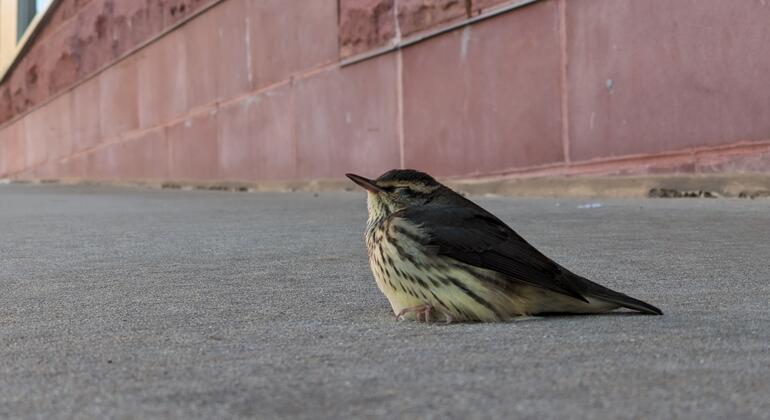
Birds face two major challenges: habitat loss and window collisions. Habitat loss occurs when their wintering or breeding grounds get taken down, built over, paved, or logged - leaving birds that have learned the route for generations to arrive at a parking lot. The other threat is modern architecture's love affair with glass. 'Highly glazed surfaces and all-glass windows are very popular, and that is just very dangerous for birds,' Quayle noted.
Skyscrapers are dangerous because their bright lights attract birds, drawing them into areas like downtown Manhattan where glass surfaces reflect nearby trees. But here's the twist: homes actually cause the majority of collisions, they're just less noticeable because it's one or two birds at a time, whereas downtown you might find a hundred. Migratory birds are especially at risk because they arrive at night, tired, disoriented, and in unfamiliar territory.
What can you do? Keep outdoor lights off at night so skies stay darker and birds aren't attracted to the light. In a smaller community, people turning out their lights makes a big difference. Also, plant native species in your garden - do a little research on what's native to your area and devote some of your outdoor space to it, to attract insects and birds.
Quayle shared a memorable rescue: while watching birds in a nearby park, she spotted a scarlet tanager in beautiful yellow plumage beneath a glass skybridge - structures especially dangerous because birds don't expect them. She ran down the hill and scooped the bird up; seconds later, a car drove over the spot where it had been. The bird was rehabilitated and released.
For those who don't think of themselves as 'bird people', Quayle suggests starting by noticing the birds around you. During migration, many free bird walks are offered in local parks, often led by experts. 'The first time I walked into Central Park with a pair of binoculars many years ago and started looking at all the birds I hadn't noticed before, it blew my mind,' she said. 'I've been doing it ever since, and that was 25 years ago.'
The Good Times
News in your inbox.
One sardonic roundup, delivered on your schedule. Free. Unsubscribe whenever your tolerance for wit runs out.
Already subscribed but we never reach your inbox? Check your spam folder and hit 'Not spam' (or 'Remove from spam') to bust us out of junk-mail purgatory. You'll be helping everyone else too.
Don't open any of our emails for a month and you'll be automatically removed from the mailing list.
Rewrite Article
Select parts to regenerate with a fresh AI pass. Translations will be updated automatically.
Generate AI Image
Creates a sardonic version of the article image using OpenAI.