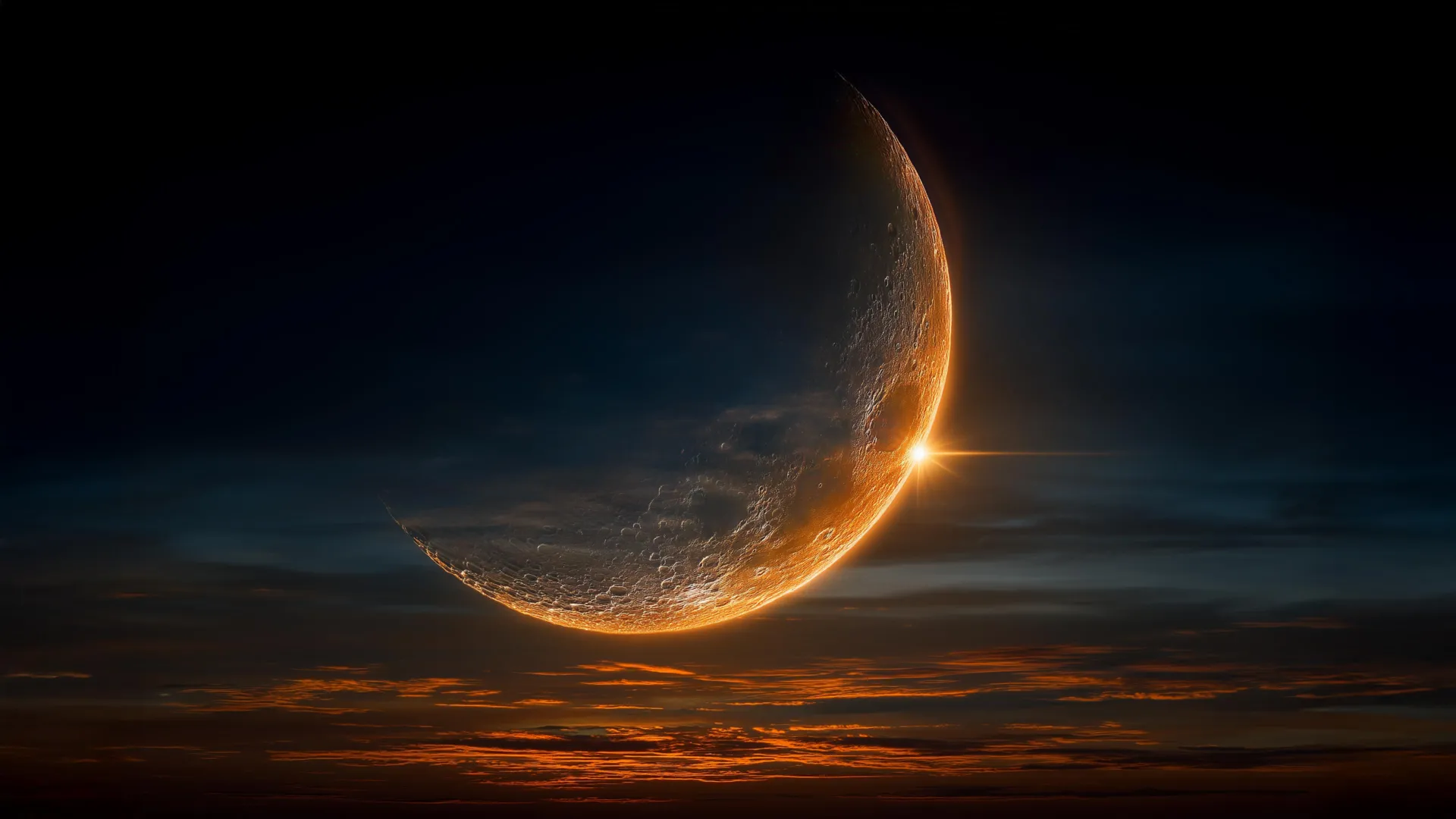
June is offering skywatchers a celestial buffet, including a rare lunar occultation of Venus, a planetary conjunction, the official start of astronomical summer, and the return of some deep-sky favorites. Because apparently, the Moon wanted to remind us it can still upstage the planets.
During the first half of June, look toward the western horizon shortly after sunset to spot Venus and Jupiter. The two brightest planets visible in the evening sky will appear especially close together around June 9. This event is known as a planetary conjunction - which is just a fancy way of saying they're cosmic neighbors from Earth's perspective, even though they're millions of miles apart.
From June 11 through June 15, Mercury joins the party low in the western sky, creating an eye-catching lineup of three planets. The reason these gatherings occur is that the planets orbit the Sun along a similar path across our sky called the ecliptic. As they move along this shared track, they occasionally appear clustered together when viewed from Earth.
Venus will be the easiest object to spot because of its exceptional brightness - it's basically the show-off of the solar system. Jupiter will shine nearby, while Mercury will sit much lower toward the horizon. A clear view of the western sky will help observers catch Mercury before it disappears into the twilight glow.
Another highlight arrives on June 17, when the Moon passes directly in front of Venus for observers in certain locations. This phenomenon is called a lunar occultation. For those within the viewing path, Venus will seem to vanish behind the Moon before emerging again later - like a magician's trick, but with way more gravity.
The occultation will be visible from parts of the United States, Canada, Brazil, and Venezuela. Even outside the narrow path where Venus is completely covered, many observers will still see the Moon and Venus appearing unusually close together in the sky. For some locations, this event will occur during daylight hours. Anyone attempting to observe it should use caution: do not point binoculars, telescopes, or cameras near the Sun unless proper solar safety equipment is being used. Viewing the Sun through optical equipment without appropriate protection can cause severe eye damage. You have been warned.
In the Northern Hemisphere, the June solstice marks the official beginning of astronomical summer. In Pacific time, it occurs on Sunday, June 21 at 1:24 a.m. The solstice is associated with the longest days and shortest nights of the year across the Northern Hemisphere. Interestingly, the longest day of the year does not necessarily coincide with the earliest sunrise or latest sunset. In Los Angeles, for example, the earliest sunrise occurs before the solstice, while the latest sunset takes place afterward. Because celestial mechanics enjoy being contrary.
As darkness falls later in the month, summer's classic stargazing targets begin taking center stage. One of the easiest seasonal landmarks to find is the Summer Triangle, a large pattern formed by the bright stars Vega, Altair, and Deneb. Within and around this region lie several popular deep-sky objects, including the Dumbbell Nebula, the Ring Nebula, the North America Nebula, and the Veil Nebula. The Dumbbell Nebula, also known as Messier 27, holds a special place in astronomy history as the first planetary nebula ever discovered. Unlike bright planets, these objects are generally too faint to stand out with the naked eye. Through telescopes or long-exposure photography, however, they reveal spectacular details including glowing clouds of gas, dying stars, and stellar nurseries scattered throughout our galaxy.
June's combination of bright planets, a rare lunar occultation, the summer solstice, and returning deep-sky treasures makes it an excellent month to spend time under the night sky. Materials provided by NASA's Jet Propulsion Laboratory.
The Good Times
News in your inbox.
One sardonic roundup, delivered on your schedule. Free. Unsubscribe whenever your tolerance for wit runs out.
Already subscribed but we never reach your inbox? Check your spam folder and hit 'Not spam' (or 'Remove from spam') to bust us out of junk-mail purgatory. You'll be helping everyone else too.
Don't open any of our emails for a month and you'll be automatically removed from the mailing list.
Rewrite Article
Select parts to regenerate with a fresh AI pass. Translations will be updated automatically.
Generate AI Image
Creates a sardonic version of the article image using OpenAI.