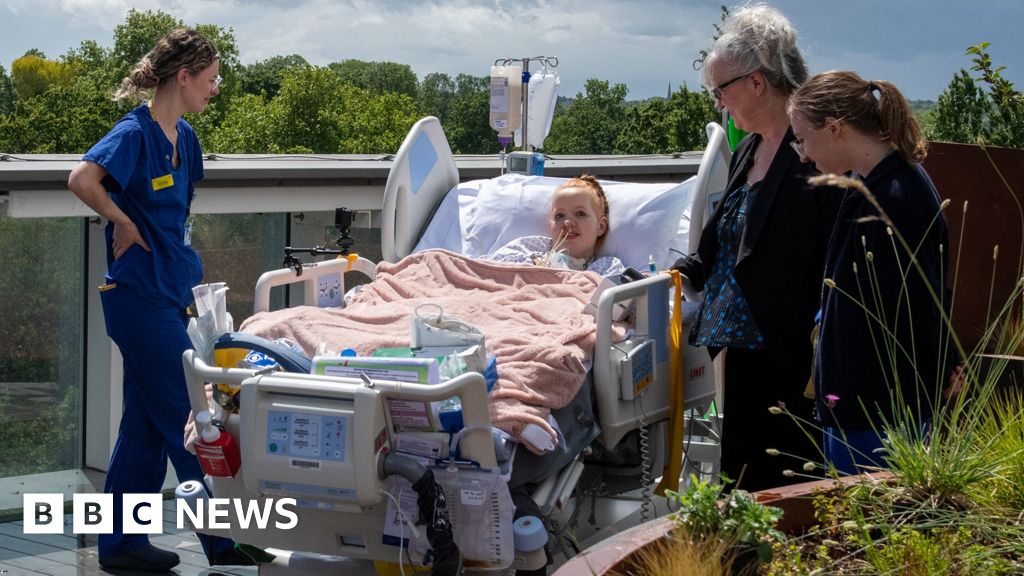
UK Hospital Opens Rooftop ICU Ward, Lets Patient Finally Remember What Outside Looks Like
King's College Hospital opens UK's first rooftop ICU ward, letting critically ill patients finally remember what the sun feels like - and possibly recover faster.
Hollie Allan, 29, has spent the last two months in intensive care at King's College Hospital in south London, which is roughly 60 days of fluorescent lighting, beeping machines, and absolutely zero fresh air. So when nurses wheeled her bed into a lift and told her to "brace yourself for the cold," she was not expecting the sunshine that hit her face like a long-lost friend. "I forgot what it feels like to be outside," she said, crying. Which is fair - two months indoors will do that to a person.
Meet the UK's first rooftop intensive care ward, a £2m-plus outdoor space funded by the hospital's charity, designed by garden designer Sarah Price and the late landscape architect Nigel Dunnett (who previously worked on the Olympic Park for the London 2012 Games). The ward can accommodate up to six critically ill patients, each hooked up to power and oxygen from a waterproof box beside their bed, all while enjoying what the British refer to as "weather."
The thinking here is almost aggressively sensible: research suggests exposure to fresh air and nature can boost patient wellbeing and reduce hospital stays. Hospital gardens have existed for ages, but they rarely cater to patients who need life support. King's doctors plan to monitor heart rates, respiratory rates, and pain levels to see if the rooftop speeds recovery. "We don't just want to save lives," says Dr Phil Hopkins, intensive care consultant. "We want to return them to their lives as quickly as we can."
Hollie, who is awaiting a vital heart operation and was too ill to go outside even before admission, is already a fan. "Even if it was thunderstorms, I'd be out here," she says. The beds are surrounded by honeysuckle, jasmine, lavender, and textured grasses that patients can touch and smell. Price says you can see the change in patients' faces and breathing. The rooftop will also serve as a break area for intensive care staff, because apparently nurses deserve nice things too.
Hospital chief executive Clive Kay hopes the garden will lead to shorter patient stays and better use of critical care facilities - and that the model could be replicated across the NHS. In other words: a hospital put a garden on its roof, and it might actually help people recover faster. Who knew that fresh air and plants could be part of medicine?
The Good Times
News in your inbox.
One sardonic roundup, delivered on your schedule. Free. Unsubscribe whenever your tolerance for wit runs out.
Already subscribed but we never reach your inbox? Check your spam folder and hit 'Not spam' (or 'Remove from spam') to bust us out of junk-mail purgatory. You'll be helping everyone else too.
Don't open any of our emails for a month and you'll be automatically removed from the mailing list.
Rewrite Article
Select parts to regenerate with a fresh AI pass. Translations will be updated automatically.
Generate AI Image
Creates a sardonic version of the article image using OpenAI.