The World Food Programme (WFP) has returned from Somalia with a message that reads like a horror movie sequel no one wanted: the famine is back, and it's hungrier than ever.
Matthew Hollingworth, WFP Assistant Executive Director, delivered the grim news Friday after visiting a country where nearly six million people - roughly one in three Somalis - now face acute hunger. Two million of them are already at emergency levels of food insecurity, which is just one polite step away from full-blown famine. Around 1.9 million children are acutely malnourished, because apparently the universe decided they needed an extra challenge.
The crisis, WFP explains, is being turbocharged by global economic shocks linked to instability around the Strait of Hormuz and the wider Middle East mess. Food prices in some parts of Somalia have surged by up to 70 per cent, while fuel prices have rocketed 150 per cent, making it expensive to move aid and basic goods. Supply routes are also disrupted, because why make humanitarian work easy?
Hollingworth offered a particularly vivid example: therapeutic food containers destined for Somalia arrived 40 days late "because of the impact on global shipping." That's 40 days of hungry kids waiting for food that was stuck in transit, like a delayed Amazon package but with far higher stakes.
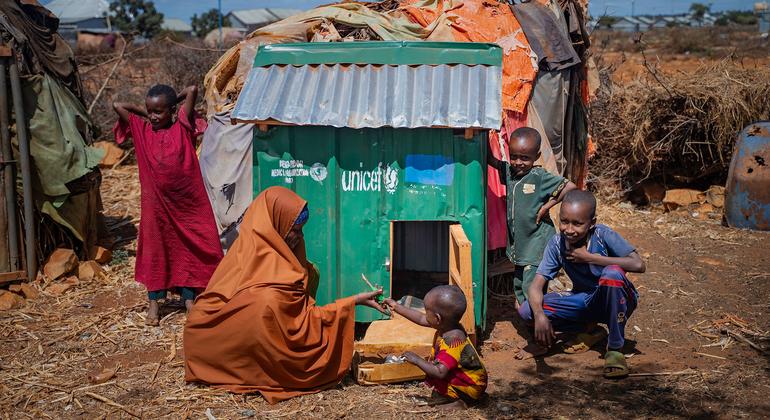
Conditions are especially dire in Puntland, where dried-up water sources, collapsed livelihoods, and three consecutive failed rainy seasons have turned the region into a desperate game of musical chairs - except the chairs are food and water, and there aren't nearly enough. Families are fleeing everything they own after losing animals, farms, and income. Just one day before his Geneva press conference, Hollingworth met a newly displaced family in Mogadishu that had fled the south, joining thousands now crammed into overcrowded urban areas seeking help.
Even recent rainfall hasn't helped much, because when you've already exhausted your ability to cope, a little water doesn't fix the fact that your livestock is dead and your crops are gone.
WFP says humanitarian agencies are now making "impossible choices" due to severe funding shortages. The agency is currently reaching only one in ten people in need of food assistance - a dramatic drop from last year, when more than two million people were receiving aid. In Puntland, the number of functioning health centres has fallen from 12 last year to just three. Preventive nutrition programmes have stopped entirely in some facilities, leaving only emergency treatment available. Because prevention is for people with budgets.
During his visit, Hollingworth toured a health centre where mothers had walked hundreds of kilometres with malnourished children. One mother told him her three-year-old son had received only two months of nutritional support before aid was cut off because resources ran out. "She is now forced to work out how on earth she will feed her child and other children next month," he said.
Without urgent new funding, WFP warns its operations in Somalia could halt entirely by July. That's the kind of deadline that makes you wish you'd paid more attention to those fundraising emails.
Aid officials are drawing stark comparisons to 2022, when Somalia came dangerously close to famine after prolonged drought and mass displacement. Back then, a large-scale international response helped avert catastrophe. Hollingworth stressed the same outcome is still possible - but only if governments and donors act now. "Famine is always preventable," he said. "Prevention depends on timely action."
WFP says it already has the systems in place to rapidly expand assistance, including 1.7 million biometrically registered people who could immediately receive emergency cash support. But without immediate international action, Somalia risks sliding into another devastating disaster. As Hollingworth put it: "Hunger is rising. Coping strategies are collapsing. And the window is starting to close."
The Good Times
News in your inbox.
One sardonic roundup, delivered on your schedule. Free. Unsubscribe whenever your tolerance for wit runs out.
Already subscribed but we never reach your inbox? Check your spam folder and hit 'Not spam' (or 'Remove from spam') to bust us out of junk-mail purgatory. You'll be helping everyone else too.
Don't open any of our emails for a month and you'll be automatically removed from the mailing list.
Rewrite Article
Select parts to regenerate with a fresh AI pass. Translations will be updated automatically.
Generate AI Image
Creates a sardonic version of the article image using OpenAI.