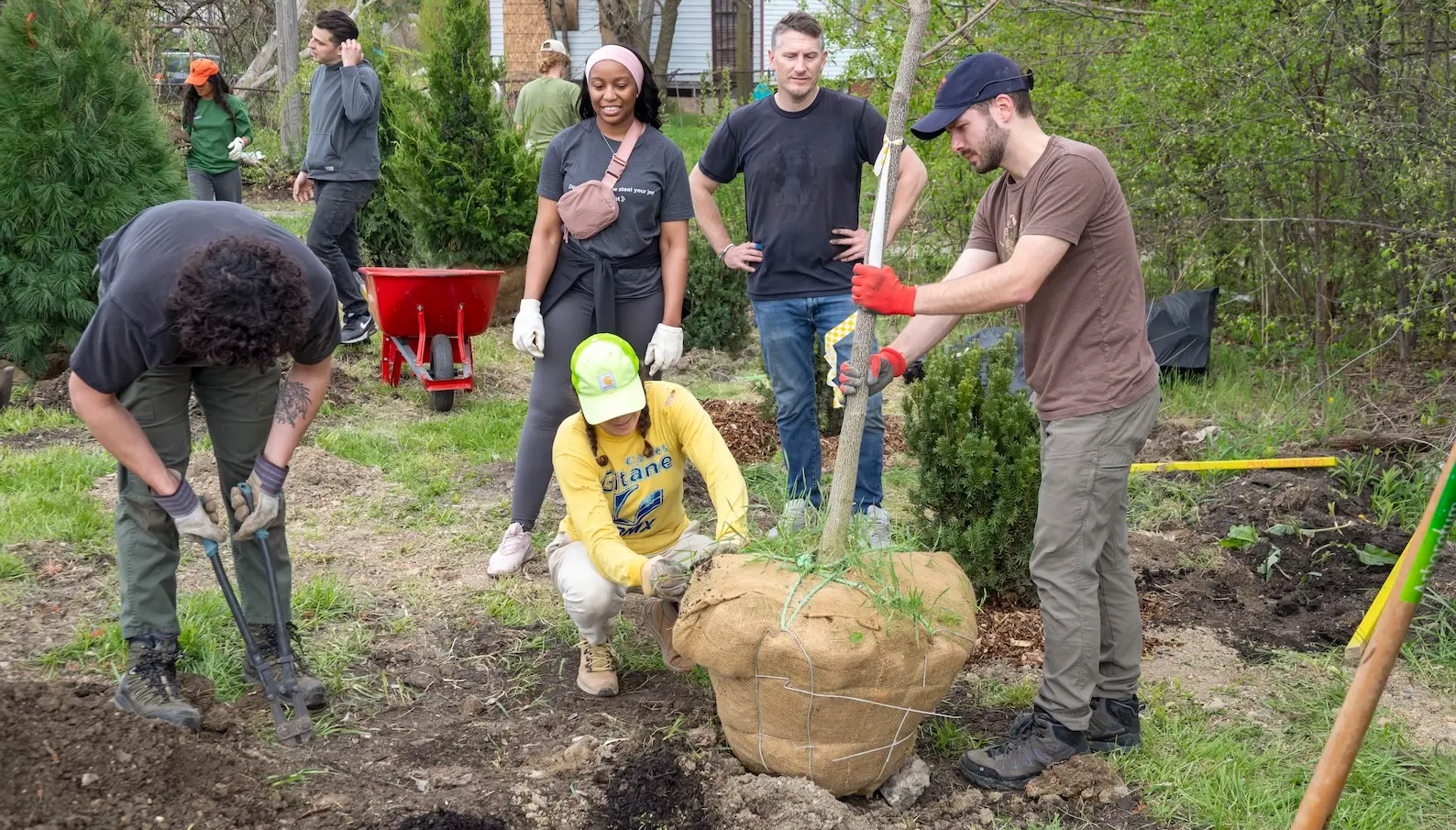
They tower overhead, sway in the wind, and are often filled with loud birds, yet trees are easy to ignore - especially for busy urbanites and, apparently, city leaders. In a new essay published today in PLOS Climate, dozens of scientists argue that mayors worldwide are missing the literal low-hanging fruit of urban forestry while pledging to cut emissions. "We have to elevate it from something that is nice to have to something that we require - like, mandatory," said Manuel Esperon-Rodriguez, an ecologist at Bangor University and lead author. "In the same way that we treat education, security, transportation, it has to be elevated to that level."
Why the urgency? Trees cool concrete jungles by providing shade and releasing water vapor (basically, they sweat for us). They also let stormwater soak into the ground instead of flooding streets - a trick that will save cities money as climate change makes rain more extreme. Parks boost mental health, urban farms produce food and jobs, and vegetation absorbs pollutants. The scientists propose a four-point plan covering funding, raising, and maintaining urban forests - including everything from sidewalk trees to backyard shrubs.
First hurdle: money. Urban forestry isn't just buying trees and digging holes; maintaining them costs, especially when young and vulnerable to pests. The researchers argue city governments should set aside a dedicated budget, treating green spaces as critical infrastructure. Even cash-strapped cities benefit: a recent report found every dollar spent on parks returns $3 in local economic benefits annually, thanks to healthier citizens and boosted tourism.
Second: equity. Richer neighborhoods are greener and cooler, while underserved areas suffer from the urban heat island effect - bad news for people without air conditioning. "Then what's the cost?" Esperon-Rodriguez asked. "They are missing opportunities, they are missing recreational activities. And if they don't have air conditioning, then on top of that there is the issue of health."
Third: community collaboration. Officials can't just roll in and plant trees. Some residents want fruit trees; others worry about cherry splats on sidewalks or pollen allergies. Fourth: enshrine expansion in legislation, not just campaign promises. "This is not only more durable," Esperon-Rodriguez said, but helps hold officials accountable if they miss targets.
Finally, campaigns must be evidence-based: choose species that survive rising temperatures, not just ones that look nice. "It's a way to secure that whatever we're planting today is going to survive the next 10, 20, or 50 years," Esperon-Rodriguez said. In other words, plant trees like your city's future depends on it - because it does.
The Good Times
News in your inbox.
One sardonic roundup, delivered on your schedule. Free. Unsubscribe whenever your tolerance for wit runs out.
Already subscribed but we never reach your inbox? Check your spam folder and hit 'Not spam' (or 'Remove from spam') to bust us out of junk-mail purgatory. You'll be helping everyone else too.
Don't open any of our emails for a month and you'll be automatically removed from the mailing list.
Rewrite Article
Select parts to regenerate with a fresh AI pass. Translations will be updated automatically.
Generate AI Image
Creates a sardonic version of the article image using OpenAI.