Scientists Find the 'Holy Grail' Gene for Limb Regrowth; Axolotls Remain Unimpressed
Scientists discover that axolotls, zebrafish, and mice share a gene program for limb regeneration - and are cautiously optimistic about one day making humans slightly less breakable.
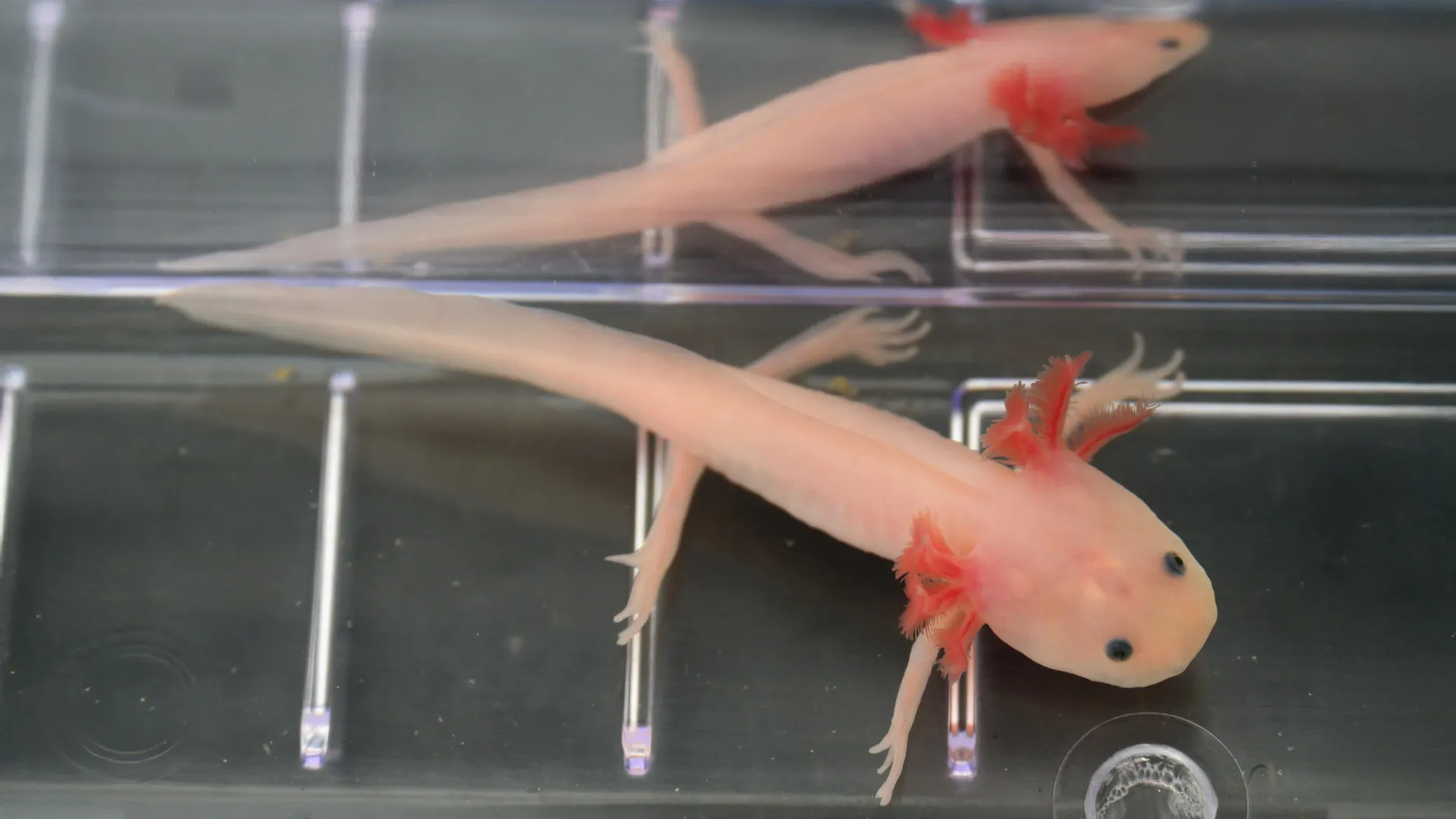
In a discovery that has salamanders everywhere refusing to share their secrets, scientists from Wake Forest University, Duke University, and the University of Wisconsin-Madison have identified a set of genes - dubbed SP genes - that orchestrate limb regeneration in axolotls, zebrafish, and mice. The findings, published in the Proceedings of the National Academy of Sciences, suggest that humans might one day regrow limbs, provided we first figure out how to not be so terrible at it.
“This significant research brought together three labs, working across three organisms to compare regeneration,” said Wake Forest Assistant Professor of Biology Josh Currie, whose lab studies the Mexican axolotl salamander - nature’s most dramatic comeback artist. “It showed us that there are universal, unifying genetic programs that are driving regeneration in very different types of organisms.”
Around the world, more than 1 million amputations occur every year due to diabetes, trauma, infections, and cancer, according to Global Burden of Disease statistics. Researchers expect that number to climb as populations age and diabetes becomes more common - because apparently, evolution hasn’t gotten the memo about proactive healthcare.
For years, scientists have searched for ways to replace prosthetics with actual working limbs. This new study points to the SP genes - specifically SP6 and SP8 - as the ringleaders of the regeneration circus. The team discovered that regenerating skin tissue in all three species activated these genes. Then, using CRISPR, they knocked out SP8 in axolotls and observed that the creatures could no longer regrow limb bones properly. Similar problems occurred in mice missing SP6 and SP8.
But here’s the hopeful part: Duke plastic surgeon David A. Brown’s lab designed a viral gene therapy that delivered a signaling molecule called FGF8 - normally activated by SP8 - to mice. The treatment encouraged bone regrowth in damaged digits and partially restored some regenerative abilities. It’s not quite a full limb, but it’s a start - like getting a free appetizer at a fancy restaurant.
“We can use this as a kind of proof of principle that we might be able to deliver therapies to substitute for this regenerative style of epidermis in regrowing tissue in humans,” Currie explained, carefully managing expectations.
Researchers caution that the work is still early, and far more studies are needed before mice get to retire their tiny prosthetics. Even so, Currie emphasized the collaborative spirit: “Many times, scientists work in their silos. A real standout feature of this research is that we work across all these different organisms. That is really powerful.”
The Good Times
News in your inbox.
One sardonic roundup, delivered on your schedule. Free. Unsubscribe whenever your tolerance for wit runs out.
Already subscribed but we never reach your inbox? Check your spam folder and hit 'Not spam' (or 'Remove from spam') to bust us out of junk-mail purgatory. You'll be helping everyone else too.
Don't open any of our emails for a month and you'll be automatically removed from the mailing list.
Rewrite Article
Select parts to regenerate with a fresh AI pass. Translations will be updated automatically.
Generate AI Image
Creates a sardonic version of the article image using OpenAI.