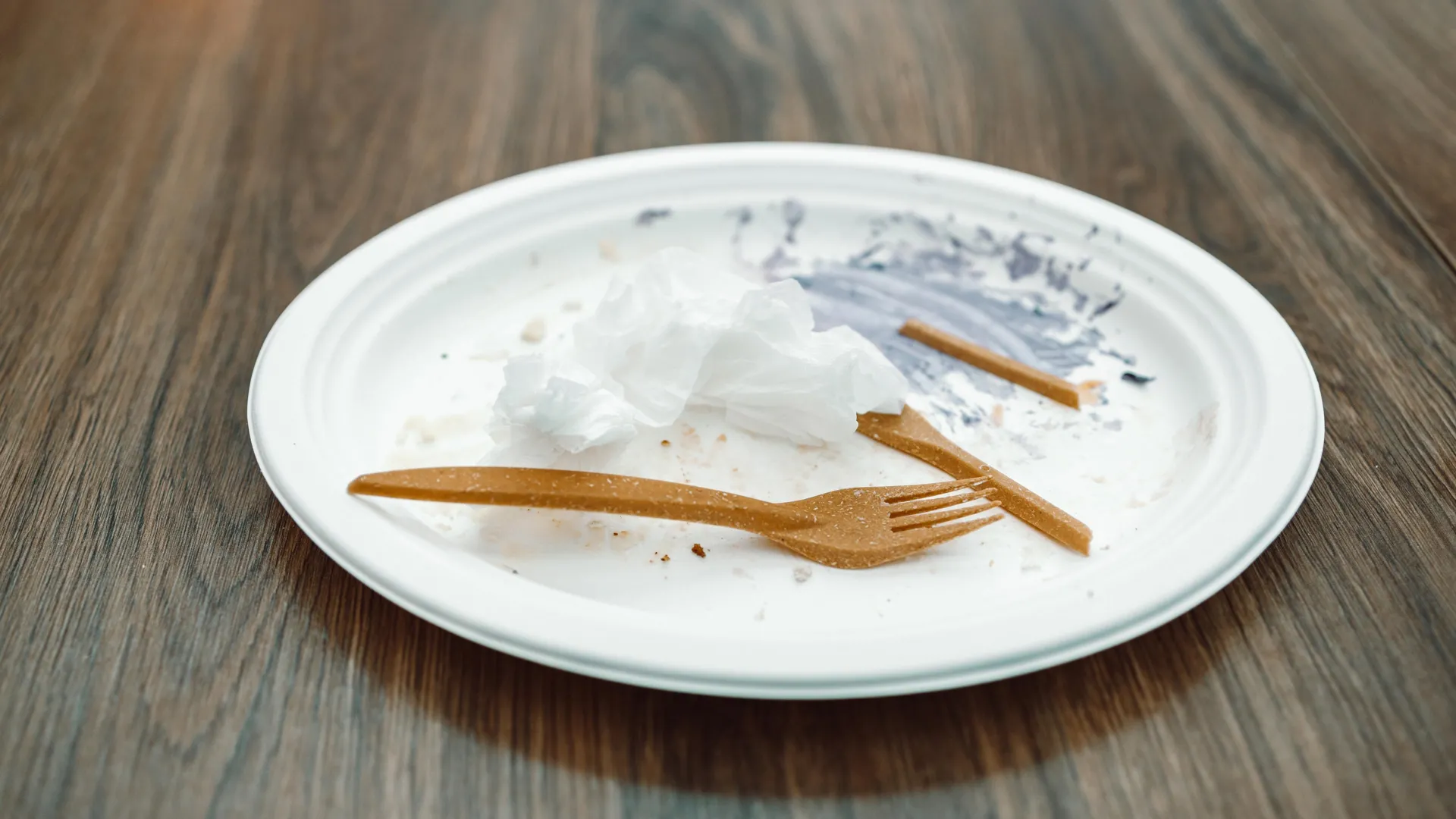
Scientists Create Plastic That Actually Disappears, Unlike Your Disappointment in Humanity
Researchers create plastic that biodegrades in six days via embedded bacterial spores, turning durability into a programmable feature - because why let plastic outlive your grandkids?
In a move that will delight environmentalists and confuse anyone who has ever tried to recycle a yogurt cup, researchers have created a 'living plastic' that self-destructs in six days without leaving behind those delightful microplastic particles we’ve all grown to love.
The study, published in ACS Applied Polymer Materials, describes a material embedded with dormant Bacillus subtilis spores. When activated by a nutrient broth heated to 122°F (50°C), the spores produce two enzymes that work together to chop the polymer polycaprolactone into its basic building blocks. The result: no microplastics, just a clean getaway.
Zhuojun Dai, a corresponding author, explained the thinking behind the project: 'Traditional plastics persist for centuries, while many applications, like packaging, are short-lived. So we thought, why not build degradation directly into the material’s life cycle?' Because, apparently, common sense is now a research breakthrough.
The living plastic boasts mechanical properties similar to ordinary polycaprolactone films, meaning it won’t fall apart while you’re using it - only when you want it to. The team even made a wearable plastic electrode that fully degraded within two weeks after activation, proving that even medical devices can learn to quit.
Next up: the researchers hope to develop a method that activates the spores in water, where most plastic pollution ends up. Because if there’s one thing the ocean needs, it’s more things that come alive and eat themselves.
The work was funded by a slew of Chinese research programs, because apparently nobody else thought to ask, 'What if plastic just… stopped?'
The Good Times
News in your inbox.
One sardonic roundup, delivered on your schedule. Free. Unsubscribe whenever your tolerance for wit runs out.
Already subscribed but we never reach your inbox? Check your spam folder and hit 'Not spam' (or 'Remove from spam') to bust us out of junk-mail purgatory. You'll be helping everyone else too.
Don't open any of our emails for a month and you'll be automatically removed from the mailing list.
Rewrite Article
Select parts to regenerate with a fresh AI pass. Translations will be updated automatically.
Generate AI Image
Creates a sardonic version of the article image using OpenAI.