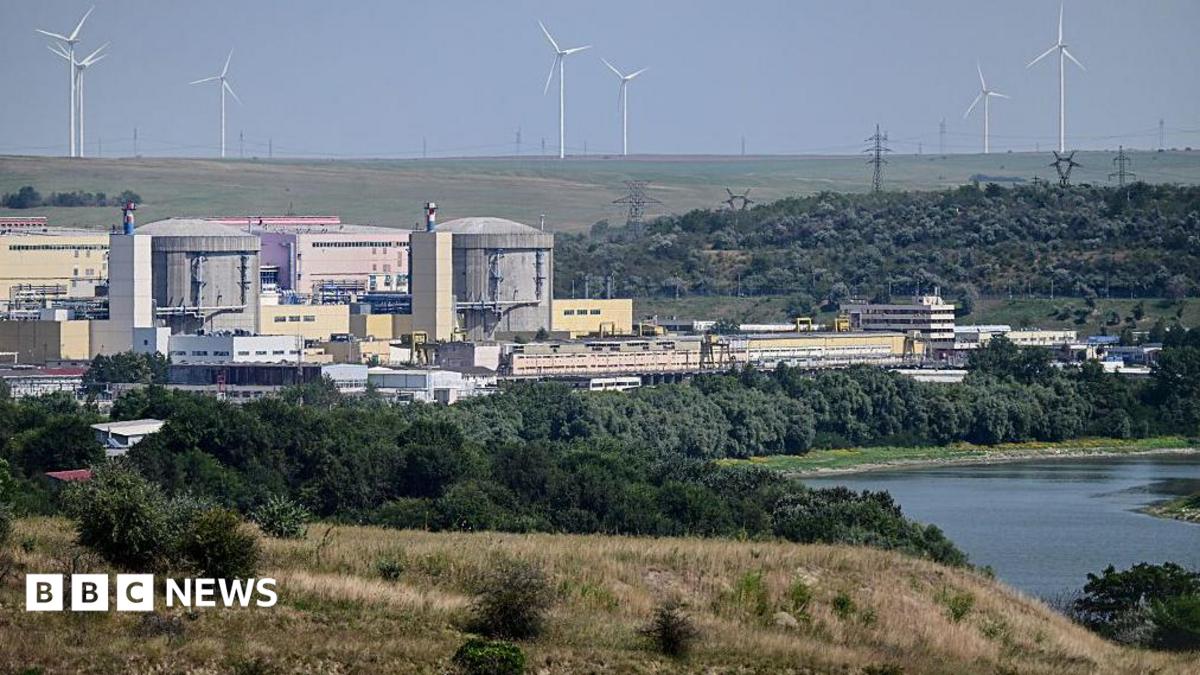
Romania has pulled the plug on its sole nuclear power station, and the culprit isn't a technical glitch or a regulatory spat - it's the Danube river running low on water after Europe's prolonged heatwave. The Cernavodă plant, home to two reactors that churn out about 20% of Romania's electricity, won't be firing up again for at least 10 days, according to plant director Romeo Urjan.
Earlier this week, in a move that screams desperation, authorities tried to coax more water toward the plant's cooling intake by sinking barges loaded with rocks into the river. Because nothing says 'solving a drought' like adding more obstacles to a shrinking waterway.
The second of the two 706-megawatt reactors was disconnected from the grid just before midday on Thursday. The first had already been shut down in July. This marks only the second shutdown in the plant's history - the first being back in 2003. So, you know, they're making history, just not the kind they'd like.
Meanwhile, Romania's neighbor Hungary is nervously eyeing its own Soviet-era nuclear plant in Paks, which also relies on Danube water for cooling. Prime Minister Péter Magyar warned last month that the plant, with its four reactors, might face its first-ever complete shutdown. Plant officials say the water levels are so low that the suction nozzles can't even reach the water. Because when your cooling system can't get a drink, you've got problems.
The Danube, Europe's second-longest river, has hit its lowest levels in 30 years across several countries. This isn't just a nuclear headache - it's a full-blown European crisis. The Rhine is also suffering, with low water severely limiting traffic. Agriculture is taking a beating: Italy's largest agricultural trade association, Coldiretti, estimates climate-related damage - hail, drought, wildfires - could exceed €3bn (£2.6bn; $3.5bn). France's Environment Minister Monique Barbut warns that recent heatwaves could cost €10bn to €15bn in direct and indirect costs. Even the Dutch bank Triodos is worried that extreme heat could wipe out much of the EU's projected economic growth - which the European Commission had forecast at 1.1%, and the IMF at 0.9% for the euro area.
And it's not just the economy. In Greece, more than 200 people, mostly tourists, were evacuated from resorts in Siviri and Fourka in the northern Halkidiki peninsula due to a raging wildfire. In France, as many as 80 departments are on heatwave alert, with temperatures expected to exceed 40°C (104°F) in some places on Friday. The country has seen more fire damage this year than any time since World War Two. Spain recorded temperatures as high as 37°C in central areas on Thursday, still recovering from recent deadly wildfires. The UK had its hottest day of the year so far, with the Met Office recording a provisional 38.1°C in London's Kew Gardens. Multiple fires burned across the West Midlands, injuring several people and destroying four homes.
Rain is expected in parts of the UK over the weekend, but the BBC climate and science team says it'll take more than a few showers to end the widespread drought. The Danube's low levels have even revealed remains of WWII soldiers and a motorcycle, because if you're going to have a historic drought, you might as well find some historic artifacts.
Climate change is driving up temperatures worldwide, but Europe is warming twice as fast as the global average, according to the Copernicus climate service. That means more heatwaves, more pressure on water resources, and more wildfires. So, while Romania's nuclear plant takes a forced vacation, the rest of Europe is left to sweat it out.
The Good Times
News in your inbox.
One sardonic roundup, delivered on your schedule. Free. Unsubscribe whenever your tolerance for wit runs out.
Already subscribed but we never reach your inbox? Check your spam folder and hit 'Not spam' (or 'Remove from spam') to bust us out of junk-mail purgatory. You'll be helping everyone else too.
Don't open any of our emails for a month and you'll be automatically removed from the mailing list.
Rewrite Article
Select parts to regenerate with a fresh AI pass. Translations will be updated automatically.
Generate AI Image
Creates a sardonic version of the article image using OpenAI.