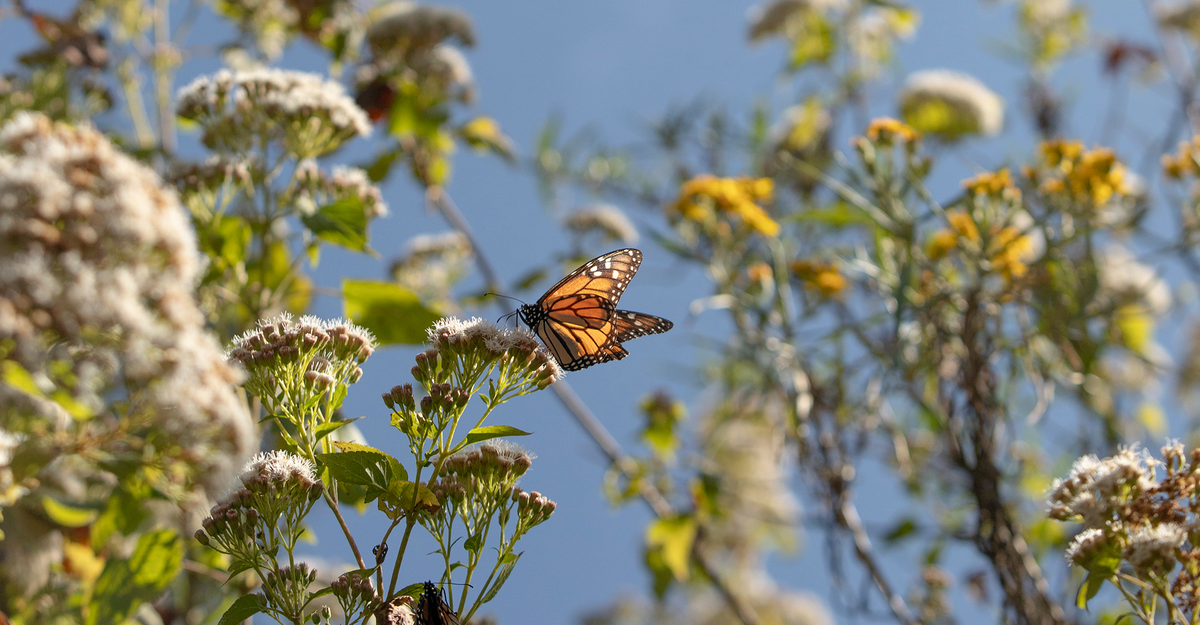
Monarch Butterfly Migration Shows Signs of Recovery, Which Is Great News for Anyone Who Loves Beauty and Butterflies
The author visits monarch sanctuaries in Mexico, finds the butterflies are doing slightly better thanks to conservation, and learns that some of them apparently enjoy Caribbean vacations.
The sky over El Rosario butterfly sanctuary, part of Mexico's Monarch Butterfly Biosphere Reserve, was alive with millions of fluttering shapes, their wings beating so hard the vibrations sounded like a distant waterfall. Your correspondent, having ridden a rust-colored mare named Pelucha to nearly 11,000 feet, could finally appreciate the sheer immensity of the monarch migration - a spectacle that has been happening for up to 20 millennia, long before humans decided to pave over much of its route.
Monarch migration is one of the longest annual cycles of movement on Earth, spanning thousands of miles from Canada to Mexico. Over the past half century, development, herbicides, global warming, and organized crime have made the journey increasingly hostile. Yet recent population estimates show an uptick for the past two years, thanks in part to conservation efforts across Mexico, the United States, and Canada. The butterflies persist because life's job is to live, and because within those thimble-size bodies hides a dynamo of survival that puts our most incredible machines to shame - though they could probably do without the eyelash glue used to attach trackers.
The monarchs' navigation relies on a biological compass that senses Earth's magnetic field, circadian clocks in their antennae, and eyes that detect light angles. They can fly 100 miles a day, congregate in clouds visible on weather radar, and have been spotted by glider pilots above 10,000 feet. They are, in the words of researcher Karen Oberhauser, "disturbance-adapted species" like rats or pigeons - which sounds less glamorous than it looks when they're roosting in oyamel firs.
But there are limits. Mexico's land-reform program in the 1930s led to forest clearing, the interstate system introduced car-on-butterfly violence, and Roundup Ready crops in the '90s wiped out milkweed from large-scale farms. Monarch colony area dropped from 45 acres in 1996 to fewer than two acres in 2013 - a plunge of some 170 million butterflies. Still, hope remains: new transmitter tags the size of a grain of rice, developed by Cellular Tracking Technologies, allow researchers to follow individual butterflies like Cinderella, Eric, and Carle (named by the author's 6-year-old daughter). The data may help identify invisible corridors in the air that the majority of monarchs follow, though some apparently enjoy Caribbean vacations or end up near oil platforms in the Gulf of Mexico.
The monarchs' return is partly due to dogged human partners who have given their lives - in every sense - to preserve nature. But mostly, it's because life's job is to live, and these butterflies have so far beaten the odds stacked against them. How forbidding those odds remain is still an open question, but for now, the sky is alive with millions of fluttering shapes, and that's something worth craning your neck for.
The Good Times
News in your inbox.
One sardonic roundup, delivered on your schedule. Free. Unsubscribe whenever your tolerance for wit runs out.
Already subscribed but we never reach your inbox? Check your spam folder and hit 'Not spam' (or 'Remove from spam') to bust us out of junk-mail purgatory. You'll be helping everyone else too.
Don't open any of our emails for a month and you'll be automatically removed from the mailing list.
Rewrite Article
Select parts to regenerate with a fresh AI pass. Translations will be updated automatically.
Generate AI Image
Creates a sardonic version of the article image using OpenAI.