Iran Deal Signed: Panel Discovers That Tech Is Now the Cool Kid on the Battlefield
Panel on Iran deal discovers that drones and AI are the new cool kids on the battlefield, making traditional military power look as obsolete as a fax machine.
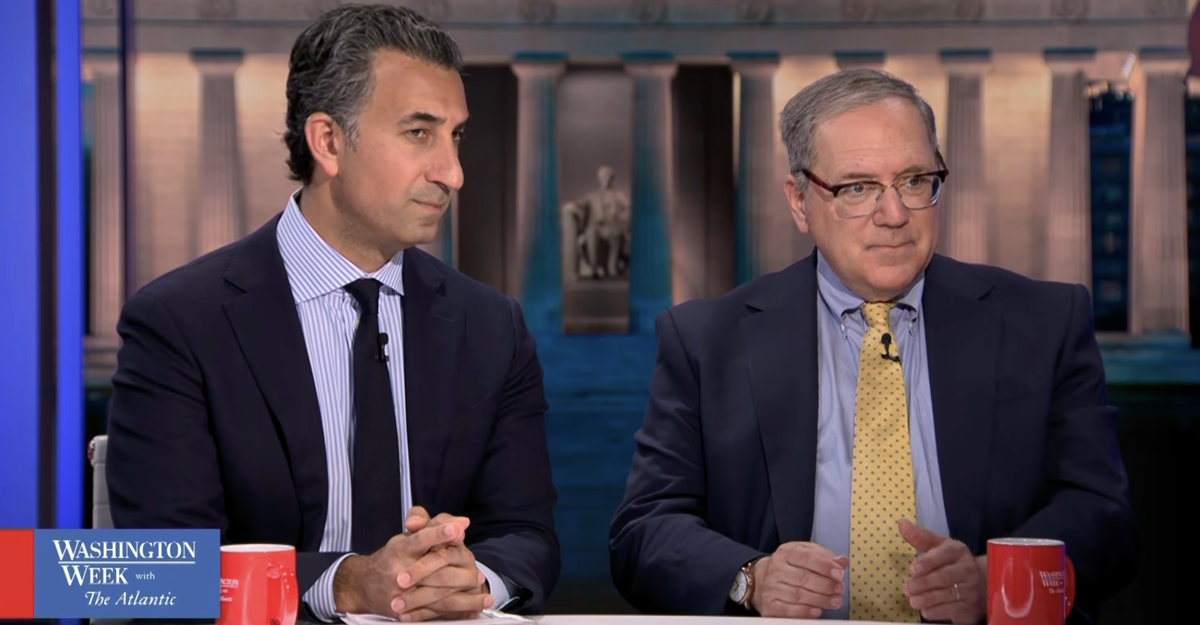
Last night on Washington Week With The Atlantic, a panel of experts gathered to dissect the newly signed U.S.-Iran agreement and ponder what Donald Trump's deal with the regime might mean for the rest of the world - because nothing says 'global stability' like a deal negotiated by a man who once suggested nuking hurricanes.
Nancy Youssef, a staff writer at The Atlantic, argued that the international community is watching both Iran and Ukraine and realizing that the era of big powers effortlessly squashing weaker nations might be over. 'This idea of large powers coming in and definitively defeating other weaker nations is not necessarily the case anymore,' she said, suggesting that David might finally have a slingshot that actually works against Goliath.
Youssef noted that technology is becoming 'an equalizer on the battlefield,' which is a polite way of saying that drones and AI are making old-school tanks look as outdated as a flip phone at a tech conference. Going forward, militaries worldwide - including the U.S. - will need to assess their technological capabilities, particularly in drone and AI advances, to keep up with the 'rapid moving and changing battlefield dynamic.' Because nothing says 'peace in our time' like an arms race in autonomous killing machines.
The panel also featured Jeffrey Goldberg (The Atlantic's editor in chief), Jonathan Karl (ABC News), Karim Sadjadpour (Atlantic contributor and Carnegie Endowment senior fellow), David Sanger (New York Times), and Youssef - a lineup that screams 'we take this seriously,' even if the topic involves a deal with a regime that still chants 'Death to America' over breakfast.
The Good Times
News in your inbox.
One sardonic roundup, delivered on your schedule. Free. Unsubscribe whenever your tolerance for wit runs out.
Already subscribed but we never reach your inbox? Check your spam folder and hit 'Not spam' (or 'Remove from spam') to bust us out of junk-mail purgatory. You'll be helping everyone else too.
Don't open any of our emails for a month and you'll be automatically removed from the mailing list.
Rewrite Article
Select parts to regenerate with a fresh AI pass. Translations will be updated automatically.
Generate AI Image
Creates a sardonic version of the article image using OpenAI.