
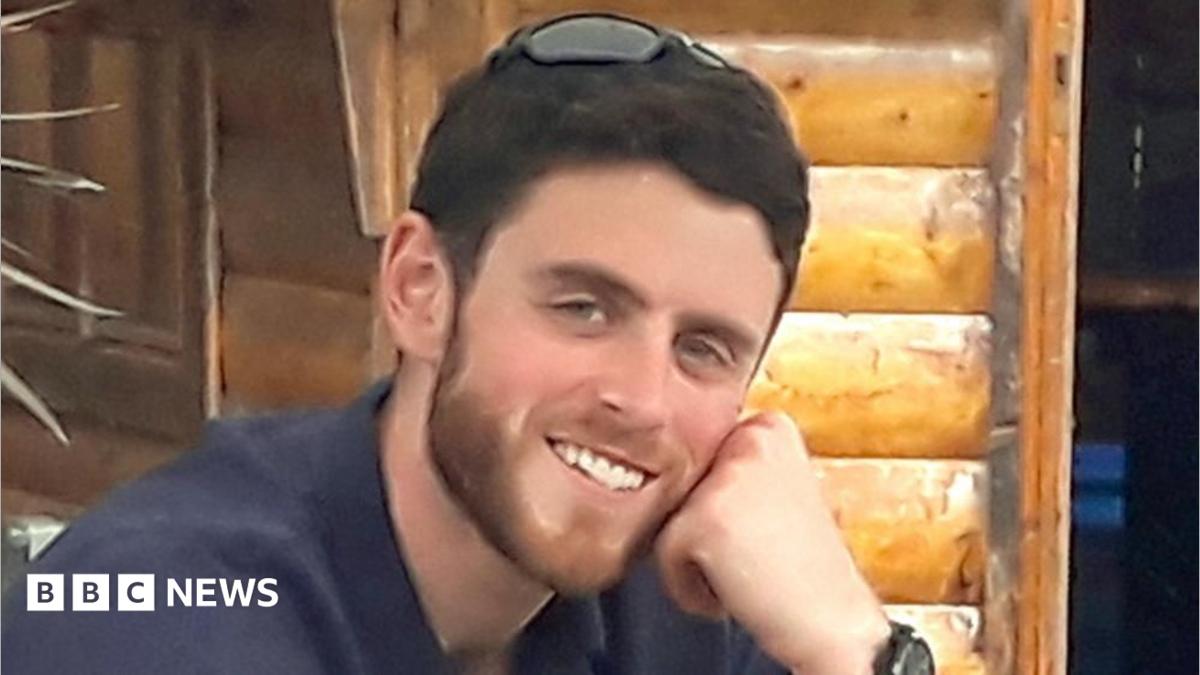
In a move that will surprise absolutely no one who has been paying attention to the UK's prison system for the past decade, Justice Secretary Alex Norris has announced that the government can't be too generous with early releases because the prisons are too crowded. The revised early release scheme for England and Wales will now exclude rapists, groomers, and serious child sex offenders, but the mother of PC Andrew Harper is "devastated" that the two men jailed for manslaughter after her son's death will still be eligible for early release.
PC Harper, 28, was killed in 2019 when he was dragged by a car down a country road as three teenagers fled the scene of a quad bike theft in Berkshire. Henry Long, the driver, received a 16-year sentence and won't be eligible. But passengers Jessie Cole and Albert Bowers, each sentenced to 13 years for manslaughter after a trial at the Old Bailey in 2020, will become eligible for release after serving half their sentences. Prime Minister Andy Burnham, who became PM on 20 July, had promised to "review the policy" after backlash, but as he told the BBC, he'd like to go even further - except that would collapse the prison system and put the public "at much greater risk." So, you know, small mercies.
Debbie Adlam, PC Harper's mother, told BBC Newsnight: "It feels like we're letting Andrew down again" and "I just feel really let down, for Andrew's sake as well as ours." She added that Norris had called to apologise, and on BBC Breakfast she called for more support from the probation service, stressing: "I need to know at the very, very least if they are going to be released that we're kept in mind of what's happening and we are informed." Lissie Harper, PC Harper's widow, said it was "disgusting" and that she was "beyond appalled and bristling with anger to hear that Andrew's killers are soon to be free to roam the streets." Thames Valley Police Chief Constable Jason Hogg called the decision "demoralising for all police officers."
The government's plan involves 5,000 extra releases on top of the 4,500 prisoners who typically leave each month, in 10 batches starting in October. But the Prison Governors' Association (PGA) said it's "unclear" how many prisoners will have their sentences recalculated: "We don't know if it is tens, hundreds or thousands." The justice secretary told the Today programme that approximately 1,000 prisoners will now not be released early following the revision. "If we drew it any wider we would have a prison capacity crisis," Norris explained. Because apparently that's the line we're drawing now.
The Sentencing Act was amended in January, making early release eligibility based on the length of fixed sentence rather than the type of offence. The act already excluded murderers serving life sentences and those on extended sentences. Under the revised plans, rape and child sexual offences will now also be excluded, without requiring changes to the existing legislation before October. Offenders of other crimes serving sentences of four years or more will be eligible for release halfway through their sentences rather than two-thirds, and those with less serious sentences could be freed after a third of their time, rather than half. The changes are phased in, starting with prisoners serving sentences of less than 575 days, and by June 2027, those jailed for 12 years or more could be eligible. The number released each time will depend on the prison population's make-up, which the government says will evolve - a comforting thought.
Separately, those who serve their full sentence and are convicted of rape or serious child sex offences will face stronger surveillance after leaving prison, including 12 months of GPS monitoring and strengthened community supervision. The government also announced an extra £10m for front-line victim support services, including a new national helpline.
Burnham made the announcement a day before going on holiday overseas, because nothing says "I'm taking this seriously" like jetting off. He is staying in contact with officials, the BBC understands. Conservative leader Kemi Badenoch wasn't impressed, posting on social media: "Andy Burnham wants a round of applause for agreeing not to release rapists and child sex offenders. He's not getting one," adding that "yet again victims are learning their fate from press releases" and warning that "killers, violent offenders, men who have terrorised their partners and more" will still leave prison early.
A prison officer told the BBC they were "creaking at the seams" and that "delaying the releases until October could mean we simply run out of space." The Victims' Commissioner for England and Wales, Claire Waxman, accepted the exemptions will feel "like a real injustice" for PC Harper's family, but called on the prime minister to show "proper leadership," adding "we seem to keep going from crisis to crisis and it's always victims and bereaved families that pay the price." Pia Sinha, chief executive of the Prison Reform Trust, said there were "no happy solutions," noting that by 2029 there will still be a mismatch between supply and demand: "If we keep adding exceptions and exemptions to that, we will diminish the number of people that can be released and we will be back within months to another capacity crisis." Domestic Abuse Commissioner Dame Nicole Jacobs criticised the decision not to exclude domestic abuse perpetrators: "It is critical that no abuser is released in October unless I am confident that victims' safety is not being compromised."