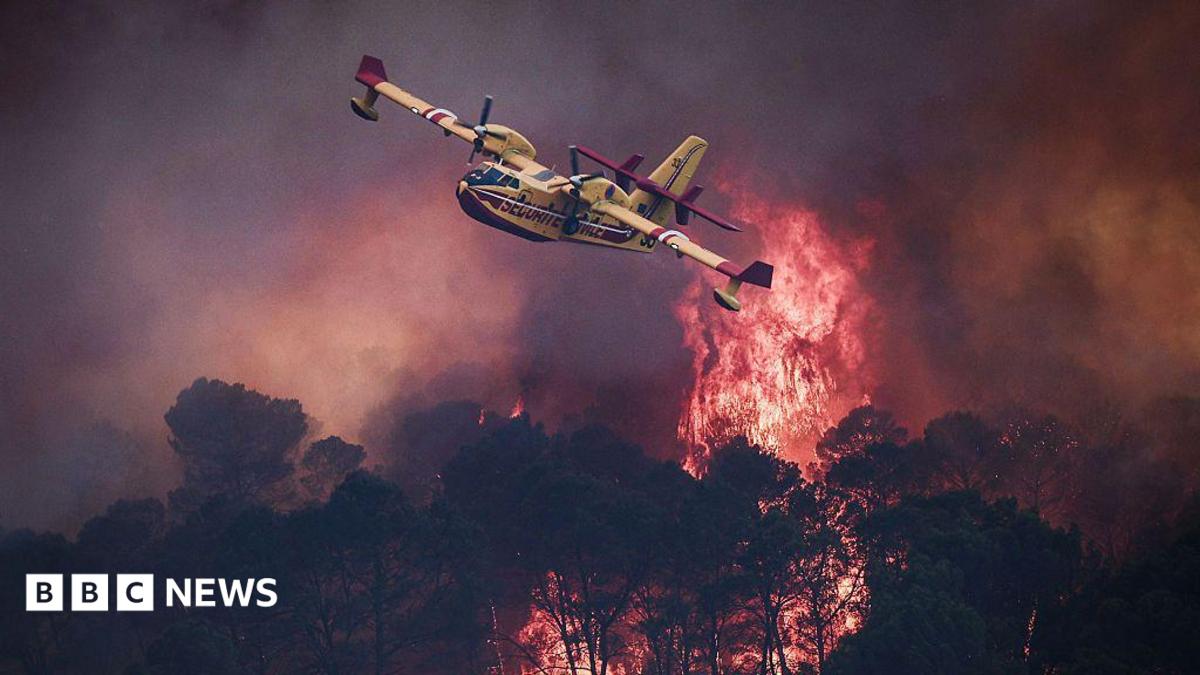
Europe's Summer Fun Continues: Wildfires Force 300,000 to Evacuate, Create Own Thunderstorms
Europe's summer of heatwaves continues as wildfires in France and Spain force mass evacuations, create their own thunderstorms, and threaten military sites - because of course they do.
Wildfires are currently treating France and Spain to a scorching summer show, forcing over 300,000 people to evacuate their homes. France is experiencing its worst wildfires in two decades, while Madrid officials are calling theirs the region's worst ever. This follows a sweltering summer of heatwaves that have pushed temperatures above 40°C (104°F) in many places.
In France, the Gironde region around Bordeaux is the hardest hit, with over 200,000 people fleeing. The blaze has torn through forests and fields in France's famous wine country, burning over 162 square miles (420 square km) in less than four days - an area roughly four times the size of Paris. It now sits just nine miles (15km) from southern Bordeaux. The fires have also threatened sensitive military and industrial sites, including facilities handling French ballistic missiles, rocket motors, and hazardous chemicals.
Satellite imagery shows vast areas of scorched earth, with smoke drifting inland. The fires have become so extreme they've created their own giant fire thunderstorm - a rare weather event where heat from the wildfires makes air rise rapidly, carrying smoke and water vapor high into the atmosphere. If the cloud grows large enough, it can produce lightning that starts new fires, occasionally bringing hail and rain. These conditions make the fires even harder to stop.
To combat them, French firefighters are using planes loaded with fire retardant and Canadair planes that can scoop 6,000 liters of water from lakes or the sea in 12 seconds. On dangerous days, loaded aircraft patrol high-risk areas before fires are reported, ready to drop within minutes. In Gironde, about 2,500 firefighters, 1,500 military personnel, and 1,200 police officers and gendarmes are involved. Near Lacanau, bulldozers and diggers have carved a firebreak 100 meters (328 feet) wide at points.
Spanish teams are using similar techniques for their wildfires, which are on track to be the worst in two decades. Francisco Martin, a government delegate in Madrid, called them "undoubtedly the largest fire in the history of the Madrid region." This summer's fires are aided by hotter, drier conditions from climate change, which allow fires to spread faster and burn fiercer. Many on the ground fear worsening conditions as high pressure brings dry, settled, and increasingly hot temperatures in the coming week.
The Good Times
News in your inbox.
One sardonic roundup, delivered on your schedule. Free. Unsubscribe whenever your tolerance for wit runs out.
Already subscribed but we never reach your inbox? Check your spam folder and hit 'Not spam' (or 'Remove from spam') to bust us out of junk-mail purgatory. You'll be helping everyone else too.
Don't open any of our emails for a month and you'll be automatically removed from the mailing list.
Rewrite Article
Select parts to regenerate with a fresh AI pass. Translations will be updated automatically.
Generate AI Image
Creates a sardonic version of the article image using OpenAI.