UN Security Council Discovers That Digging Up Rocks Might Cause Problems
The UN Security Council holds a debate on critical minerals, discovering that digging stuff up in unstable places might lead to problems - and decides to form a group to talk about it.
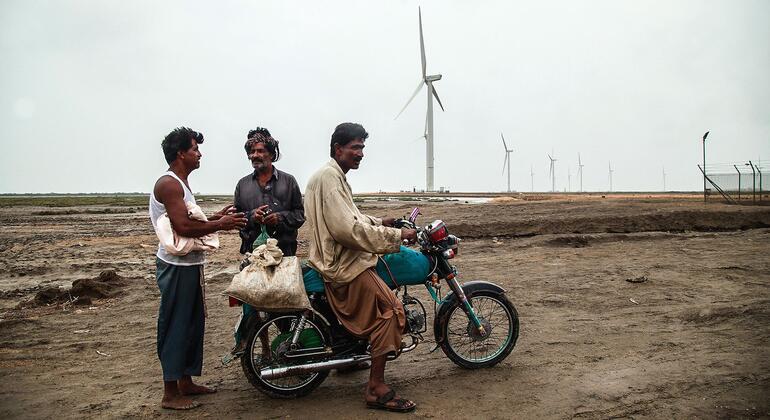
The world needs more critical minerals than ever before for electric vehicles, wind turbines, solar panels, batteries and smartphones - all essential for the global shift away from fossil fuels. Unfortunately, many of these minerals are found in countries where 'conflict, weak governance or poverty' are the local specialties. If poorly managed, these resources can fuel corruption, finance armed groups, damage the environment, and leave local communities exactly where they started: nowhere.
Those competing realities dominated a day-long debate in the UN Security Council on Wednesday, where ministers and diplomats asked a simple but increasingly urgent question: How can the world ensure the race for critical minerals powers the clean energy transition without also driving conflict? The meeting marked a clear shift in framing - critical minerals are no longer just an economic issue but a question of peace, security, justice, and shared prosperity. The strongest message to emerge? The minerals powering the clean energy transition should benefit producing countries and local communities, not finance conflict, criminal networks, or a new era of 'we take, you suffer.'
'Countries and communities must benefit, first and most, from the resources in their own backyard,' said one delegate. 'No more exploitation. No more plundering,' added another. 'We cannot allow this region once again to bear the environmental and social costs of extraction that colonialism taught us,' lamented a third. In a particularly poetic moment, someone noted that 'a diamond can fund a classroom, or it can fuel a militia. A forest can sustain a community, or it can finance a war. Geology does not choose. Governance does.'
No formal Security Council resolution or binding plan was adopted - because why rush into action when you can have broad political convergence? But the current Security Council president, the Democratic Republic of the Congo, proposed a Group of Friends on the Governance of Natural Resources as a possible follow-up mechanism. The Group would bring together 'interested' UN Member States, organizations, and civil society to 'sustain permanent dialogue, share best practices, and formulate proposals.' In other words, they'll talk about it some more.
The Good Times
News in your inbox.
One sardonic roundup, delivered on your schedule. Free. Unsubscribe whenever your tolerance for wit runs out.
Already subscribed but we never reach your inbox? Check your spam folder and hit 'Not spam' (or 'Remove from spam') to bust us out of junk-mail purgatory. You'll be helping everyone else too.
Don't open any of our emails for a month and you'll be automatically removed from the mailing list.
Rewrite Article
Select parts to regenerate with a fresh AI pass. Translations will be updated automatically.
Generate AI Image
Creates a sardonic version of the article image using OpenAI.