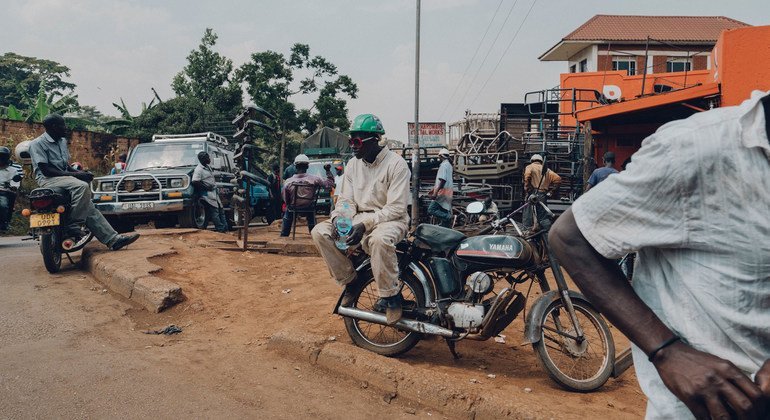
Uganda is cultivating a new cash crop: fear. According to the UN Human Rights Office (OHCHR), the country's post-election landscape has become a veritable garden of intimidation, with opposition supporters, journalists, human rights defenders, and civil society groups all finding themselves at heightened risk of abuse.
Since the January general election, reports of enforced disappearances, torture, arbitrary arrests, and other human rights violations have spiked against those perceived as government critics. OHCHR reports that at least 50 opposition leaders and supporters, five human rights defenders, and five journalists have reportedly been subjected to abuses in recent months. Because nothing says 'democracy' like making critics vanish.
The authorities have also leaned on legal provisions that - surprise, surprise - don't quite meet international human rights standards, to detain critics. This has added a legal veneer to the atmosphere of intimidation, which is almost considerate of them.
Civil society hasn't been spared either. Ten leading organizations have been suspended this year, while others face heightened scrutiny and harassment, effectively shrinking the civic space and muting independent voices. It's almost as if they're trying to make the term 'civil society' an oxymoron.
“The actions of the authorities are creating a climate of fear that is increasing self-censorship, further stifling public debate and deepening polarization,” said UN High Commissioner for Human Rights Volker Türk, who apparently has a knack for stating the obvious.
OHCHR also warns that increasing military involvement in civilian institutions, combined with restrictions on freedom of expression, peaceful assembly, and association, is eroding the rule of law and encouraging widespread self-censorship. As civic space shrinks, many Ugandans are becoming reluctant to speak out, presumably because they've noticed what happens to those who do.
Türk called on the government to abide by its obligations under international human rights law, the African Charter, and the Ugandan Constitution to ensure a vibrant civil society where everyone can freely express their views. He also urged authorities to address broader economic and social challenges through a human rights-based approach that promotes inclusion, accountability, and equal opportunities. Because apparently, that's a thing some countries do.
The Good Times
News in your inbox.
One sardonic roundup, delivered on your schedule. Free. Unsubscribe whenever your tolerance for wit runs out.
Already subscribed but we never reach your inbox? Check your spam folder and hit 'Not spam' (or 'Remove from spam') to bust us out of junk-mail purgatory. You'll be helping everyone else too.
Don't open any of our emails for a month and you'll be automatically removed from the mailing list.
Rewrite Article
Select parts to regenerate with a fresh AI pass. Translations will be updated automatically.
Generate AI Image
Creates a sardonic version of the article image using OpenAI.