Rocket Report: India's Vikram-1 Sets Date; AST SpaceMobile Mulls Becoming a Rocket Company to Avoid Rocket Problems
SpaceX scrubs Starship, India sets a date, China catches a booster, Japan dreams big, and AST SpaceMobile might buy a rocket company because launch delays are annoying.
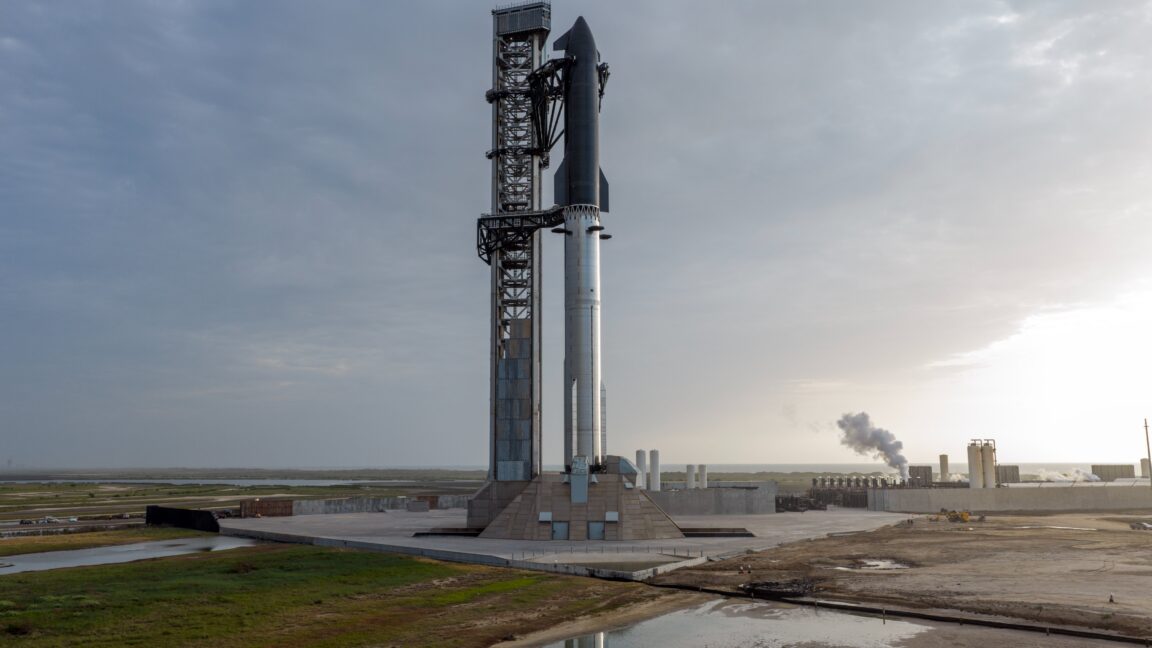
Welcome to Edition 9.03 of the Rocket Report, where SpaceX's Starship decided to play hard to get on Thursday evening in South Texas. A handful of Raptor engines refused to light at ignition, scrubbing the launch. It's unclear whether the vehicle can be fixed at the pad or if de-stacking is required - either way, a few days' delay beats an unscheduled rapid disassembly in flight.
India's Vikram-1 rocket finally has a launch date: July 18 at 11:30 am local time. Skyroot Aerospace will attempt the first commercial orbital launch from India, carrying small satellites weighing up to 350 kg to a 450 km orbit. The payloads include tech demos from Grahaa Space, Cosmoserve, DCubed, and Skyroot's own SCOPE, plus Cosmos Diamonds' artwork "Cosmic Bloom" and a micro-art piece. Skyroot CEO Pawan Kumar Chandana said they've done all possible ground tests and are eager to see how Vikram-1 performs in real flight - because nothing builds character like a first test flight.
Japan conducted a rocket landing test with its experimental reusable RV-X rocket, which ascended to about 11 meters, translated 16 meters horizontally, and landed after 40 seconds. JAXA is developing the vehicle for reusable launch technology, and it looks a bit like the DC-X and Starhopper had a baby. Data will feed into the CALLISTO project with French and German partners.
Down Under, Spinifex Space launched (pun intended) to provide suborbital test ranges in southwestern Queensland. The company spun out of Black Sky Industries and offers land and licenses for static-fire tests, hypersonic vehicles, and destructive testing - basically, a playground for rocket scientists. The closest alternative is Woomera, the government range where Australia tests missiles.
China joined the reusable booster club: the Long March 10B landed on an offshore platform last Friday, caught by tensioned cables after descending from space. The upper stage deployed the mysterious CX-26 payload. Chinese officials called it a "complete success," which is what you'd expect them to say even if the booster had landed upside down.
AST SpaceMobile, the direct-to-cell satellite company, announced plans to offer $1 billion in convertible notes, spooking investors into a 10% stock drop. The company wants more rockets to launch its BlueBird satellites, and is considering acquisitions to vertically integrate - because nothing says "we need more rockets" like buying a rocket company. This follows a failed New Glenn static-fire test that grounded a BlueBird launch.
Japan wants to ramp up launches to 30 per year by the early 2030s, which is ambitious given they've only managed two orbital launches in 2026 so far. One H3 variant flew a test flight on June 11 (a return to flight after a December failure), and the other was the failed Kairos flight on March 4. Officials suggest hosting foreign rockets to meet the goal.
ESA awarded a contract to launch its Henon CubeSat on an Ariane 6 in early 2027, as a secondary passenger on the PLATO exoplanet-hunting mission. ESA confirmed that up to four 16U CubeSats can fit in that launch architecture. Henon will use a miniaturized electric propulsion system to reach a distant retrograde orbit around the Sun - because regular orbits are too mainstream.
SpaceX's Starship test flight was scrubbed when a handful of Raptor engines failed to light at ignition. Elon Musk said the next attempt will happen "hopefully" in a few days. This flight was to deploy 20 Starlink V3 satellites (non-operational) to test laser links with other spacecraft. If successful, it'll validate interoperability with previous-gen Starlinks.
Ars Technica analyzed what it would take to build SpaceX's proposed 1 million-satellite megaconstellation. The key factor: cheap access to space. Optimistic scenario: 17,500 Starship launches and $1.45 trillion. Pessimistic: 77,000 launches (42 per day for five years) and $9.8 trillion. So, you know, pocket change.
NASA's SunRISE mission, originally slated for ULA's Vulcan, will now launch on a SpaceX Falcon Heavy. The six SmallSats will operate as a giant radio dish above geosynchronous orbit to track solar radio bursts. No launch date announced yet, but at least they've got a ride.
Upcoming launches: July 16 - Starship Flight Test 13 from Starbase, Texas; July 18 - Vikram 1 Aagaman test flight from India; July 20 - Falcon 9 Starlink 17-39 from Vandenberg.
The Good Times
News in your inbox.
One sardonic roundup, delivered on your schedule. Free. Unsubscribe whenever your tolerance for wit runs out.
Already subscribed but we never reach your inbox? Check your spam folder and hit 'Not spam' (or 'Remove from spam') to bust us out of junk-mail purgatory. You'll be helping everyone else too.
Don't open any of our emails for a month and you'll be automatically removed from the mailing list.
Rewrite Article
Select parts to regenerate with a fresh AI pass. Translations will be updated automatically.
Generate AI Image
Creates a sardonic version of the article image using OpenAI.