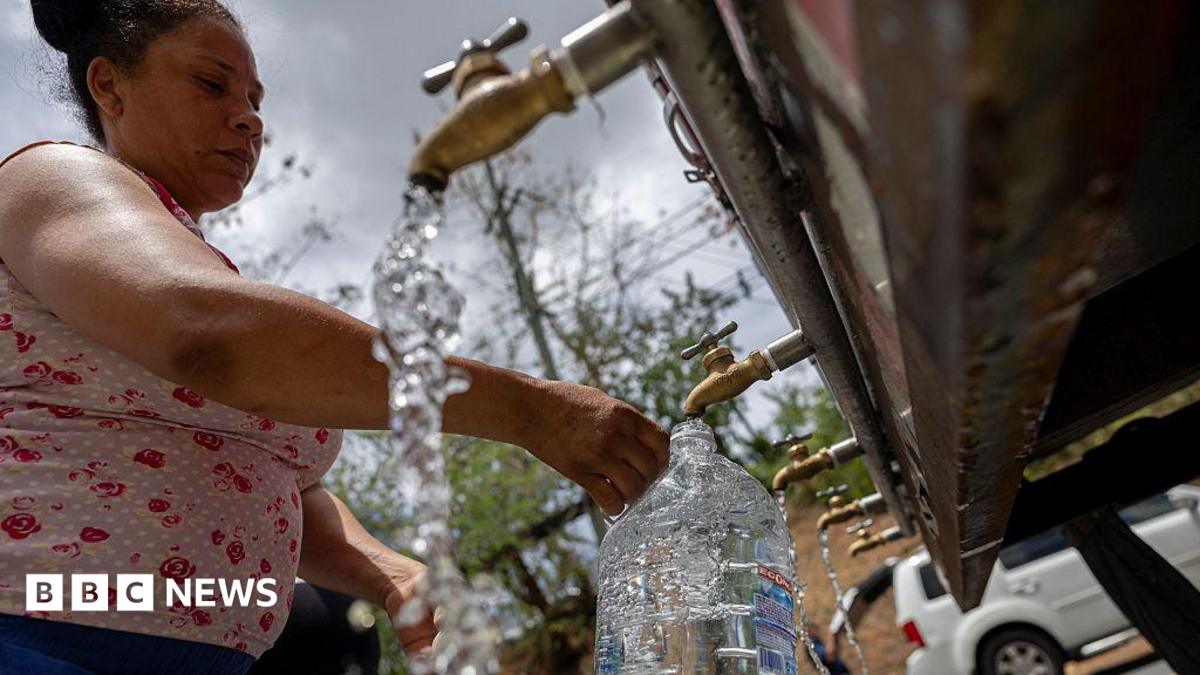
Puerto Rico Turns Off Taps, Turns On the Drama: Water Rationing Hits 180,000 Properties
Puerto Rico's drought has turned water into a luxury item, with rotating shut-offs and leaky pipes - because who needs running water when you have climate change?
Hundreds of thousands of Puerto Ricans are now living the '48 hours on, 48 hours off' lifestyle, and not in a fun, trendy way. The US territory has implemented rotating water shut-offs to combat a drought so severe that even the taps are throwing in the towel.
Residents in San Juan, where the water was turned off on Friday, are not amused. 'It's unbelievable to live through this today,' said local Gloriany Baba, calling the conditions 'brutal.' The government hasn't hinted at an end date, because why would they?
According to the US Drought Monitor, most of the island is in moderate to severe drought, a situation made worse by infrastructure that's seen better decades. The water authority admits about 65% of the water it produces vanishes into thin air - or more accurately, into leaky pipes and unpaid bills. Governor Jenniffer González acknowledges the aging infrastructure but insists the rationing is Mother Nature's fault, pointing to the depleted Carraízo reservoir. July was the driest on record, with 68% of the island officially parched.
Seven regions that rely on the reservoir are affected, with 180,000 properties facing the chopping block. González says the decision came after 'carefully evaluating' the situation and weather forecasts, adding, 'This situation is beyond our control.' Experts had warned about this weeks ago, but who listens to experts?
Residents are now queuing at water tanker trucks, filling up bottles like it's the apocalypse. There's also some confusion about who gets water when - the Morcelo area, promised water on Friday, reportedly got nothing. 'People are uncertain because they know we're in the 48-hour window where we're supposed to have drinking water,' said community leader Rubén Torres. 'The first 24 hours have already passed and the water hasn't arrived.'
Beyond the obvious lack of rain and crumbling pipes, experts point to sediment clogging reservoirs. This isn't the first rodeo: similar rationing happened in 2020 and 2015, when 400,000 households got water every third day.
Puerto Rico knows a thing or two about extreme weather, thanks to climate change. Hurricane Maria in 2017 devastated the island's grid and killed thousands, and scientists say climate change made its rainfall more likely. Governor González also mentioned over 1,000 wildfires currently burning and hinted that rain might return once a Saharan dust cloud moves along. The US federal government is 'helping out,' she said, without specifics. FEMA has yet to comment, probably because they're busy dealing with the fallout.
Meanwhile, the island's electricity grid is still recovering from a New Year's Eve blackout, because why not pile on?
The Good Times
News in your inbox.
One sardonic roundup, delivered on your schedule. Free. Unsubscribe whenever your tolerance for wit runs out.
Already subscribed but we never reach your inbox? Check your spam folder and hit 'Not spam' (or 'Remove from spam') to bust us out of junk-mail purgatory. You'll be helping everyone else too.
Don't open any of our emails for a month and you'll be automatically removed from the mailing list.
Rewrite Article
Select parts to regenerate with a fresh AI pass. Translations will be updated automatically.
Generate AI Image
Creates a sardonic version of the article image using OpenAI.