One Year After Texas Floods, Home Feels Further Away Than Ever - And So Does the 'Garden of Eden'
A year after devastating floods, a Texas family is still living in donated RVs, battling permitting rules, insurance gaps, and form fatigue - because apparently surviving the storm was the easy part.
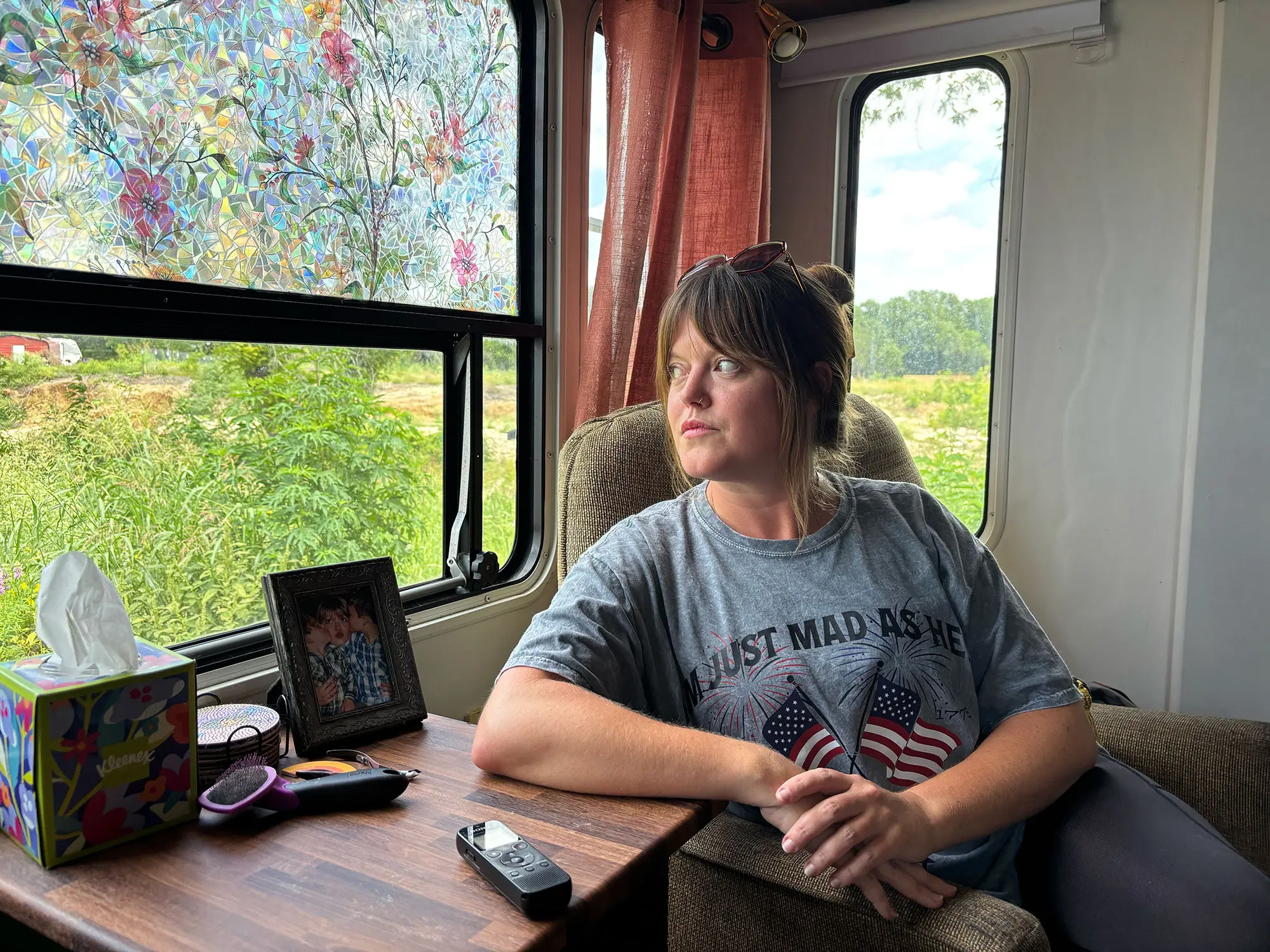
When rain falls on the RVs that line Big Sandy Creek, it sounds like gunfire. The harder it pours, the louder it gets. But what bothers Ashlee Willis most is how the wind makes them sway. She cowers in her camper’s narrow hallway with her two frightened cats, a Taylor Swift blanket stuffed into their carrier in case they have to flee - a not-so-subtle reminder of the night last July when her mobile home actually bobbed after water tore it from its foundation.
It was supposed to be a joyful July 4th celebration. Willis and her parents, Brandy and Gregg Gerstner, bought “a bajillion” glow sticks for the above-ground pool and had fireworks ready. Rain dashed those plans, so everyone went to bed. By 2:30 a.m., the storm was so violent it shook Brandy and Gregg awake. The creek rose fast; they scrambled to save goats, pigs, dogs, and cats. Gregg waded through the torrent, saved a couple of people, but couldn’t reach Willis, who climbed onto a pool table with five other guests and two cats as water filled her home. She called her mother to say goodbye. “There was no way to comprehend how we were going to survive,” Willis said. Then the water suddenly receded. They used glow sticks to spell “Help” in the windows and sang “The Sun Will Come Out Tomorrow.” It did - but their world was remade. “It’s all gone,” Willis said. “Everything’s gone.”
One year later, the family is still waiting to rebuild. So is the rest of the community. After seven weeks in a hotel, they moved into donated RVs - now parked no more than 30 feet from Big Sandy Creek, closer than before. Gregg monitors water levels with security cameras. The flood killed 10 people in Sandy Creek and destroyed 74 homes. Across central Texas, 139 people died and $1.1 billion in property damage was recorded.
The recovery, it turns out, is a bureaucratic horror show. Travis County is enforcing permitting rules it rarely bothered with before - requiring homes in floodplains to be elevated at least 2 feet above the 100-year flood line. For the Gerstner-Willis family, that means building 12 feet in the air with a lift, adding more than $100,000 to the tab. “I would say 98 percent of the people out here are not going to be able to afford their houses to be raised,” Brandy Gerstner said. Only 2.4 percent of affected households had flood insurance. FEMA gave $4.3 million to 1,212 households, capped at $43,600 each - enough to stabilize, not rebuild. A George Strait concert handed out $25,000 checks. Governor Greg Abbott posed for photos while handing them out.
Residents complain of “form fatigue” navigating a patchwork of nonprofits. Willis recovered just 3 percent of her losses - $1,000 from a church and $5,000 from Samaritan’s Purse - before being selected by Rebuild Sandy Creek for a home-rebuilding program. Her situation exposed a weird catch-22: because she lives in a second structure on her parents’ land, a common arrangement in Sandy Creek, some organizations treated her as a duplicate claim. “A lot of these groups out here helping don’t come across multigenerational plots of earth,” she said. “It looked like double-dipping.”
Brandy Gerstner knows a thing or two about starting over. After tumbling through California’s foster care system, she made her way to Texas, found work in nursing, and in 1991 bought a parcel on Big Sandy Creek that had flooded a decade before. It was overgrown with weeds, infested with tarantulas and rattlesnakes, and came with a 1975 mobile home. She squashed 75 scorpions within weeks. But she fixed it up, planted apple, plum, and pear trees, added chickens, pigs, and goats, and built a garage for brewing beer and making cheese. Her home became a gathering place for 16 people around a table meant for six. “They called it their garden of Eden,” she said. Now that Eden is gone, and the promised land of rebuilding is still somewhere over the horizon.
The Good Times
News in your inbox.
One sardonic roundup, delivered on your schedule. Free. Unsubscribe whenever your tolerance for wit runs out.
Already subscribed but we never reach your inbox? Check your spam folder and hit 'Not spam' (or 'Remove from spam') to bust us out of junk-mail purgatory. You'll be helping everyone else too.
Don't open any of our emails for a month and you'll be automatically removed from the mailing list.
Rewrite Article
Select parts to regenerate with a fresh AI pass. Translations will be updated automatically.
Generate AI Image
Creates a sardonic version of the article image using OpenAI.