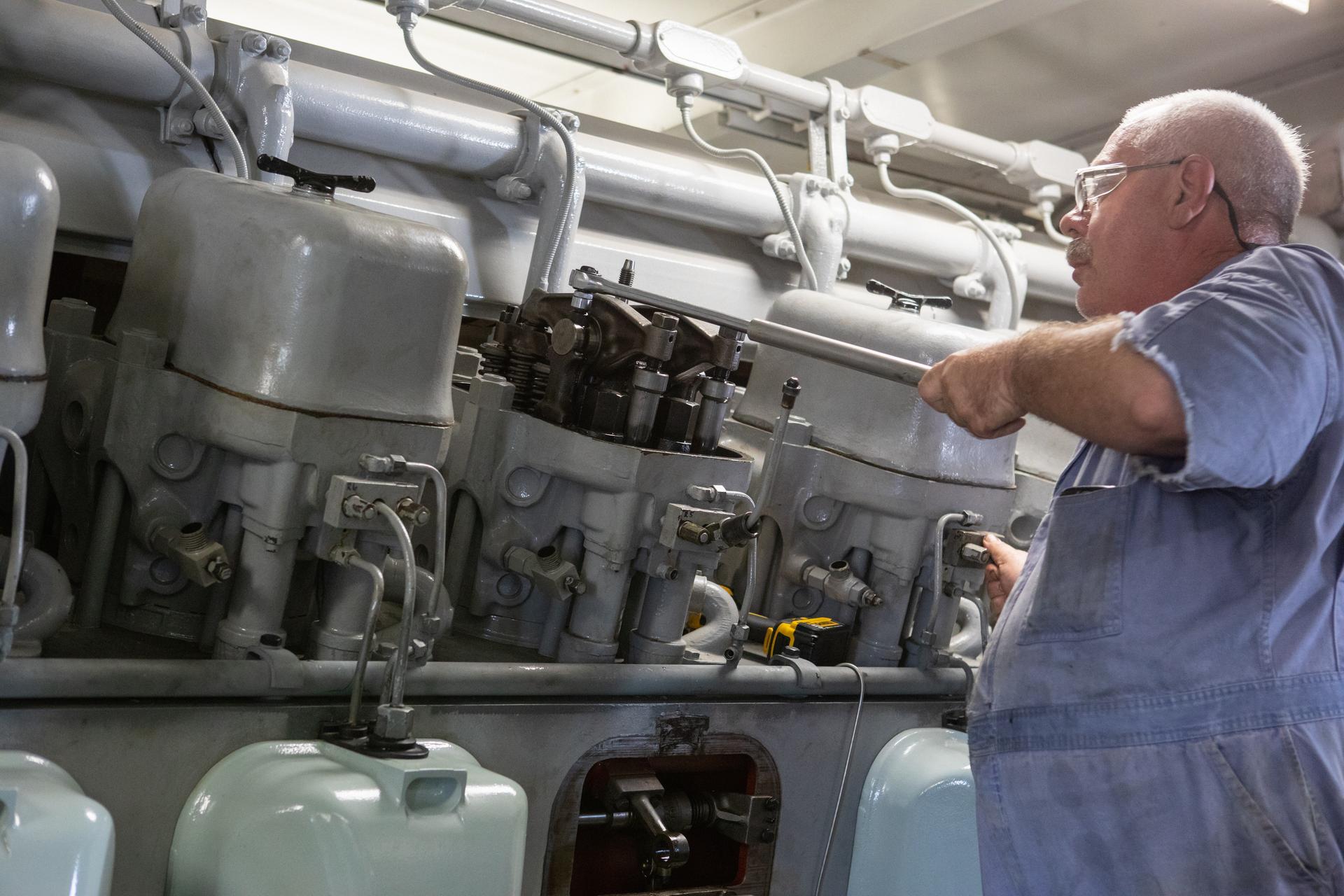
Machines and engines are everywhere. They power cars, boats, airplanes, and even rockets. Mechanics are the folks who know how all this stuff works - especially engines - and how to fix them when they inevitably break down.
When you hear "mechanic," you might picture someone with a wrench and a grease-stained shirt. But mechanics can be experts on all sorts of machinery, including the kind that goes to space. At NASA, mechanics do a lot more than change oil.
Take aerospace mechanics, for example. They maintain the research planes at NASA's Armstrong Flight Research Center in Edwards, California. Those planes study the environment or test experimental wing designs - because someone has to make sure the wings don't fall off.
Over at NASA's Kennedy Space Center in Florida, mechanics keep the crawler-transporters in tip-top shape. These massive machines carry rockets from the assembly building to the launch pad. They're basically the world's most overqualified golf carts.
And at the Michoud Assembly Facility in New Orleans, mechanics ensure the fleet of barges used to carry rocket sections are ready to roll - or float. These ships have been hauling rocket parts for decades, because apparently, rockets are too big for FedEx.
So, how do you become a mechanic? There are several routes, depending on what you want to fix. For automotive mechanics, start with a high school diploma or GED, then hit up trade or technical schools for hands-on experience. Certifications can help you specialize and prove you know your stuff.
Heavy equipment mechanics often need a two-year degree, but you can also start right after high school by doing basic tasks or shadowing a senior mechanic. Expect three to four years of training before you can take certification and licensing tests. Patience, young padawan.
Aircraft mechanics need a special skillset and must attend FAA-approved programs at community colleges or technical schools. These fast-track your career and prepare you for certification tests. Because when you're fixing planes, you really don't want to wing it.
Military service is also a solid way to get training and certifications. Plus, you get to travel and maybe fix things in exotic locations.
In high school, load up on math, science, and industrial technology. Check out career and technical education programs, read repair manuals, and watch online tutorials to learn how machines work. You can also get experience through part-time jobs or shadowing at local repair shops.
Start researching training programs, community colleges, and apprenticeships. Compare your options to see which pathway fits. That way, you'll know what you're getting into and can prepare accordingly.
Being a mechanic requires good problem-solving skills. Troubleshooting complex machinery takes logical thinking and patience. Attention to detail is critical - you don't want to mess up measurements or ignore safety specs. And keeping up with the latest tech is a must, since mechanics use computers and electronic sensors for diagnostics. Plus, with electric vehicles and drones on the rise, the field is always evolving. Stay curious, stay sharp, and maybe one day you'll be fixing rocket ships.
The Good Times
News in your inbox.
One sardonic roundup, delivered on your schedule. Free. Unsubscribe whenever your tolerance for wit runs out.
Already subscribed but we never reach your inbox? Check your spam folder and hit 'Not spam' (or 'Remove from spam') to bust us out of junk-mail purgatory. You'll be helping everyone else too.
Don't open any of our emails for a month and you'll be automatically removed from the mailing list.
Rewrite Article
Select parts to regenerate with a fresh AI pass. Translations will be updated automatically.
Generate AI Image
Creates a sardonic version of the article image using OpenAI.