Giant Asian Mantises Officially Declared Invasive, Because Europe Didn't Have Enough Problems
Two Asian mantis species are officially invasive in Europe, and they're eating their way through native wildlife - with some help from climate change and domestic cats.
Praying mantises have long been regarded as mystical guides, bad luck omens, and generally fascinating insects. But now, two species of Asian mantises are making a less enchanting name for themselves by threatening Europe's native wildlife.
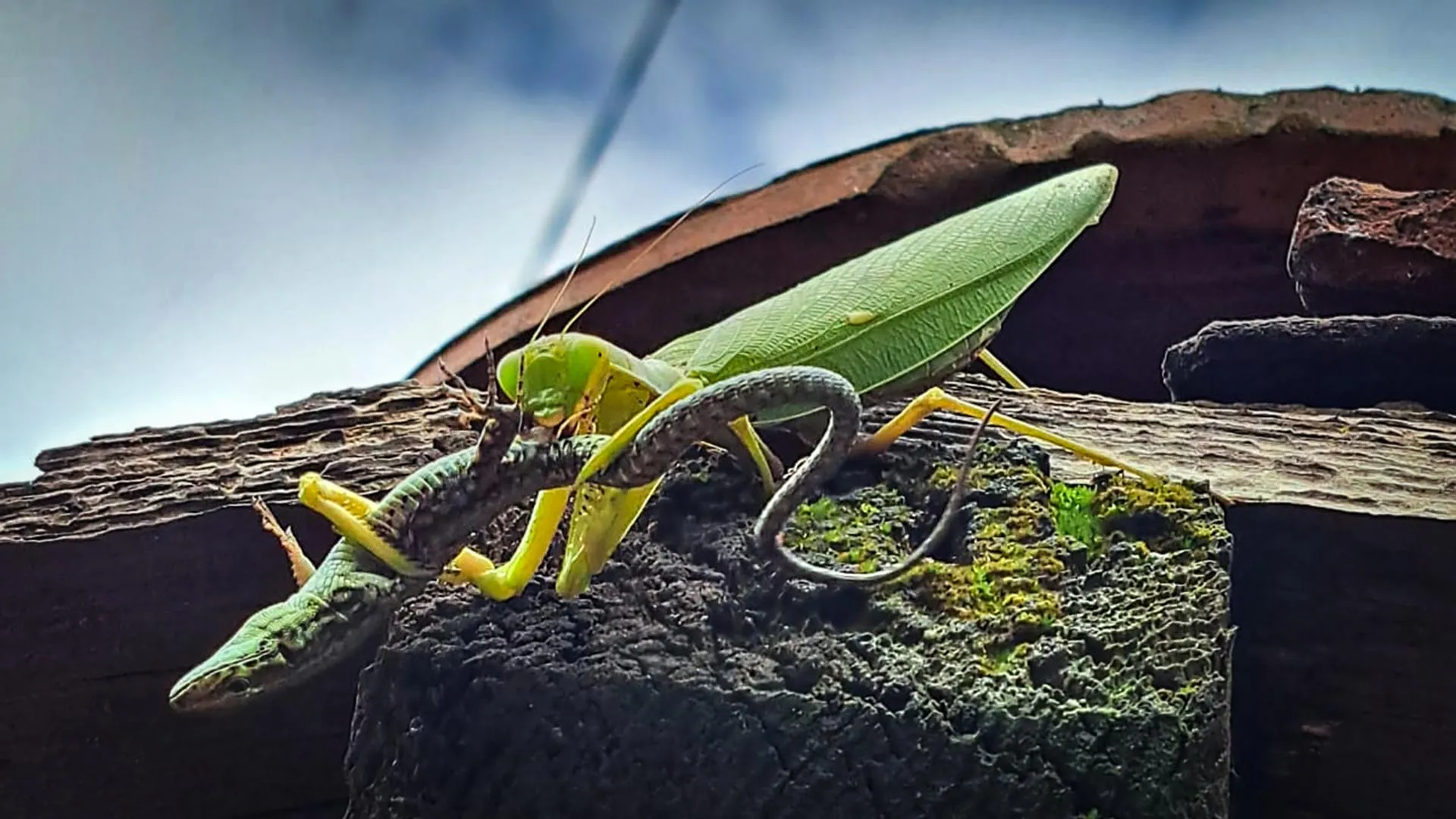
A new study in the Journal of Orthoptera Research has officially classified Hierodula tenuidentata and Hierodula patellifera as Invasive Alien Species (IAS). Led by Roberto Battiston of the Museum of Archaeology and Natural Sciences "G. Zannato," the research highlights how these insects have been quietly expanding their territory in Europe for about a decade, with populations exploding in Mediterranean and continental regions. "They are pushing increasingly further north, thanks to climate change," Battiston notes, adding that the public often mistakes them for a welcome sight rather than an ecological menace.
The mantises are prolific breeders, with each egg case producing around 200 young - nearly twice as many as the native European mantis (Mantis religiosa). Their nymphs are also less cannibalistic, allowing populations to balloon quickly. The invasive females attract native male mantises, which attempt to mate but end up as dinner. They also feast on a broad range of native animals, including honeybees and protected small vertebrates like tree frogs and lizards.
One unexpected hero in this saga is the domestic cat, which accounts for 45% of recorded predation events on the invasive mantises. However, cats are indiscriminate hunters and also prey on native mantises, which are already struggling. Urban landscapes provide ideal conditions for the invaders, with insect hotels and heat islands helping them thrive.
Researchers have turned to citizen science, collecting over 2,300 reports from the public. They advise people to report sightings and, in winter, remove the spongy egg cases (oothecae) from branches - but only after consulting a specialist to avoid harming native species. The study underscores how human activity and climate change are redrawing the maps of invasive species, making public awareness and targeted conservation essential for protecting Europe's biodiversity.
The Good Times
News in your inbox.
One sardonic roundup, delivered on your schedule. Free. Unsubscribe whenever your tolerance for wit runs out.
Already subscribed but we never reach your inbox? Check your spam folder and hit 'Not spam' (or 'Remove from spam') to bust us out of junk-mail purgatory. You'll be helping everyone else too.
Don't open any of our emails for a month and you'll be automatically removed from the mailing list.
Rewrite Article
Select parts to regenerate with a fresh AI pass. Translations will be updated automatically.
Generate AI Image
Creates a sardonic version of the article image using OpenAI.