
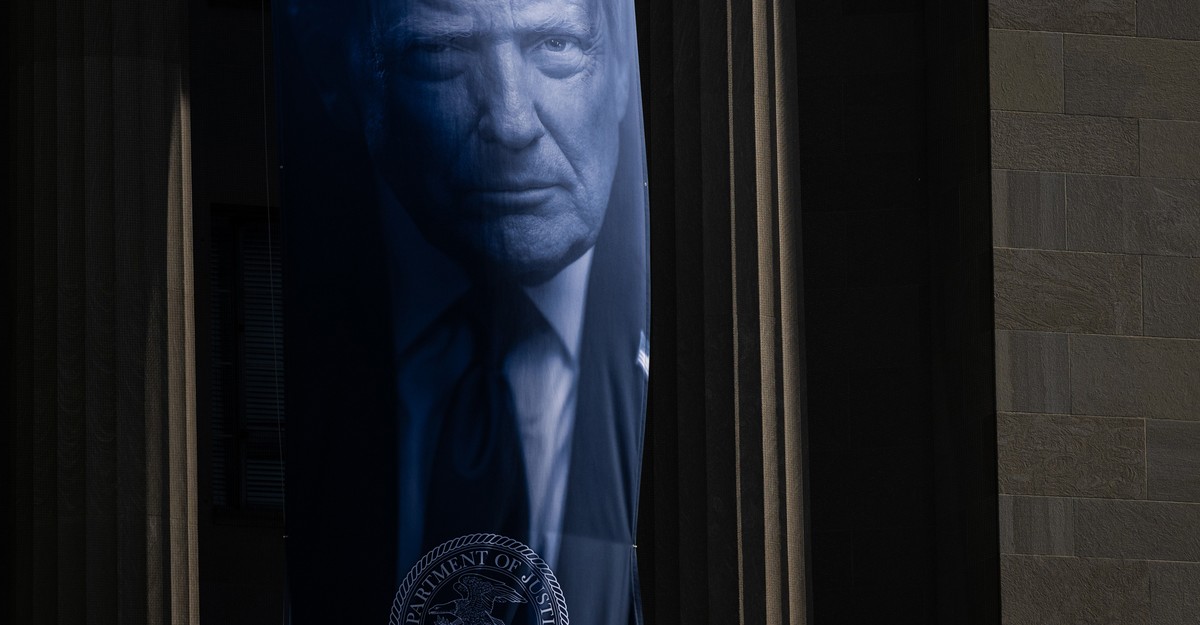
The Justice Department has decided that the old rules - laws, facts, basic reality - were just slowing things down. Under the watch of Acting Attorney General Todd Blanche, who seems to be auditioning for the permanent gig by being more Trump than Trump, the DOJ has announced a flurry of new prosecutions and filed a court motion that reads like a Truth Social post with footnotes. The goal, it appears, is to give President Trump the headlines and revenge he craves, even if that means treating the law as a suggestion box.
The indictment of the Southern Poverty Law Center (SPLC), a left-leaning anti-extremism group that has long been a thorn in the right's side, kicked off this new era. Blanche alleged that the SPLC had been "manufacturing the extremism it purports to oppose by paying sources to stoke racial hatred." He stood next to FBI Director Kash Patel, flanked by posters tallying funds allegedly spent on informants. Trump, ever the lawyer, added on Truth Social that if the allegations are true, "the 2020 Presidential Election should be permanently wiped from the books." The indictment itself is coyly written, hinting at more than it states outright: that the SPLC sent funds to informants and used shell companies to hide the payments. One small problem: paying informants isn't a crime, and the government hasn't shown that donors were duped, which is key to the wire-fraud charge. The indictment also charges the SPLC under a statute about lying to influence a bank, but doesn't explain what the lies were or what the SPLC supposedly wanted the bank to do. As former DOJ prosecutor Kyle Boynton put it, this is "a new front in the prosecutorial misconduct this department is willing to engage in to get an indictment returned."
Court filings from the SPLC further undermine the administration's claims. In a Fox News interview, Blanche claimed the SPLC never shared what it learned with law enforcement - fueling a MAGA conspiracy that the 2017 Charlottesville violence was an SPLC setup. But the SPLC's motion to obtain grand-jury transcripts states it "used the informant program to gather voluminous and detailed information about the risk of violence at Charlottesville" and shared that with the FBI before the Unite the Right rally. It also passed along material that may have helped avert a white-supremacist terrorist attack in Las Vegas. None of these details made it into the indictment, presumably because they'd ruin the story the administration wants to tell.
The same disregard for reality appears in DOJ's arguments over Trump's ballroom project. After an attempted attack at the White House Correspondents' Dinner, Trump insisted on building a "Militarily Top Secret Ballroom" where the East Wing used to be. DOJ filed a motion demanding that District Judge Richard Leon dissolve an injunction halting construction. The filing reads like a Trump rant: the plaintiffs "are very bad for our Country" and "suffer from Trump Derangement Syndrome," and the ballroom will be built "FREE OF CHARGE AS A GIFT TO THE COUNTRY!" This is not standard DOJ fare - historically, the department prided itself on "government gray" prose. The goal, presumably, is just to make the boss happy in the short term, since there's little reason to think Judge Leon will be charmed.
A day after that filing, Blanche and Patel unveiled a new indictment against former FBI Director James Comey - the second criminal case against him after a previous charge was tossed in November. The charges stem from a year-old Instagram post: Comey, on vacation, shared a photo of seashells arranged to spell "86 47." Trump allies claimed "86" is slang for "murder" and "47" refers to Trump, the 47th president. But "86" is more commonly used in restaurants to mean an item is out of stock or to eject a troublesome customer. Even Bondi's DOJ declined to take it seriously. Blanche, however, revived the case after Bondi's departure and ordered North Carolina prosecutors to seek an indictment. Comey has said he had no idea "86" could be a threat and quickly deleted the post. Under First Amendment precedent, prosecuting threats requires not just that observers see a threat, but that the defendant knew it would be understood that way. Courts have protected far more explicit statements, like a protester saying he'd like to put LBJ in his rifle sights. Arguing that seashells are more threatening than that will be a tough sell.
The legal flimsiness of these cases shows how far Blanche's DOJ is willing to go to please Trump. In the first Comey case, DOJ stretched facts; in the second, it seems to have distorted the law itself. The SPLC case does the same. Boynton warned that a DOJ willing to mislead a grand jury "could literally charge any American with a crime." This slapdash approach poisons the entire department, so that even legitimate cases - like the prosecution of Cole Allen, the alleged White House Correspondents' Dinner attacker, or the case against former NIH official David Morens - are shadowed by questions of credibility. While the SPLC and Comey indictments will likely get tossed, that may not matter. The only thing that matters is whether Trump is satisfied.