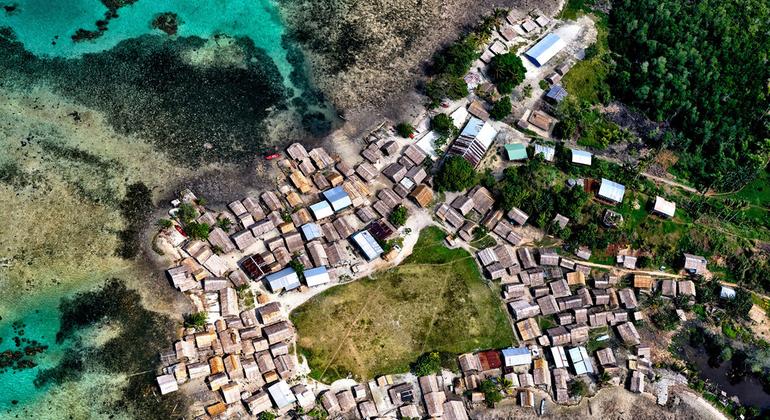
More than 150,000 people in the Solomon Islands are now intimately familiar with Tropical Cyclone Maila, a Category 4 storm that swept through the Pacific with destructive winds, flooding, and heavy rainfall. The UN relief coordination office OCHA has described the aftermath as generating “significant humanitarian needs,” which is diplomatic speak for “this is really bad.”
Displacement is widespread, with families crammed into evacuation centres, schools, churches, and host communities. OCHA warns that women, children, and persons with disabilities face growing protection risks - because nothing says “safe” like overcrowded shelters and disrupted support systems.
Adding a touch of historical flair to the disaster, flooding and erosion in Western Province have exposed unexploded ordnance left over from World War II battles. Because apparently, a cyclone wasn't enough; now residents get to dodge 80-year-old explosives too.
The UN Emergency Relief Coordinator has chipped in $2.5 million from the central emergency response fund for urgent lifesaving assistance. Health services are strained, with 3,600 pregnant women affected and 21 health facilities damaged. Many women can't reach clinics because roads and transport are, shall we say, less than optimal.
Food insecurity is rising as crops and fishing livelihoods are destroyed. Communities are reporting smaller meals and growing dependence on humanitarian aid. Education is also disrupted: 84 schools in Western, Choiseul, and Guadalcanal Provinces are damaged, affecting nearly 15,800 students. UNICEF and partners are setting up temporary learning spaces and handing out emergency school supplies.
Cyclone Maila is part of a broader wave of extreme weather across the Pacific. Earlier in April, Typhoon Sinlaku prompted a state of emergency in the Federated States of Micronesia after damaging homes, infrastructure, and water systems.
“This is yet another reminder that extreme weather events are becoming more frequent and unpredictable,” said Iori Kato, Regional Director for Asia and the Pacific at the UN International Organization for Migration. “Without sustained investment in preparedness and early warning systems, the region risks facing devastating human and economic costs. This is a critical window for action.” In other words, the Pacific is sending a very expensive, very wet memo.
The Good Times
News in your inbox.
One sardonic roundup, delivered on your schedule. Free. Unsubscribe whenever your tolerance for wit runs out.
Already subscribed but we never reach your inbox? Check your spam folder and hit 'Not spam' (or 'Remove from spam') to bust us out of junk-mail purgatory. You'll be helping everyone else too.
Don't open any of our emails for a month and you'll be automatically removed from the mailing list.
Rewrite Article
Select parts to regenerate with a fresh AI pass. Translations will be updated automatically.
Generate AI Image
Creates a sardonic version of the article image using OpenAI.