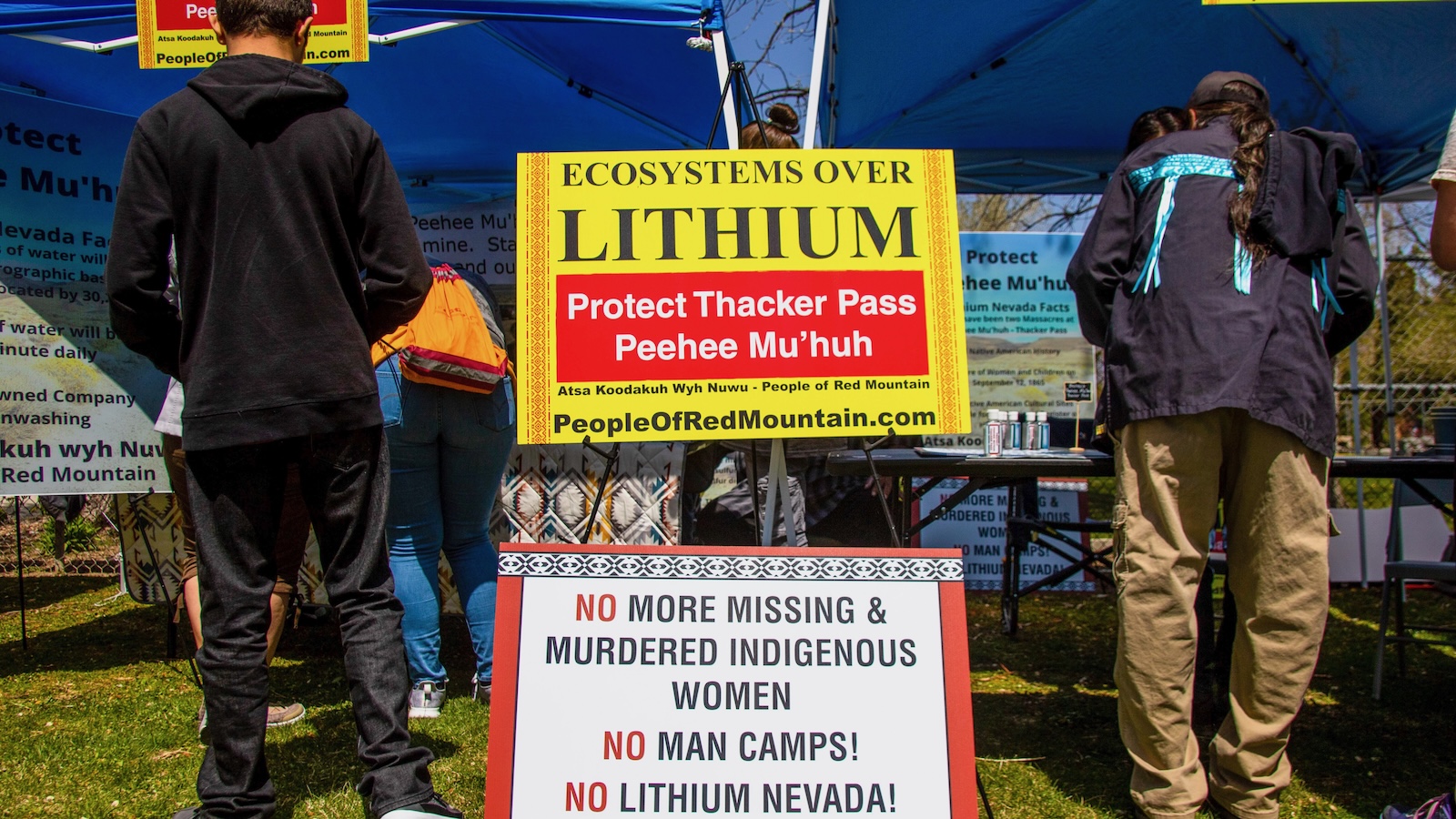
Amnesty Report: Nevada's Lithium Boom Is Basically a Masterclass in Ignoring Indigenous Rights
Amnesty International says Nevada's lithium mines are violating Indigenous rights, but sure, let's keep pretending a fast-tracked permit counts as 'consultation.'
As the Trump administration barrels ahead with its quest to secure critical minerals like lithium, a new report from Amnesty International drops the inconvenient truth: the U.S. government and private corporations are treating Indigenous peoples’ rights in Nevada like a suggestion box at a dictatorship.
The report, released today, calls for the suspension of federal permits for all lithium mines in the Silver State, which holds about 85 percent of the country’s known lithium reserves - the key ingredient in electric vehicle batteries and your phone’s undying need to be recharged. Several Indigenous nations and environmentalists have been fighting extraction for years, citing water contamination and biodiversity loss. “This is our land,” said Fermina Stevens, a member of the Te-Moak Tribe of Western Shoshone and executive director of the Western Shoshone Defense Project. “We should have a say in what happens. But I know that they don’t want us there because Nevada is so rich in all of these minerals.”
Amnesty highlights three projects: Thacker Pass Lithium Mine (under construction), Rhyolite Ridge Lithium-Boron Project (construction slated for this year), and Nevada North Lithium Project (still in the exploratory phase). All sit on public land the Western Shoshone and Paiute people consider unceded territory. The report argues that all three violate Indigenous peoples’ right to free, prior, and informed consent (FPIC) - an international standard that, one might think, should be a no-brainer when you’re digging up someone else’s ancestral backyard. Although federal agencies approved the projects, Amnesty contends the reviews fell short of FPIC and the United Nations Declaration on the Rights of Indigenous Peoples (UNDRIP).
“They’ve got to come down on the right side,” said Mark Dummett, Amnesty’s head of business and human rights. “They’ve got to come down on the side of human rights, rather than getting the minerals at all costs.” The report also flags the Trump administration’s deregulation push - fast-tracked permits and limited environmental review - which makes “consultation” about as meaningful as a participation trophy.
A spokesperson from the U.S. Department of Interior fired back, calling the activists “climate crazed” and their claims “baseless,” adding that the Bureau of Land Management’s review included extensive environmental analysis and tribal engagement. Because nothing says “extensive engagement” like a process Indigenous leaders describe as perfunctory at best.
Nevada has seen more than 20,000 lithium claims filed amid a global boom, and the report lands as Indigenous peoples worldwide resist “green transition” mining that they say exchanges one form of destruction for another. Dummett warned that mining companies are exploiting regulatory gaps: “The way that this mining has always taken place has been incredibly damaging to the environment and people. We don’t want to see the mistakes of the past repeated.”
Stevens noted that consultation has grown even more hollow since the war in Iran supercharged lithium demand. “War and the military complex is all that they can see,” she said. “And so they’re blinded to the things that are sacred, that are more important for human survival. And I just don’t think that they care about those things.”
Lithium Americas, owner of Thacker Pass, disputed the report’s claims in a response, arguing that UNDRIP isn’t binding in the U.S. - but hey, they comply with it anyway. “The Thacker Pass Project has the potential to significantly advance America’s electrification efforts, reduce carbon emissions, and strengthen domestic supply chains,” its response read. Ioneer, owner of Rhyolite Ridge, “respectfully but firmly disagreed” with Amnesty, highlighting its tribal engagement and compliance with all U.S. legal requirements. Surge and Evolution, owners of Nevada North, said they “take all reasonable efforts to conduct proactive and ongoing engagement with Indigenous peoples.”
Indigenous leaders aren’t holding their breath for change, but they’re not backing down. “We can survive without technology, but we can’t survive without water,” Stevens said. “We can’t save the Earth through the energy transition while we’re simultaneously destroying biodiversity.”
The Good Times
News in your inbox.
One sardonic roundup, delivered on your schedule. Free. Unsubscribe whenever your tolerance for wit runs out.
Already subscribed but we never reach your inbox? Check your spam folder and hit 'Not spam' (or 'Remove from spam') to bust us out of junk-mail purgatory. You'll be helping everyone else too.
Don't open any of our emails for a month and you'll be automatically removed from the mailing list.
Rewrite Article
Select parts to regenerate with a fresh AI pass. Translations will be updated automatically.
Generate AI Image
Creates a sardonic version of the article image using OpenAI.