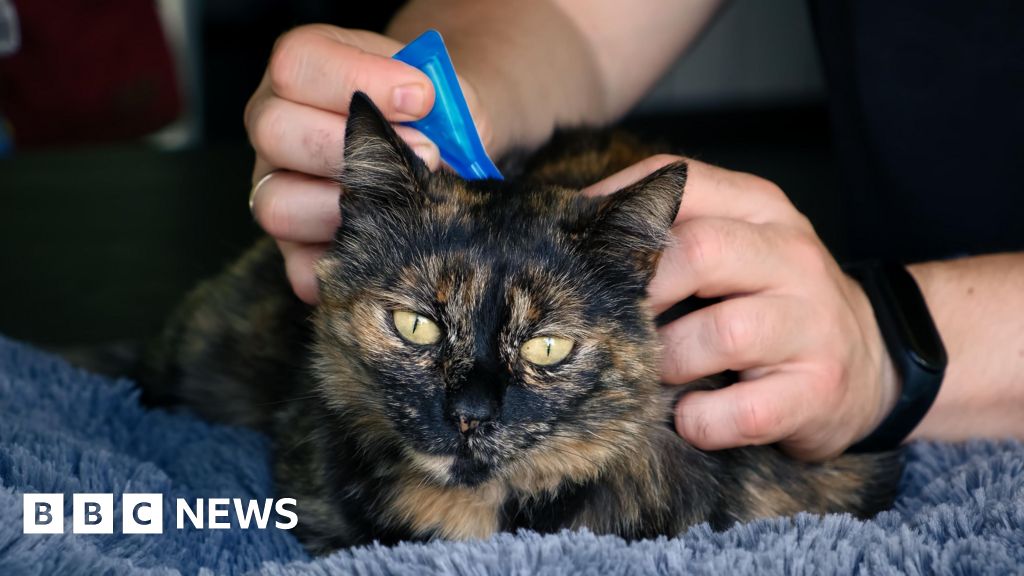
A panel of vets has told a House of Lords committee that over-the-counter flea treatments for cats and dogs should be banned, because nothing says 'I love my pet' like washing chemicals into rivers that kill everything else.
The treatments in question contain fipronil and imidacloprid, two parasiticides that environmental scientists say are toxic to wildlife. The vets want to see an end to year-round preventative treatments and a ban on sales of spot-on products containing these chemicals by anyone other than vets.
Dr Elizabeth Mullineaux, senior vice president of the British Veterinary Association (BVA), cited surveys of the BVA's 20,000 members showing 80% supported a ban on general sale and over 70% agreed blanket preventative treatment should stop. 'We're using these products really routinely and I think if you ask most vets what they do with their own pets, we don't treat our own pets in the way some practices are selling these products,' she said.
Dr Martin Whitehead, senior veterinary surgeon at Chipping Norton Veterinary Hospital, was blunt: 'Almost all the parasiticides that are preventatively applied to pets are unnecessary.' Dr Rose Perkins, a practicing vet and visiting Fellow at the Grantham Institute, said she had never given preventative treatments to her puppy or cat, treating her cat once for fleas with an isoxazoline tablet instead of spot-ons.
The vets argued treatment should only happen in case of infestation, not monthly. Perkins compared it to antibiotic use: 'It's much cheaper, you save a lot of money, and isoxazolines are incredibly effective.'
The Department for Environment, Food and Rural Affairs (Defra) is considering a ban on general sale of spot-on treatments, launching a call for evidence last month and a campaign encouraging correct use. But the vets said this won't cut it. Perkins noted only one in 100 vets she surveyed used fipronil as their primary flea treatment for their own pets: 'They know it's polluting and they know it's ineffective.' She added that government-funded research showed pollution occurs even when owners apply spot-ons correctly.
This follows evidence from three environmental scientists who told peers that fipronil and imidacloprid wash into water and kill insects at the bottom of the food chain for fish, birds, and mammals. Both neurotoxins were banned as agricultural pesticides in the UK in 2017 and 2018 for killing bees and pollinators.
Ecological consultant Matthew Shardlow said the ingredients are so toxic and easily transferred onto humans and into water that they should be withdrawn from sale: 'We know enough to act, we don't need more information for fipronil and imidacloprid as we've got absolutely all the evidence we need.'
Guy Woodward, an ecology professor at Imperial College London, said imidacloprid is toxic in extremely small amounts - the equivalent of two sugar cubes in 400 Olympic-sized swimming pools. 'These things are toxic, extremely toxic, in extremely small concentrations... and it's only now we're starting to glimpse the full scale of contamination,' he said.
The Veterinary Medicines Directorate (VMD), the regulator funded by government and the pharmaceutical industry, said they want to limit environmental impacts and pointed to their consultation and awareness campaign. Dawn Howard, CEO of NOAH (National Office of Animal Health), defended preventative flea treatments: 'Parasite control and preventive medicine remains an important part of protecting animal health and welfare.'
So in summary: Vets say stop dousing your pets in neurotoxins every month. The industry disagrees. Defra is 'considering' a ban. And your dog probably doesn't need that monthly chemical bath anyway.
The Good Times
News in your inbox.
One sardonic roundup, delivered on your schedule. Free. Unsubscribe whenever your tolerance for wit runs out.
Already subscribed but we never reach your inbox? Check your spam folder and hit 'Not spam' (or 'Remove from spam') to bust us out of junk-mail purgatory. You'll be helping everyone else too.
Don't open any of our emails for a month and you'll be automatically removed from the mailing list.
Rewrite Article
Select parts to regenerate with a fresh AI pass. Translations will be updated automatically.
Generate AI Image
Creates a sardonic version of the article image using OpenAI.