Venus May Be Tearing Itself Apart From Within, Because Being Hell Wasn't Enough
New 3D simulations suggest Venus's massive rift valleys are younger than thought, meaning the planet may still be geologically active - because being a scorching hellscape wasn't dramatic enough.
Venus is already a frontrunner for the solar system's most hostile real estate, with surface temperatures that could melt lead and an atmosphere that would crush you like a tin can. But new research suggests the planet might also be geologically active, tearing itself apart from within with massive rift valleys that stretch up to 10,000 kilometers - roughly the distance from New York to Tokyo, if you wanted to take a really, really long road trip.
For decades, scientists assumed Venus was geologically dead, its surface frozen in time from over 100 million years ago. But a new study from ETH Zurich, published in Nature Geoscience, turns that assumption on its head. Researchers led by Taras Gerya and master's student Xi Yang used high-resolution 3D computer simulations to show that some of Venus's rift valleys may be much younger than previously believed - and that the planet may still be squirming with tectonic activity.
The simulations revealed that when rifts are young, they develop broad elevated ridges called rift flanks along their sides. These features appear while the rifts are still moving or soon after they stop, and they flatten relatively quickly once tectonic movement ends. Unlike on Earth, where erosion wears down mountains, Venus's rift flanks sink because the crust slowly relaxes after being stretched. The model also suggests Venusian rifts spread at about 3 to 10 centimeters per year - faster than earlier estimates.
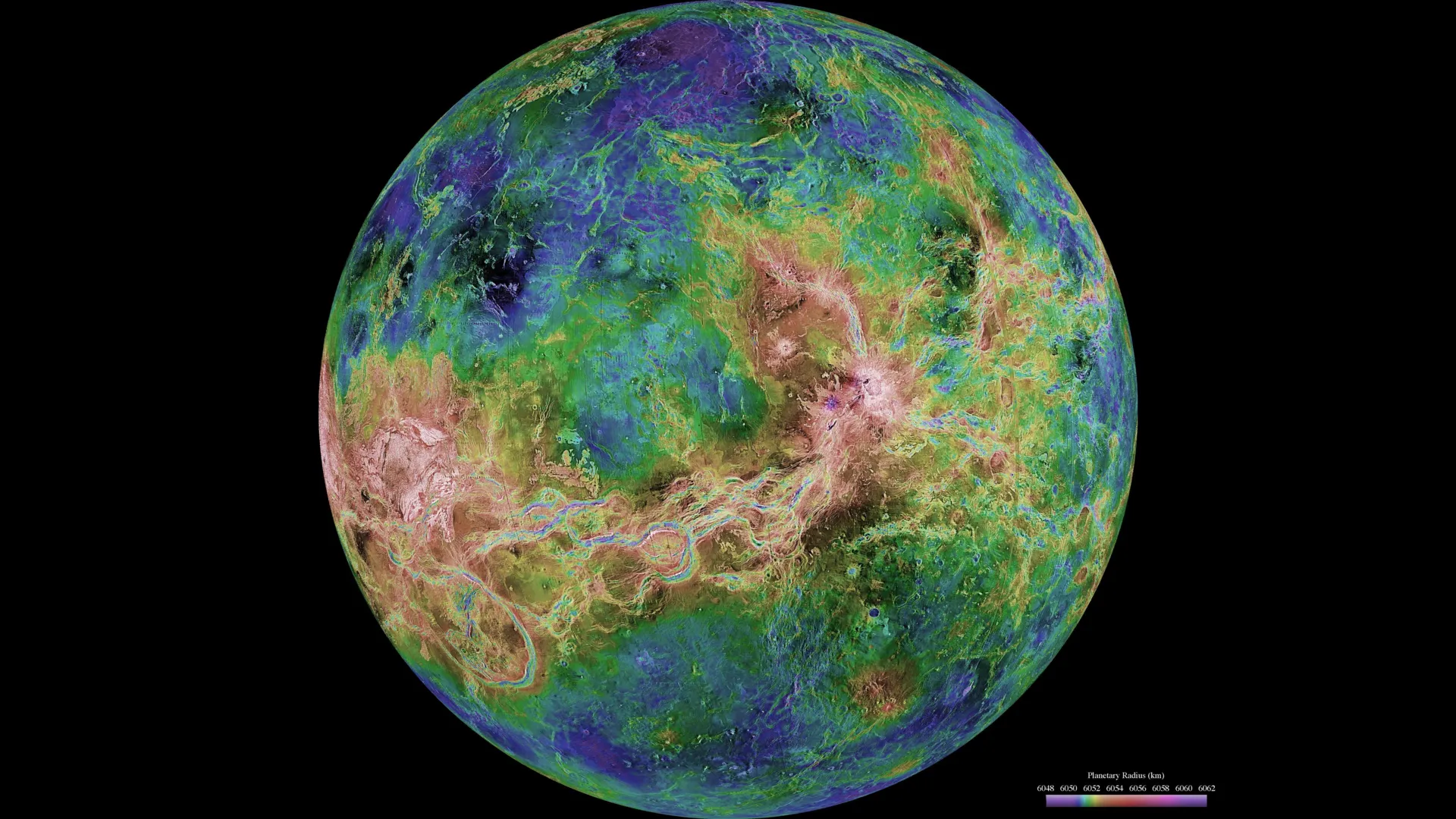
The researchers compared their simulated landscapes with images from NASA's Magellan probe, which mapped Venus in the 1990s, and found striking similarities. That's good evidence that some of these rifts formed recently, geologically speaking. "The results help us to better assess the tectonic activity on Venus," says Gerya, which is a polite way of saying Venus might be more alive than we thought.
The findings could help future missions - like NASA and ESA's upcoming EnVision orbiter, launching in the early 2030s - target areas where geological activity may still be happening. The work also offers clues about how rocky planets evolve, which might one day help identify active exoplanets beyond our solar system. So while Venus remains an utterly inhospitable hellscape, at least it's an interesting one.
The Good Times
News in your inbox.
One sardonic roundup, delivered on your schedule. Free. Unsubscribe whenever your tolerance for wit runs out.
Already subscribed but we never reach your inbox? Check your spam folder and hit 'Not spam' (or 'Remove from spam') to bust us out of junk-mail purgatory. You'll be helping everyone else too.
Don't open any of our emails for a month and you'll be automatically removed from the mailing list.
Rewrite Article
Select parts to regenerate with a fresh AI pass. Translations will be updated automatically.
Generate AI Image
Creates a sardonic version of the article image using OpenAI.