
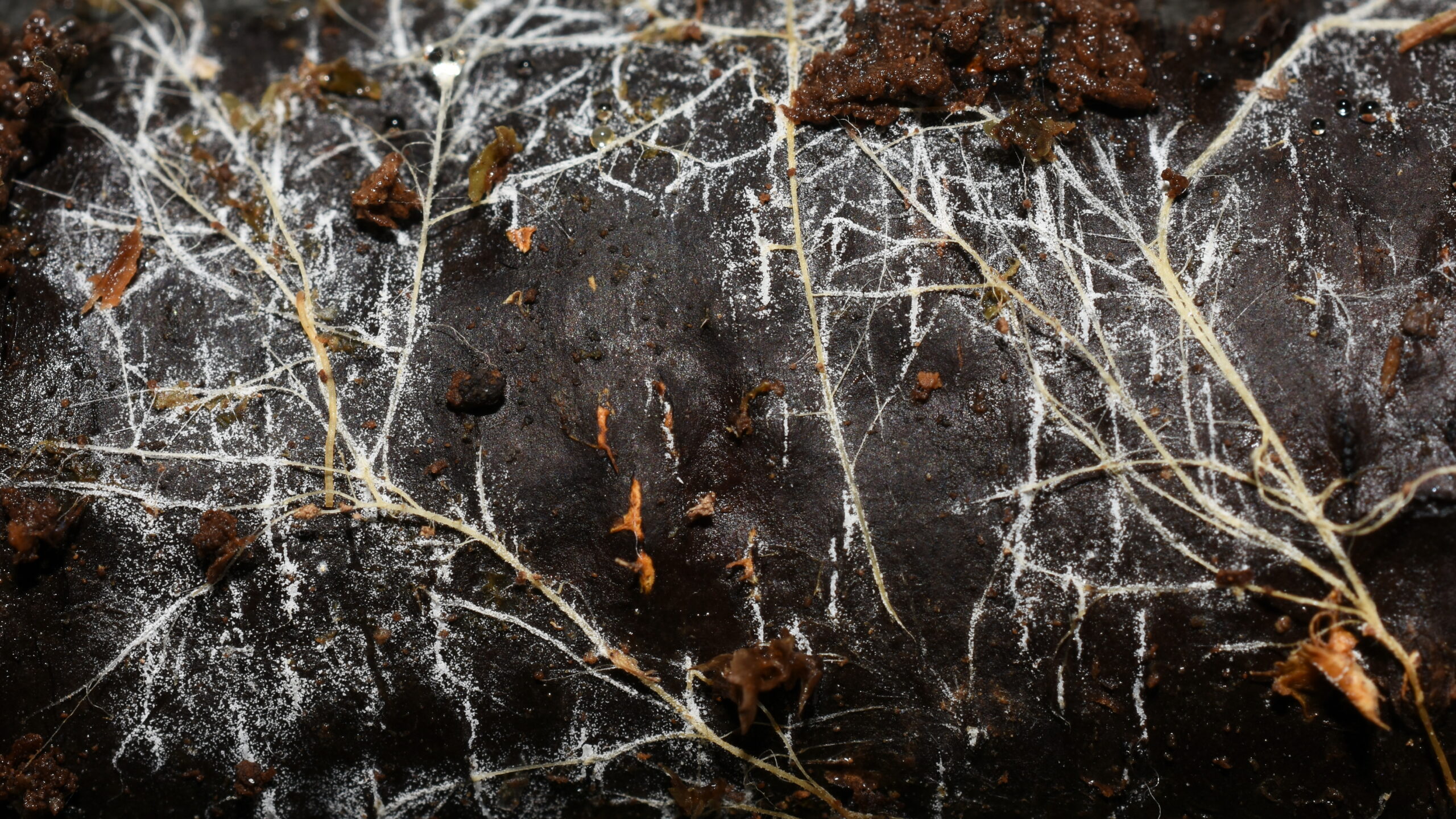
Hidden beneath your feet, there's a secret society of fungi that makes the Internet look like a short text chain. According to new research published Thursday in Science, the global network of arbuscular mycorrhizal fungal threads stretches an estimated 110 quadrillion kilometers - enough to reach nearly a billion times the distance from Earth to the sun. That's right: the world's most important underground network isn't run by a tech billionaire; it's run by mushrooms.
These ultra-thin hyphae, each smaller than a human hair, form cozy symbiotic relationships with the roots of about 80 percent of the world's plant species. In exchange for carbon, the fungi serve up phosphorus and nitrogen, like a subterranean meal delivery service. Previous research found these networks sequester about 1 billion tons of carbon annually - carbon that, if not stored underground, would be happily warming the atmosphere. So basically, fungi are doing the planet a solid while we're busy arguing about recycling.
Until now, these networks had never been mapped globally. The new study, led by the Society for the Protection of Underground Networks (SPUN) - an organization whose name sounds like a secret society but is actually just very into dirt - combined literature reviews, soil samples from around the globe, machine learning, and lab testing to estimate the distribution and mass of these systems.
"This is the moment where we went from knowing that this system exists to really knowing where it is, how dense it is and where it's been," said Toby Kiers, SPUN's executive director and co-author of the study. Translation: we've gone from "there's probably some fungus down there" to "here's a map of the fungal empire."
For decades, researchers knew arbuscular mycorrhizal fungi form relationships with roughly 80 percent of plant species and are found nearly everywhere plants grow. But the extent of those networks - and where they're densest (grasslands) or being lost (agricultural areas) - remained fuzzy. "[The study] helps us come to grips with how important these below ground organisms can be to everything that we see above ground," said James Bever, a professor at the University of Kansas who studies plant-microbe interactions and was not involved in the study.
Justin Stewart, an evolutionary ecologist at SPUN and lead author, explained that previous biodiversity studies were like asking someone to describe the forest outside their home: "They could say 'well there are three tree species in it.' That's great. That tells me about the biodiversity. But you don't actually know how big the forest is, how far apart the trees are." Now we do - and it's very, very big.
The hyphae act as living pipes, transporting nutrients and carbon between plants and fungi. Because they're so long and thin, they reach deeper into soils than roots, accessing nutrients while storing carbon where it can stay put for a long time - assuming the conditions are right. "You're getting a win-win," Stewart said. "The plants are growing better, and carbon's being drawn down."
To quantify these networks, the team reviewed existing studies containing 16,000 core samples from ecosystems worldwide, measuring fungal thread length per volume of soil. Each sample was geolocated, and the team used machine learning to create predictive global maps. Working with AMOLF, a research institute in Amsterdam, they developed a robot with a camera that recorded fungal networks growing in a lab to estimate their widths. The final calculation? The network's mass is about five times the weight of all humans on Earth. So if you were feeling insignificant before, now you know: there's a fungal network out there that outweighs all of us.
The study only covers living fungal networks - dead ones, which also store carbon, remain a mystery. But it also found where these networks are most threatened. Fungal densities in croplands are about half of those in wild ecosystems. Wild grasslands hold about 40 percent of the world's arbuscular mycorrhizal biomass, yet they're among Earth's least protected ecosystems and are converted into farmland at four times the rate of forests. Previous SPUN research found 90 percent of fungal communities globally are unprotected, and many ecosystems - like the deserts of the American Southwest - remain understudied.
What's driving these losses and their consequences needs further exploration. That's why the SPUN team will attend this year's United Nations Climate Change Conference - COP31 - to present to policymakers about the networks' importance in protecting ecosystems and sequestering carbon.
"We're still far from completely understanding how, if you have a grassland next door, and you want to [increase] microbes and fungi there," said Corentin Bisot, an AMOLF biophysicist and co-author. "We don't have the toolbox for you to do it."
Stewart called this study "just the first map," comparing it to early Spanish maps that depicted California as an island. As we learn more, the public's understanding of these underground networks will grow - and hopefully, so will our appreciation for the fungal overlords keeping the planet alive.
This article originally appeared on Inside Climate News, a nonprofit, non-partisan news organization that covers climate, energy, and the environment. Sign up for their newsletter here.