Solar Power Achieves 'Largest Growth Ever' Because Apparently Sunlight Is Still Free
The sun did more work than ever in 2025, with solar power's growth outpacing every other energy source in history during a non-crisis year, because apparently harnessing a giant ball of fusion is a…
On Monday, the International Energy Agency released its global energy analysis for 2025, confirming what a more limited report from the International Renewable Energy Agency had already suggested: 2025 was the year solar power finally decided to show up to the party and dominate. The IEA, feeling bold, has declared that "the world has entered the Age of Electricity," a conclusion reached after noting that electricity demand grew at twice the rate of overall energy demand, thanks in part to electric vehicles and heat pumps.
Speaking of which, electric vehicle demand rose by nearly 40 percent, with electric cars making up a quarter of all cars sold last year. This contributed to a measly 0.7 percent rise in oil use, which is less than half the average rise of the previous decade. Heat pump sales were flat, but in many countries they now account for a majority of new heating units sold. Even so, a cold snap meant buildings drove a 1 percent increase in natural gas use.
The IEA predicts these trends will accelerate in 2026 due to conflicts in the Middle East closing the Strait of Hormuz, which will mess with global oil and liquefied natural gas flows. Instead of just suffering, the world might actually speed up its shift away from fossil fuels because, apparently, fuel shocks are a great motivator for adopting electrified alternatives.
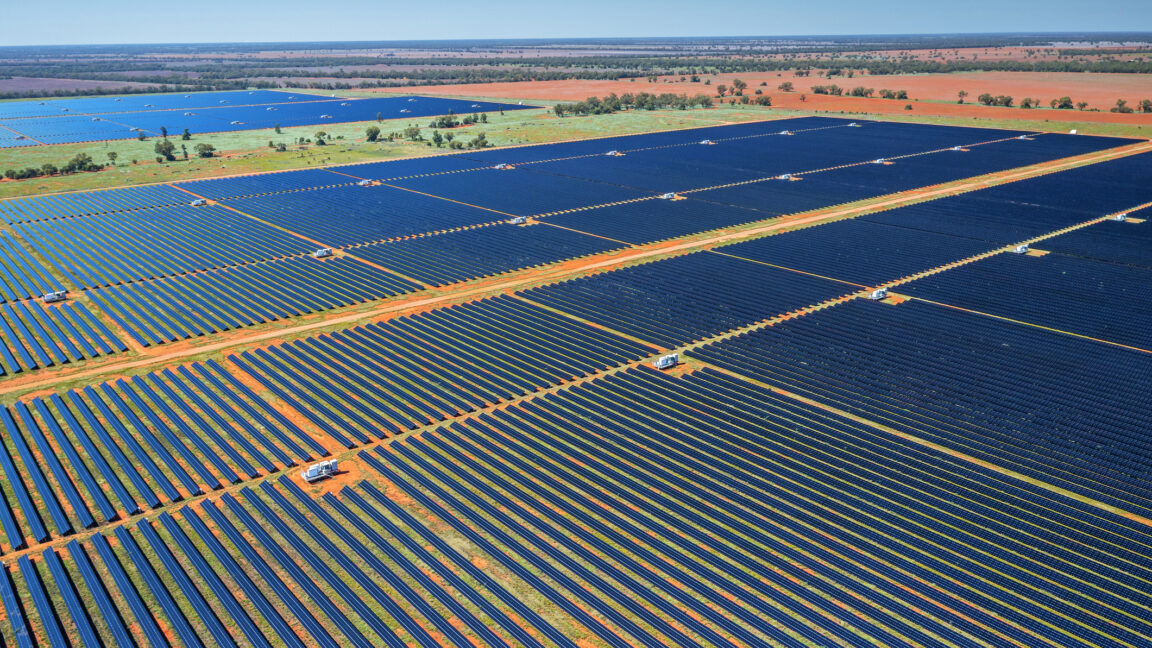
But the real star of the show is solar power. The IEA states, "The absolute increase of solar PV generation in 2025 is the largest ever observed for any source," excluding years with major economic shocks like COVID-19. In a normal year, solar's growth was unprecedented. It alone covered a quarter of the rising demand for all forms of energy, and over two-thirds of increased electricity demand.
Solar generated over 2,700 terawatt-hours last year, more than double its output from three years earlier. It now accounts for over 8 percent of the world’s total electricity production. Thirty countries installed at least a gigawatt of solar last year, making it the largest grid source by capacity, though other sources still outproduce it for now.
This solar boom is the main reason carbon-free sources - hydro, nuclear, solar, wind, and other renewables - grew faster than demand in 2025. They covered nearly 60 percent of the overall growth in energy demand. Helping solar along was battery storage, the fastest-growing power technology, with capacity additions rising 40 percent to 110 GW of new capacity in 2025. That's more than the highest one-year addition of natural gas capacity and leaves total installed capacity at over 10 times what it was just five years ago.
Meanwhile, natural gas use increased by about 1 percent, and coal use rose by just 0.4 percent. The US saw a small coal increase, but the EU dropped below 10 percent of electricity production from coal for the first time on record. China commissioned a lot of coal plants, but those were started during a prior energy shock; its coal use for electricity actually dropped due to massive renewable investment, with China responsible for 60 percent of global renewable growth.
Nuclear power remained stable, with about 3 GW of new plants offsetting 3 GW of retirements. China is the major player here too, with enough plants under construction that it will eventually surpass the US in installed nuclear capacity if all are commissioned. Twelve GW of new plants started construction last year, with nine of the ten total plants located in China.
As a result of all this, energy-related carbon emissions grew by about 0.4 percent in 2025, setting a record high but marking the third straight year of slowing growth. Notably, China's emissions actually declined, which the IEA credits to industrial changes and the explosive expansion of renewable energy.
The IEA estimates that green tech installed since 2019 - renewables, EVs, heat pumps, etc. - along with nuclear power, displaced about 7 percent of total fossil fuel use in 2025 and reduced carbon emissions by 8 percent compared to a hypothetical baseline. In coal terms alone, these systems displaced the equivalent of India’s 2025 coal use.
Looking ahead, the closure of the Strait of Hormuz is likely to interfere with global fossil fuel use in 2026. The key question is whether this event will finally get countries to seriously move away from fossil fuels, or if we'll just have another one-time drop in emissions before returning to business as usual.
The Good Times
News in your inbox.
One sardonic roundup, delivered on your schedule. Free. Unsubscribe whenever your tolerance for wit runs out.
Already subscribed but we never reach your inbox? Check your spam folder and hit 'Not spam' (or 'Remove from spam') to bust us out of junk-mail purgatory. You'll be helping everyone else too.
Don't open any of our emails for a month and you'll be automatically removed from the mailing list.
Rewrite Article
Select parts to regenerate with a fresh AI pass. Translations will be updated automatically.
Generate AI Image
Creates a sardonic version of the article image using OpenAI.