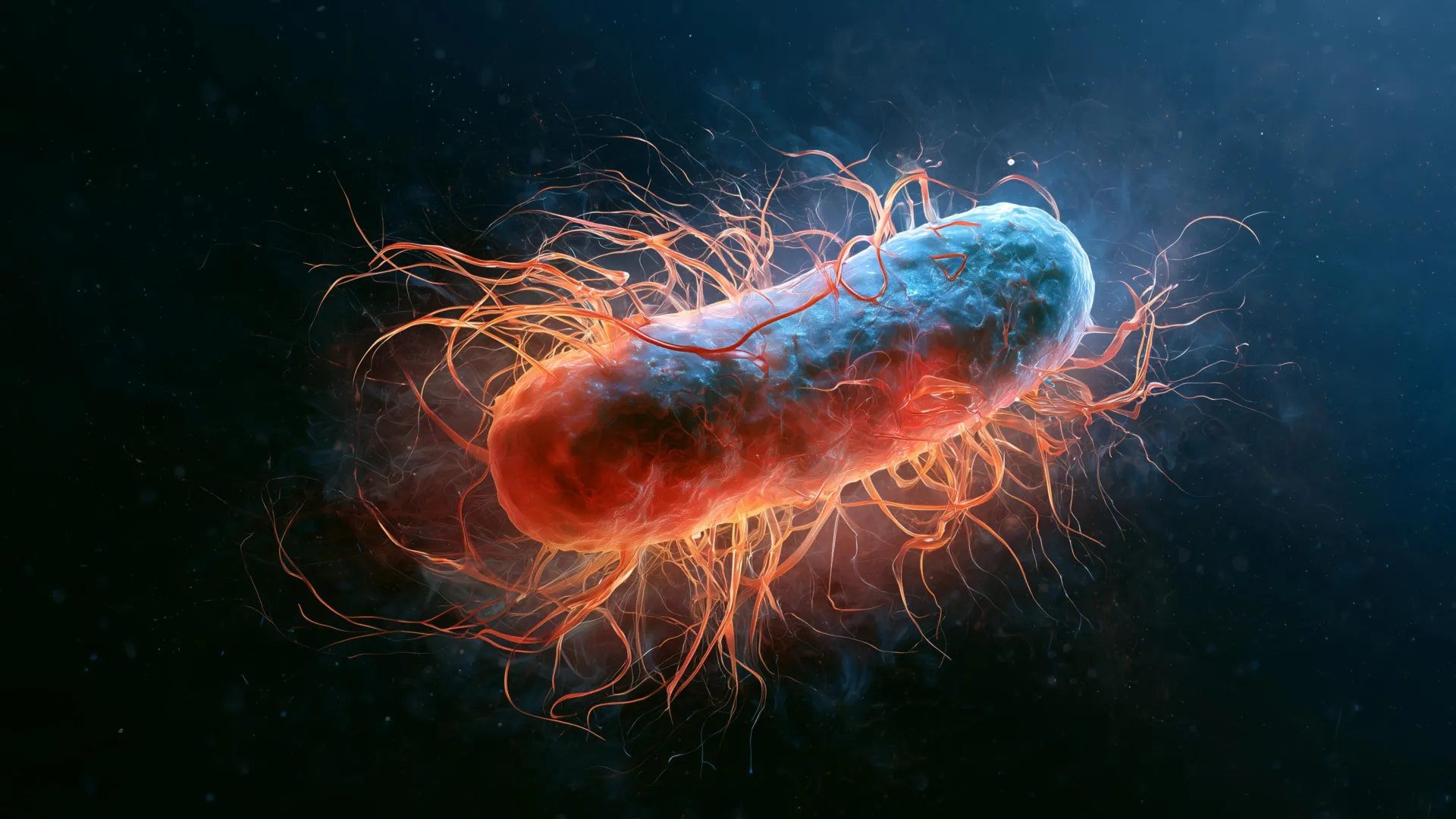
In news that sounds like a rejected X-Men pitch, researchers led by Prof. An Xu at the Hefei Institutes of Physical Science of the Chinese Academy of Sciences have found that a magnetotactic bacterium called Magnetospirillum magneticum AMB-1 (AMB-1) can extend healthy lifespan in the Caenorhabditis elegans model - the humble lab worm that keeps quietly outperforming us in longevity studies. The team also identified the main mechanism: suppression of ferroptosis, a form of cell death you've probably never heard of but which has apparently been quietly ruining everything.
The findings were published in Free Radical Biology and Medicine, a journal that sounds like it was named by someone who lost a fight with a thesaurus.
Aging, for those unfamiliar, gradually reduces normal physiological function and raises the risk of many chronic diseases - a fact that anyone over 30 has already deduced through personal experience. Researchers have explored drugs and genetic approaches as possible anti-aging strategies, but questions about safety and practical clinical use remain, because of course they do.
Magnetotactic bacteria offer a very different approach. These microorganisms contain specialized structures called magnetosomes and have shown good biocompatibility. They have already attracted attention for potential uses including drug delivery and cancer treatment, but their possible influence on aging has received far less study - presumably because someone had to think of giving magnetic bacteria to worms first.
To investigate, the researchers tested the MTB strain AMB-1 in C. elegans, a widely used model organism for aging research and, presumably, a good sport about the whole thing. Worms treated with AMB-1 lived substantially longer. Their average lifespan increased by 43.39% - a suspiciously precise figure that suggests someone counted very carefully - and the treatment also helped preserve neurological function and intestinal integrity in older worms. So not just longer, but longer with working brains and guts. Take notes, humanity.
The team then examined whether magnetosome production was important to this effect, because science doesn't just stop at "it worked." Their results indicated that the ability to produce magnetosomes played a major role in extending lifespan. Wild-type AMB-1 produced a stronger longevity effect than reversibly non-magnetotactic RNM-AMB-1. In contrast, non-magnetotactic NM-AMB-1 did not extend lifespan - proving that the magnetism, not just the bacterium's winning personality, was doing the work.
Further experiments offered clues about how AMB-1 produces its effects. The bacteria reduced iron buildup and lowered lipid peroxidation in the worms, changes that suppressed aging-related ferroptosis. Ferroptosis is a form of cell death associated with iron accumulation and oxidative damage to fats within cells - the biological equivalent of leaving a cast-iron pan out in the rain. Genetic analysis showed that several ferroptosis-related pathways were involved in AMB-1-mediated lifespan regulation, including the genes ftn-1, bli-3, and ads-1, which we're sure the worms would thank personally if they could.
According to the researchers, the findings establish a new microbial strategy for anti-aging intervention and provide foundational evidence that could support broader use of MTB in geriatric medicine. So someday your grandfather may be prescribed magnetic bacteria, and he'll be thrilled.
Materials provided by Hefei Institutes of Physical Science, Chinese Academy of Sciences. Note: Content may be edited for style and length.
In related news that is somehow less strange: Scientists Discover Canada's First Dinosaur Tracks From a Rarely Documented Cretaceous Age; Two Dead Stars Are Racing Around Each Other Every 6.2 Minutes; Natural Compound May Help Protect the Brain and Heart From Excess Salt; and a 240-Million-Year-Old Fossil Discovery Challenges the Story of the First Dinosaurs.
The Good Times
News in your inbox.
One sardonic roundup, delivered on your schedule. Free. Unsubscribe whenever your tolerance for wit runs out.
Already subscribed but we never reach your inbox? Check your spam folder and hit 'Not spam' (or 'Remove from spam') to bust us out of junk-mail purgatory. You'll be helping everyone else too.
Don't open any of our emails for a month and you'll be automatically removed from the mailing list.
Rewrite Article
Select parts to regenerate with a fresh AI pass. Translations will be updated automatically.
Generate AI Image
Creates a sardonic version of the article image using OpenAI.