NASA Tells 51,000 Students: 'Build a Moon Base, But Maybe Finish Your Homework First'
NASA uses a robotics competition to recruit future moon-base builders, because nothing says 'long-term lunar presence' like teenagers fixing broken robot parts.
NASA has a message for the next generation of engineers, technologists, and innovators: robots are going to build a Moon base, and you might want to start working on your soldering skills now.
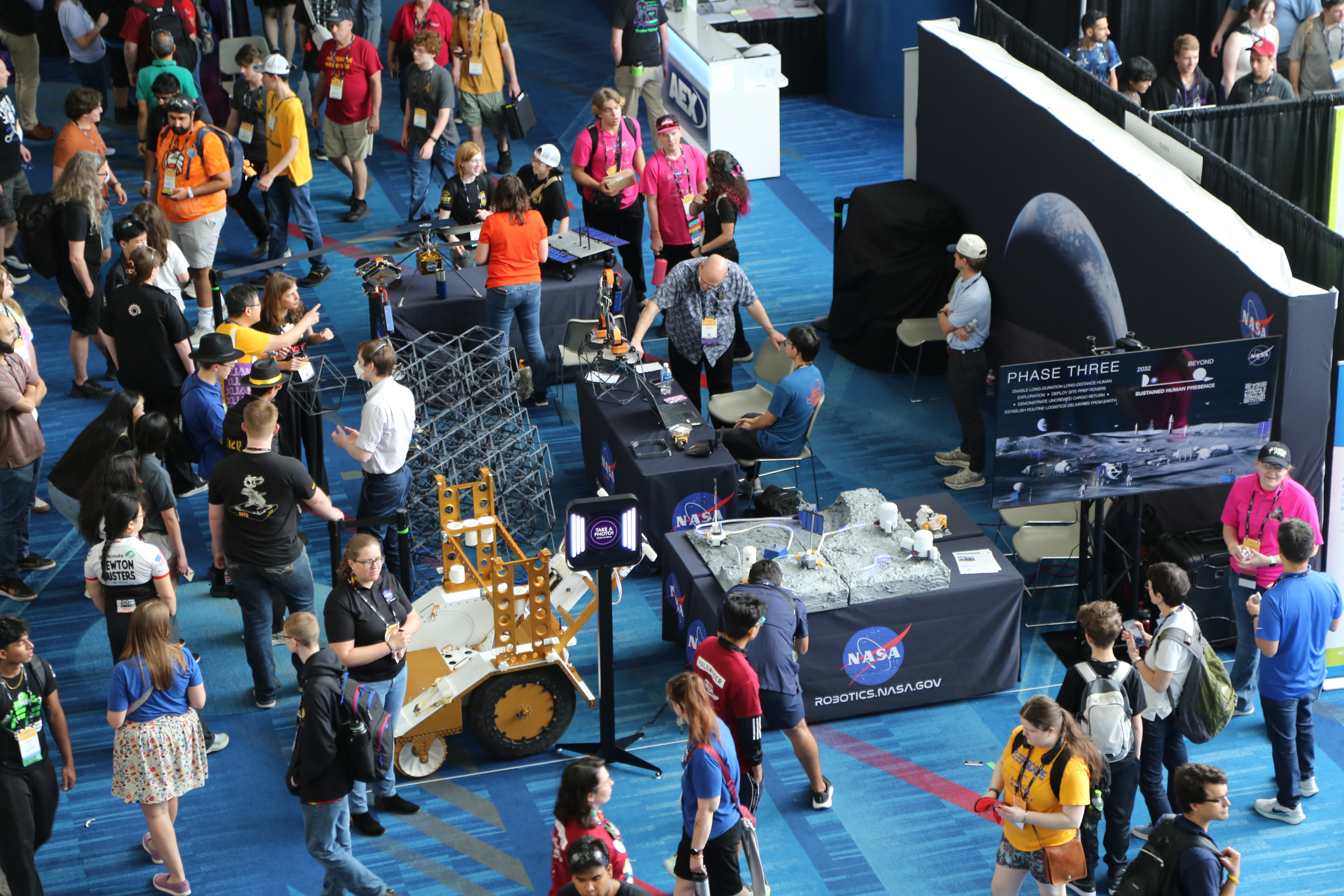
That was the agency's pitch at the 2026 FIRST Robotics World Championship in Houston, where more than 1,000 student teams gathered to compete and tinker. NASA showed up with a Moon Base model, interactive exhibits, and a clear agenda: convince 51,000+ students, parents, and mentors that the path to a permanent lunar outpost runs through a robotics competition.
The Moon Base plan is ambitious. Phase 1 involves a rapid series of robotic and early uncrewed missions to scout, experiment, and prepare for surface operations ahead of crewed Artemis missions. That includes an accelerated cadence of CLPS (Commercial Lunar Payload Services) flights, with up to 30 robotic lunar landings targeted for 2027, to expedite the delivery of science and technology payloads including rovers, hoppers, and drones.
NASA's exhibit also highlighted innovations from ten of its centers, including Johnson Space Center in Houston, Kennedy Space Center in Florida, Langley Research Center in Virginia, Ames Research Center in California, Michoud Assembly Facility in New Orleans, Armstrong Flight Research Center in Edwards, California, Glenn Research Center in Cleveland, Goddard Space Flight Center in Greenbelt, Maryland, White Sands Test Facility in Las Cruces, New Mexico, and Wallops Flight Facility in Wallops Island, Virginia.
Since 1996, NASA has supported and mentored FIRST Robotics teams. This year, the agency sponsored more than 160 teams, 50 of which had a NASA mentor. NASA Johnson directly mentored six teams, with two making it to the FIRST Championship. Additionally, NASA operated a Mobile Machine Shop where teams could bring broken parts for repairs by NASA machinists, completing over 600 jobs during the event.
NASA's presence at the championship provides a platform for sharing its ambitious plans while inspiring students to envision themselves as part of the NASA team, working to achieve the near-impossible - or at least build a robot that can survive a lunar landing.
The Good Times
News in your inbox.
One sardonic roundup, delivered on your schedule. Free. Unsubscribe whenever your tolerance for wit runs out.
Already subscribed but we never reach your inbox? Check your spam folder and hit 'Not spam' (or 'Remove from spam') to bust us out of junk-mail purgatory. You'll be helping everyone else too.
Don't open any of our emails for a month and you'll be automatically removed from the mailing list.
Rewrite Article
Select parts to regenerate with a fresh AI pass. Translations will be updated automatically.
Generate AI Image
Creates a sardonic version of the article image using OpenAI.