Iran's Supreme Leader Plays Hide-and-Seek at His Own Father's Funeral
Iran's new supreme leader skips dad's funeral, sparking rumors of injury or extreme grief avoidance - while mourners call for Trump's death and the US president wonders if the tears are real.
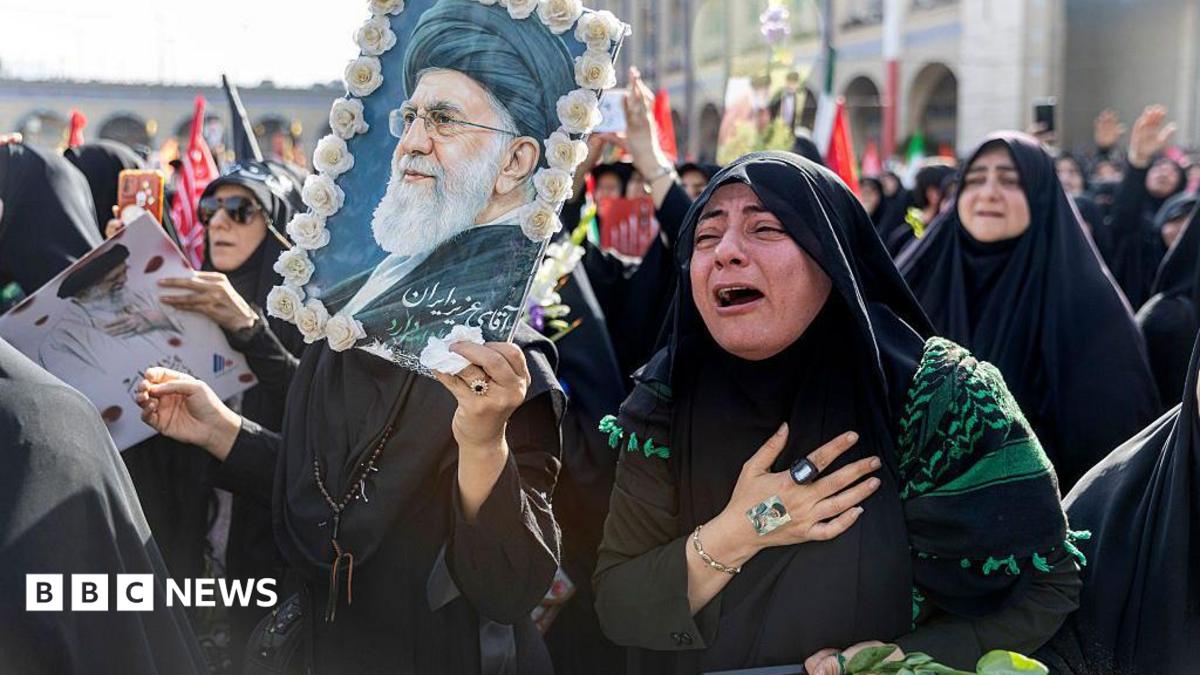
Iran's Supreme Leader Mojtaba Khamenei was conspicuously absent from his father's funeral on Sunday, leaving senior regime figures to mingle with thousands of mourners without the guest of honor. Ali Khamenei's other three sons - Masoud, Mostafa, and Meysam - did show up, alongside President Masoud Pezeshkian and Revolutionary Guards chief Ahmad Vahidi, proving that at least some family members have a grasp of basic funeral etiquette.
Speculation about Mojtaba's condition has been fueled by rumors he was wounded in the same US-Israel air strikes that killed his father. He hasn't been seen in public since his appointment in early March, which is either a sign of injury or an extremely committed avoidance of awkward small talk.
Official funeral proceedings for the late supreme leader - who ruled from 1989 until his death in February - began on Friday, with events planned across Iran and Iraq over the coming week. Iranian authorities claim 12-20 million people are expected to attend what they're calling the "funeral of the century," though that might be slightly overselling it given that the century is only 25 years old.
Khamenei's body is currently lying in state at Tehran's Grand Mosalla religious complex, with a funeral service led by 97-year-old cleric Jafar Sobhani. Sunday was declared a public holiday - because nothing says "mourning" like a day off work - and later the body will be moved for a procession through the capital on Monday.
Mojtaba's absence comes against a backdrop of fears that Israel may want to assassinate him too. A fragile ceasefire between the warring countries is holding while peace talks continue, though both sides have warned they're ready to resume military action. US President Donald Trump told Axios on Saturday that peace talks paused for a week due to the funeral, and noted that with many Iranian senior officials gathered, Washington could "take them all out with one shot." But he added, "We are not going to do that because then we would have nobody to negotiate with." A pragmatic approach, if not exactly diplomatic.
Trump also said he was surprised to see Iranians crying, speculating they hated Khamenei. "Maybe it's fake tears," he mused. Mourner Zahra Safaei, 50, countered via Reuters: "We did not make a revolution 47 years ago to shed fake tears. We did not sacrifice all these martyrs to shed fake tears."
Meanwhile, at a poetry recitation before the prayer, poet Mohammad Rasouli declared "Trump's murder is our responsibility," drawing calls of "death to America" and "death to Israel." Banners in the city included slogans like "kill Trump" and "kill Bibi" - a truly bipartisan approach to foreign policy.
The Tehran events alone are expected to attract more than 10 million mourners, with strict security measures and warnings of crowd crushes. Iran's official news agency Irna reported that over 4,000 people had visited medical centers near the Grand Mosalla, though no deaths were recorded - yet. Images show mourners being sprayed with mist to keep cool and medics carrying an elderly woman away on a stretcher.
Khamenei's coffin is displayed alongside those of four relatives killed in the strikes, including his one-year-old granddaughter Zahra Mohammadi Golpayegani. After Tehran processions on Monday, the coffin moves to Qom on Tuesday, then to a Shia site in Iraq on Wednesday, with burial on Thursday in his hometown of Mashhad. It's a farewell tour that would make a rock band jealous.
The Good Times
News in your inbox.
One sardonic roundup, delivered on your schedule. Free. Unsubscribe whenever your tolerance for wit runs out.
Already subscribed but we never reach your inbox? Check your spam folder and hit 'Not spam' (or 'Remove from spam') to bust us out of junk-mail purgatory. You'll be helping everyone else too.
Don't open any of our emails for a month and you'll be automatically removed from the mailing list.
Rewrite Article
Select parts to regenerate with a fresh AI pass. Translations will be updated automatically.
Generate AI Image
Creates a sardonic version of the article image using OpenAI.