El Salvador's Volcanoes: They're Hot, They're Restless, and One Used to Be a Lighthouse
El Salvador's volcanoes are still doing their thing - erupting, steaming, and occasionally powering the national grid - while one volcano once served as a lighthouse for confused sailors.
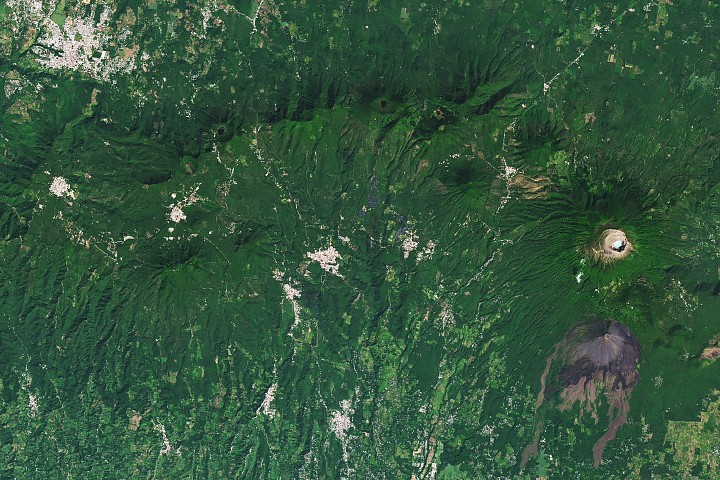
Western El Salvador has a lot of volcanic personality. Near the city of Ahuachapán, the land looks like it lost a fight with a giant acne cream - pockmarked with craters and smothered in recent lava flows. Meanwhile, a geothermal field has been busy powering geysers, heating mineral pools, and running an energy plant that's been chugging along since 1975. All of this sits atop the Central American Volcanic Arc, a 1,000-kilometer (600-mile) stretch of geological restlessness running from Guatemala to Panama.
To the right, Santa Ana looms at 2,381 meters (7,812 feet), making it the country's tallest volcano. Its summit features crescent-shaped ridges surrounding a hot, acidic crater lake that you definitely don't want to swim in. Santa Ana has been throwing small to moderate tantrums since the 16th century, with its most recent notable eruption in 2005 sending a dense gas and ash column skyward and sending lahars down its slopes like muddy, destructive sleds.
In 1770, Santa Ana decided to start a family. Izalco, a steep-sided stratovolcano, grew on its southern flank through frequent eruptions over the next two centuries. Its regular Strombolian eruptions and lava fountains earned it the nickname "Lighthouse of the Pacific," because sailors could reportedly see its glowing emissions at night. Sadly, the lighthouse has since dimmed - Izalco's most recent activity was in 1966.
The Apaneca Range arcs across the scene with forested, dimpled peaks. No eruptions have been recorded here in the past 11,700 years - talk about a long nap - but geothermal activity persists in the form of fumaroles, hot springs, and steam vents. That steam can turn deadly: a blast in October 1990 near Laguna Verde volcano killed people, and a 2025 steam eruption near a popular hot springs facility forced evacuations and damaged infrastructure. Because even relaxing in a hot spring isn't safe from geology's sense of humor.
Despite the hazards, the region's heat has been put to good use. The Ahuachapán Geothermal Power Plant has been operating since 1975, tapping groundwater heated to around 250 degrees Celsius (480 degrees Fahrenheit) and local fault systems. By the early 1980s, it was generating 40 percent of El Salvador's electricity. Some scholars note that this peak production coincided with civil unrest and population growth - proving that even geothermal power can't escape being tangled up in human drama.
NASA Earth Observatory image by Michala Garrison, using Landsat data from the U.S. Geological Survey. Story by Lindsey Doermann.
The Good Times
News in your inbox.
One sardonic roundup, delivered on your schedule. Free. Unsubscribe whenever your tolerance for wit runs out.
Already subscribed but we never reach your inbox? Check your spam folder and hit 'Not spam' (or 'Remove from spam') to bust us out of junk-mail purgatory. You'll be helping everyone else too.
Don't open any of our emails for a month and you'll be automatically removed from the mailing list.
Rewrite Article
Select parts to regenerate with a fresh AI pass. Translations will be updated automatically.
Generate AI Image
Creates a sardonic version of the article image using OpenAI.