
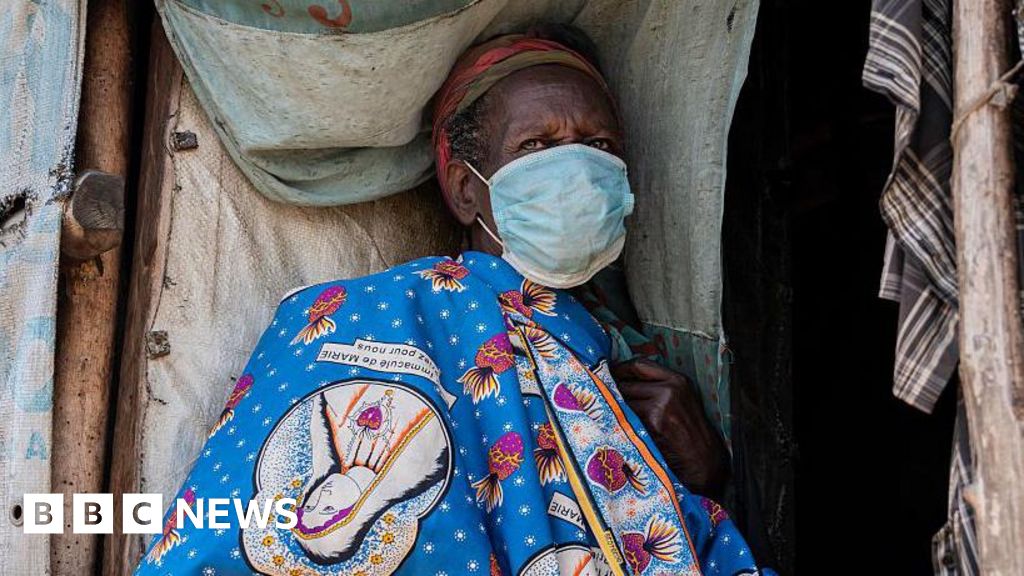
The rapid spread of Ebola in the Democratic Republic of Congo has created a 'deeply alarming' situation, the medical charity Médecins Sans Frontières (MSF) has warned - because apparently, 'slightly concerning' wasn't going to cut it anymore.
Speaking two weeks on from the outbreak being declared, MSF deputy director Dr Alan Gonzales said never before had 'so many cases' been recorded so soon, which is the medical equivalent of breaking a speed record nobody wanted. His comments came as the head of the World Health Organization (WHO), Dr Tedros Adhanom Ghebreyesus, visited the eastern Congolese province of Ituri - the worst-hit area - to oversee virus containment efforts, presumably hoping to catch up with a disease that's been sprinting.
There are now more than 1,000 suspected Ebola cases in the DR Congo, and at least 246 deaths. Neighbouring Uganda has reported nine confirmed cases and one death, proving that viruses don't respect borders any more than they respect weekend plans.
'Two weeks after the declaration of the Ebola disease outbreak in Ituri Province, the situation is deeply alarming,' Gonzalez said in a statement on Saturday. 'Never before has an Ebola outbreak recorded so many cases so soon after its declaration,' he said, stressing his teams on the ground were 'witnessing a response that has not yet caught up to the rapid spread of the epidemic'. In other words, the response is still lacing up its shoes while the epidemic is already at the finish line.
'The reality today is that nobody knows the true scale and severity of this outbreak. New suspected cases are being reported daily, yet hundreds of samples remain untested,' Gonzalez added. So the good news is we're not sure how bad it is; the bad news is it's probably worse than we think.
Gonzalez added that containment efforts and humanitarian aid deliveries were being delayed by 'major constraints', including border and airport closures - because nothing says 'fighting a pandemic' like shutting down the supply lines.
The WHO has repeatedly warned that ongoing conflict in the DR Congo was also significantly hampering the Ebola outbreak response, because apparently the virus isn't enough of a challenge on its own.
After arriving in Ituri's provincial capital of Bunia on Saturday, Tedros said he and his team were in the DR Congo 'to see how the response is running and if there are challenges to help'. He urged communities in the centre of the outbreak to play a bigger role in fighting the disease, saying they 'understand the problems better and they know the solution as well' - a refreshingly democratic approach to epidemic control.
Tedros also said he understood how important it was for people to honour their dead at funerals - but warned that right now this was dangerous. 'Certain practices including touching of bodies of those who have died from Ebola, can spread the virus further. While we grieve for those we've lost, we must do everything we can so that we don't lose another, and get into a cycle of grief,' he said, delicately addressing the tension between tradition and survival.
In Bunia, daily life appears largely unchanged. People continue to move around, trade and go about their normal activities - because life doesn't stop for epidemics, even if the virus wishes it would. On arrival at the city's airport, passengers are directed to handwashing stations where they are required to clean their hands with soap and water. Public health advisories are displayed in parts of the airport, while information is also being broadcast on radio and television. These messages are being delivered in local languages as well as in French, the DR Congo's official language - because Ebola doesn't discriminate, but it helps if the warnings are understood.
One of the WHO head's first stops was the National Institute for Biomedical Research laboratory in Bunia, where samples from suspected Ebola patients are tested. Local health officials say the facility is now able to return results within 24 hours, helping doctors quickly identify infections and begin treatment. Until recently, samples had to be transported more than 1,500km (932 miles) to the DR Congo's capital, Kinshasa, causing delays that health workers feared could cost lives and allow the virus to spread further - a logistical nightmare that would make any delivery service blush.
In a separate development, health officials in Brazil said on Saturday that they were investigating a suspected Ebola case in São Paulo state. Brazilian media report that a 37-year-old man - who had recently returned from the DR Congo - was now in isolation in an infectious diseases institute. Because nothing says 'welcome home' like a quarantine.
The current outbreak, a rare strain of Ebola known as Bundibugyo, has no proven vaccine and kills about a third of those infected. Ebola viruses normally infect animals, typically fruit bats, but outbreaks among humans can sometimes start when people eat or handle infected animals. Ebola spreads through direct contact with the bodily fluids of an infected person, including blood, vomit, diarrhoea, saliva, urine, semen and sweat. It can also be transmitted by touching contaminated objects such as needles, bedding or clothing - so basically, it's the uninvited guest that ruins everything.