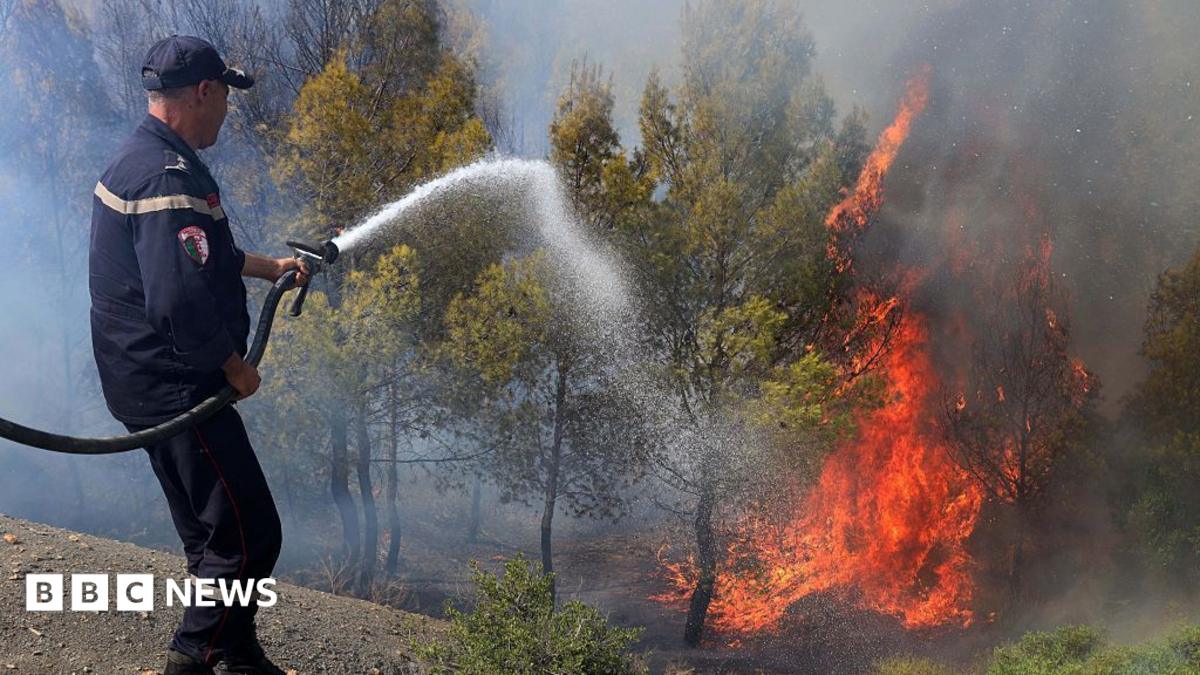
At least 12 people have been killed and dozens injured as wildfires tear through northern Algeria, because apparently summer in North Africa now comes with a side of apocalypse. Civil protection authorities reported dozens of blazes across several provinces along the country's northern coastline, with at least 54 people suffering burn injuries - six of them in intensive care, according to Interior Minister Said Sayoud on Wednesday night.
The deaths come as northern Africa melts under a severe heatwave, with Tunisia and Algeria particularly feeling the burn. Sayoud confirmed five deaths in Jijel province, four in Bejaia, and three in Tizi Ouzou. He and Health Minister Mohamed Seddik Ait Messaoudene have trotted off to Bejaia to 'assess' firefighting and evacuation efforts, which is a fancy way of saying 'things are on fire, literally.'
Many homes in Bejaia and Jijel have been evacuated, and local broadcaster Jijel News shared footage of residents huddling in a post office as thick smoke clouds billowed around them - because nothing says 'safe haven' like a postal service under siege.
Firefighters were battling a whopping 69 blazes across the country as of Wednesday evening. The Bejaia region already knows this drill: three years ago, fires killed 30 people there. And last month alone, at least six deaths were blamed on fires, with crews fighting more than 2,000 blazes across Algeria in July. Because why not?
Algeria always has some summer fires, but climate change is turning them into a recurring nightmare. The World Meteorological Organization (WMO) notes that extreme heat is now common in North Africa, which is warming faster than any other African subregion - 0.43°C per decade from 1991 to 2025. Even camels are dropping dead from the heat, according to a recent study. Yes, camels - the desert's ultimate survivalists - are throwing in the towel. So if you're looking for a sign that things are bad, that's it.
The Good Times
News in your inbox.
One sardonic roundup, delivered on your schedule. Free. Unsubscribe whenever your tolerance for wit runs out.
Already subscribed but we never reach your inbox? Check your spam folder and hit 'Not spam' (or 'Remove from spam') to bust us out of junk-mail purgatory. You'll be helping everyone else too.
Don't open any of our emails for a month and you'll be automatically removed from the mailing list.
Rewrite Article
Select parts to regenerate with a fresh AI pass. Translations will be updated automatically.
Generate AI Image
Creates a sardonic version of the article image using OpenAI.