
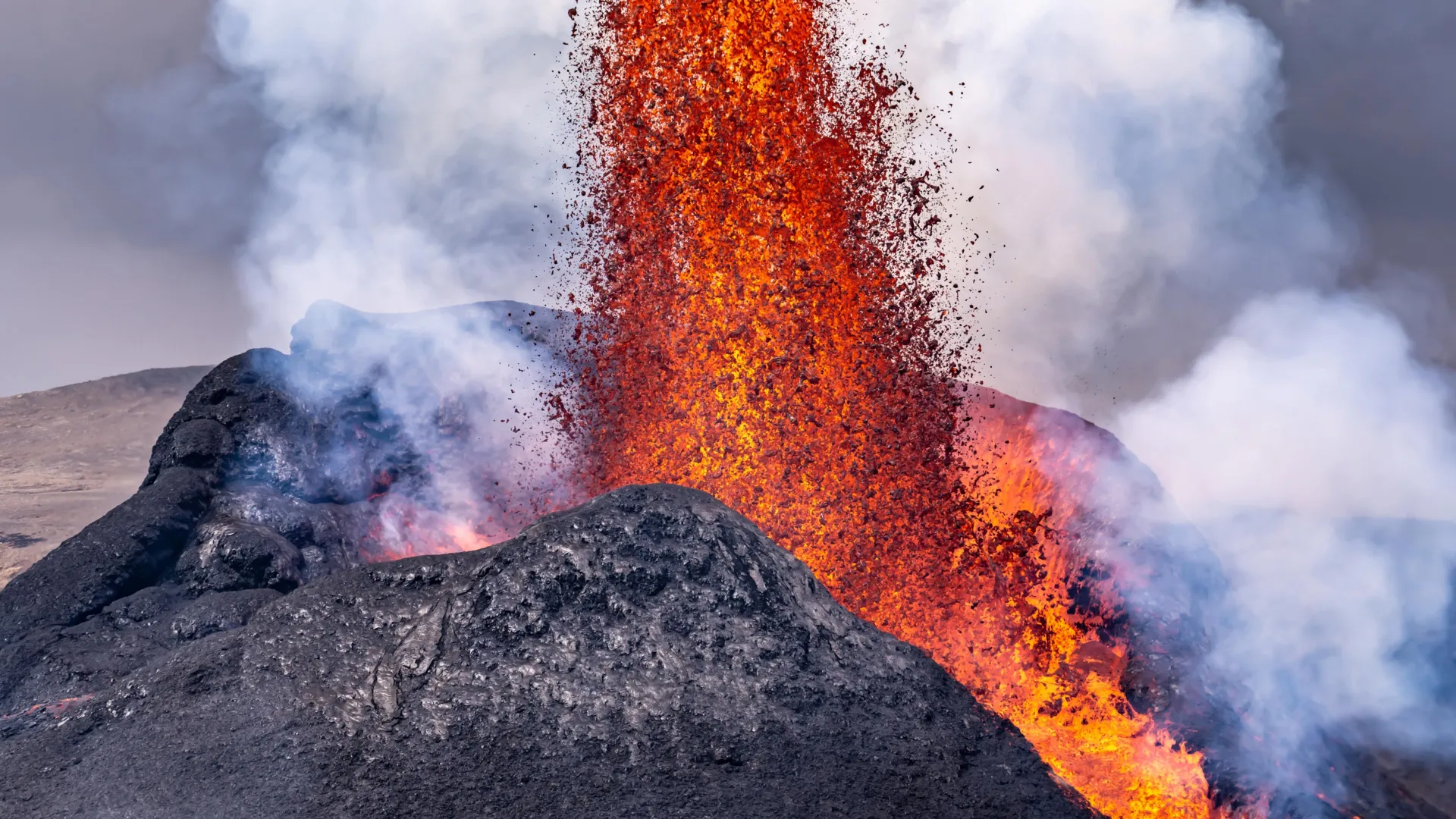
Geologists digging through some of Earth's oldest rocks have discovered that water was already meddling in the planet's volcanic affairs more than three billion years ago - because apparently even a molten hellscape can't resist the urge to recycle.
The international team, led by Adelaide University geochemist Dr. Eric Vandenburg, examined ancient rocks from Western Australia's Pilbara Craton. Their analysis suggests water had traveled deep beneath the surface before helping form magma that fed volcanoes resembling today's Pacific "Ring of Fire" - which is either impressive or alarming, depending on how you feel about ancient supervolcanoes.
Published in Nature Communications, the findings indicate Earth may have been recycling water between its surface and interior much earlier than scientists realized, even though the young planet operated very differently from the world we know now - mostly by being a billion-degree lava nightmare.
Dr. Vandenburg, from the School of Physics, Chemistry and Earth Sciences, said the ancient rocks offer an unusual opportunity to investigate conditions on Earth billions of years ago. "These rocks formed more than three billion years ago, when Earth was a very different place," he said, which is a polite way of saying "you wouldn't have liked it."
Today, plate tectonics plays a central role in moving water through the planet. At subduction zones, one tectonic plate sinks beneath another, carrying water from the oceans down toward the mantle. That water can help generate magma, which rises toward the surface and contributes to the volcanoes that help build continents - a process that, while dramatic, at least follows the rules.
"The early Earth was too hot for plates to behave that way, so until now it has been unclear whether surface water could have made that journey more than three billion years ago, and if so, how," Vandenburg explained. "What surprised us was finding evidence that large amounts of water had already made their way deep into the Earth's interior and influenced the formation of volcanic rocks."
The researchers suggest another geological mechanism may have moved water into the mantle before modern plate tectonics became established. They call the process "dripduction" - which sounds like a questionable coffee-brewing technique but is actually dense, water-rich portions of Earth's cooler outer crust periodically sagging downward and collapsing into the hotter mantle, transporting water with them like a geological Uber service.
As those sections of crust descended, they released their water into the mantle. That water then helped generate magma, which eventually rose, erupted through volcanoes, and cooled into rocks that have survived for billions of years - proving that even bad breakups can leave lasting evidence.
"The Earth wasn't operating exactly as it does now, but it appears some of the key processes were already in place," Dr. Vandenburg said, presumably resisting the urge to add "so take that, modern geology."
The discovery addresses a major question in geology: how early did materials begin moving between Earth's surface and its deep interior? Pinpointing when water first started traveling deep underground matters because this recycling process affects volcanic activity, the growth of continents, and the movement of ingredients important for life - which is to say, everything that eventually led to us, so no pressure.
The findings may also help scientists better understand how Earth's continents developed and how the planet gradually evolved into its modern form - a form that includes traffic jams, reality TV, and the existential dread of reading geology papers.
Rocks from this period are extremely rare, which makes the Pilbara especially valuable. The region contains some of the best-preserved rocks from the early Earth, giving researchers a rare record of processes that occurred billions of years ago - essentially a geological time capsule that didn't get lost in the couch cushions.
By studying chemical signatures locked inside the rocks, the team reconstructed geological events dating back roughly 3.1 billion years. The results suggest Earth's surface and deep interior were interacting much earlier than previously recognized. Rather than being relatively static, the young planet appears to have been surprisingly dynamic and was already recycling one of its most essential substances: water - because even ancient Earth understood the importance of hydration.
The study involved researchers from Adelaide University, Monash University, the Geological Survey of Western Australia, Curtin University, the Australian National University, Cardiff University and the GEOMAR Helmholtz Center for Ocean Research in Germany - a collaboration so international it probably required its own time zone.
Materials provided by Adelaide University. Note: Content may be edited for style and length.