
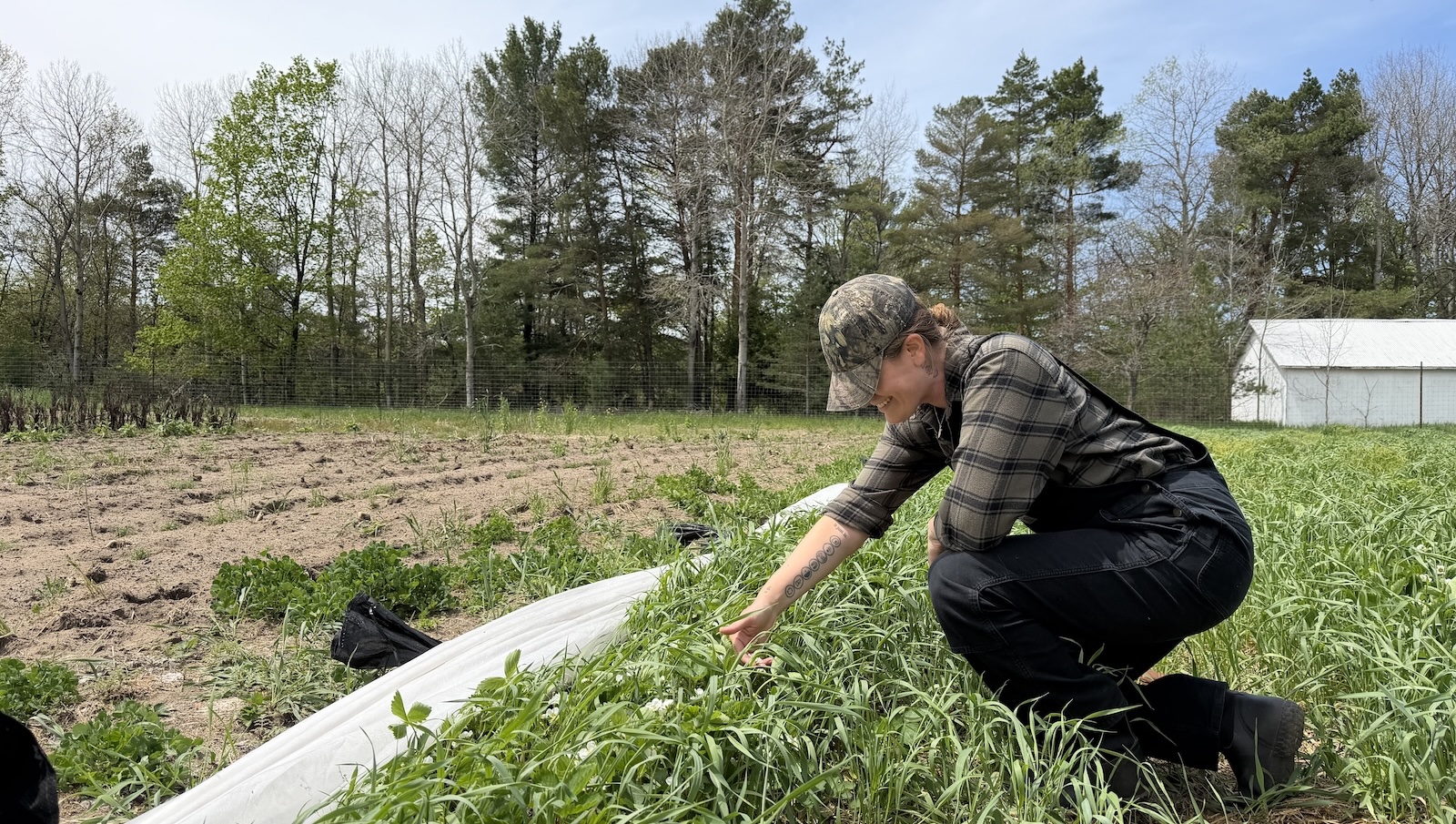
As the U.S. farmer population continues to gray like a forgotten head of lettuce, communities are scrambling to cultivate the next generation of growers. But with high upfront costs, scarce land, and a climate that seems to have read the wrong script, getting into farming can feel like trying to grow a garden on the moon.
Enter the Great Lakes Incubator Farm, tucked on farmland at the southern edge of Traverse City, Michigan. This program lets aspiring farmers bypass the usual nightmares by, you know, actually farming. Over seven months, a three-student cohort learns the glamorous arts of pest management, tractor driving, and writing a farm business plan - essentially, everything except how to explain to your relatives why you chose this life.
“Nobody gets into farming for sane reasons, other than the sanity of knowing where your food comes from and just general health,” said Rachel Greenberg, a 33-year-old student farmer from Indianapolis. “The challenges are pretty never-ending.” She’s not wrong: farm bankruptcies were up 46 percent last year, according to a National Farm Bureau report, and more than 50,000 acres of farmland have vanished in the last two decades thanks to developers with dollar signs in their eyes.
Despite these headwinds, the student farmers are driven by a desire to know where their food comes from, contribute to local communities, and teach others to do the same - basically, the opposite of a reality TV show about farming. The program, a project of the Grand Traverse Conservation District, has fewer economic pressures than a real farm business. Students grow fruits and vegetables for local residents who’ve already committed to buying the season’s produce, and leftovers go to food-rescue operations. Profit? Not the point.
“The whole incubator idea is something you see a lot in the world of entrepreneurship, and it’s beautiful that somebody saw that and was like, ‘Why don’t we just do that with farming?’” Greenberg said.
Troy Saruna, 28, a conservation worker with no farming experience, wants to understand his impact on the natural world at a time when climate change is making weather more dramatic than a soap opera. The program teaches regenerative agriculture, focusing on soil health and reducing heat-trapping gases. “Our food systems are just so inextricably tied to the health of the planet,” Saruna said.
Even experienced farmers find value. Shanaya Holmes, 49, who runs a 4-acre farm in Alabama, is learning to grow food in a different climate and improve her record-keeping - because switching from “outside, outside, outside” to “bookwork, bookwork, bookwork” is a challenge.
Adam Brown, the farm’s manager and instructor, sees the program as a stepping stone. “It’s really built for anybody who can then filter out and work anywhere in the food system,” he said. Brown wouldn’t have become a farmer himself without a similar training program 15 years ago on the West Coast. “I can pay it forward,” he said.
The program, now in its second year, is one of the only such programs in northern Michigan, according to Michigan State University. Nationwide, there are roughly 100 similar programs, per Tufts University, though no one has a definitive list - because why would they? The Great Lakes Incubator Farm relies mostly on a nearly $700,000 federal grant from the USDA, which ends after the October harvest. Brown plans to reapply, but competition is fierce. In 2025, the USDA canceled $148 million in grants - including some for beginner farmers - to comply with President Donald Trump’s early executive orders targeting climate action, environmental justice, and diversity, equity, and inclusion.
“It’s almost like a double-edged sword,” said Jon LaPorte, a farm business management educator for Michigan State University Extension. “They’re trying to help people get started, but then they’ve got the same struggles of staying sustainable themselves.” In Michigan, farmers under 45 increased by about 20 percent between 2017 and 2022, according to the USDA’s census. But sustaining that growth is tricky.
Brown says the training program allows for failure - without the financial ruin. “This is a great space for failure too, right? Because there’s not a whole lot of risk here,” he said. “It’s a perfect, experimental type of atmosphere.”