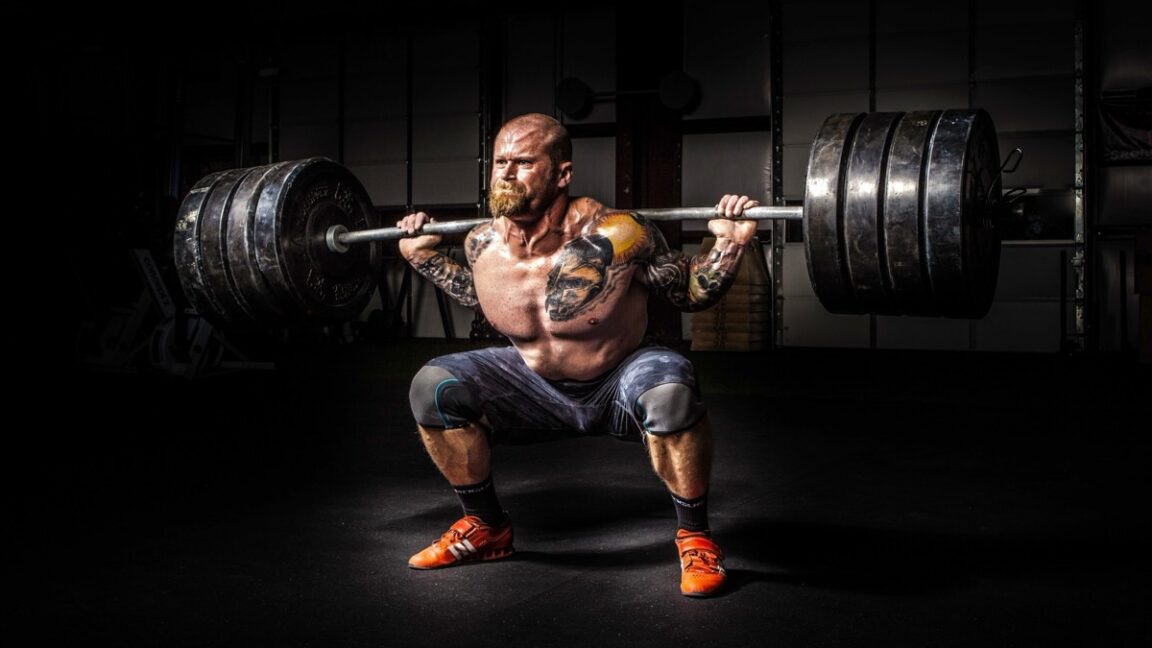
Penn State Strongman Turns Olympic Barbell Whip Into Actual Physics, Because Of Course
A Penn State grad student and Strongman hobbyist scientifically confirms what elite weightlifters already knew: barbells have a 'whip,' and it's a one-percent edge that casual lifters will never feel.
Olympic weightlifting is deceptively simple: three movements (snatch, clean, jerk), one barbell, maximum drama. But at the elite level, athletes obsess over every advantage - including how the barbell bends and springs back, a property physicists call flexural bending and lifters call the “whip.” This week at the Acoustical Society of America meeting in Philadelphia, scientists served up some actual numbers to go with all that grunting.
Enter Joshua Langlois, a Penn State grad student who competes in Strongman competitions for fun and has friends who lift at the national level. “They told me how they use the whip,” Langlois said in a media briefing. “When they dip down, they can feel when the bar flexes back up and use that to accelerate the movement upward.” So he did what any reasonable person would do: he suspended four 20-kg men’s barbells (women use 15-kg ones) from elastic bands with 50 kg loaded on each end, attached accelerometers, and started tapping them with a small hammer to map vibrations.
The predictable bit: a bar floating in space oscillates at a higher frequency without sleeves (the rotating ends that hold the weights) than with them. Adding mass lowers the oscillation rate and shifts the nodes (stationary points). The surprise came with higher bending modes: frequency increased at higher loads. “The bar becomes more fixed so the actual wavelength is less,” Langlois explained. “This is something we did not foresee.” The effect is tiny - about one percent - but as Langlois noted, “For elite sports, a single percent makes all the difference.” He added that casual lifters probably won’t feel it; like the best golfers sensing a club’s bend, this is strictly for the elite.
What makes a great barbell remains murky. All Olympic barbells share the same weight, diameter, and length, but materials vary (steel, stainless, chrome-coated). Stiffness (Young's modulus) can differ, but manufacturers keep their recipes secret. The coupling between shaft and sleeve also matters: bearings, bushings, hybrids, or bare steel. Bearings generally offer the best coupling and grace the priciest bars. Next up, Langlois plans to study real Olympic lifters in action to see exactly how they exploit the whip. Because knowing the bar matters is one thing - watching someone use it to hoist a small car is quite another.
The Good Times
News in your inbox.
One sardonic roundup, delivered on your schedule. Free. Unsubscribe whenever your tolerance for wit runs out.
Already subscribed but we never reach your inbox? Check your spam folder and hit 'Not spam' (or 'Remove from spam') to bust us out of junk-mail purgatory. You'll be helping everyone else too.
Don't open any of our emails for a month and you'll be automatically removed from the mailing list.
Rewrite Article
Select parts to regenerate with a fresh AI pass. Translations will be updated automatically.
Generate AI Image
Creates a sardonic version of the article image using OpenAI.