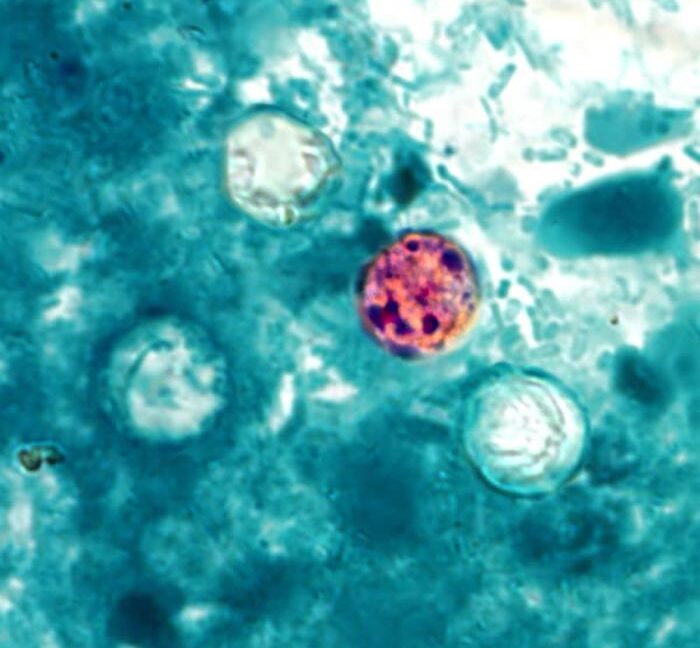
An outbreak of a diarrhea-causing intestinal parasite has exploded in Michigan over the last two weeks, with no clear source in sight - unless you count the usual suspects like bagged salad and cilantro.
As of July 6, the Michigan Department of Health and Human Services (MDHSS) has received reports of over 700 cases since June 22, along with 36 hospitalizations. By way of comparison, the state reported just 170 cases on June 30, which then ballooned to 572 by July 4 - so things are moving in a distinctly non-constipated direction.
The culprit is the microscopic unicellular parasite Cyclospora cayetanensis, which causes cyclosporiasis. While generally not life-threatening, the infection tends to produce “watery diarrhea with frequent and sometimes explosive bowel movements,” according to the CDC. These intestinal eruptions typically last about a week, but can drag on for two or more weeks, with dehydration being a primary concern.
The parasite spreads via fecal contamination on produce and in water. Thorough washing and hand hygiene are key prevention methods - so maybe skip that pre-washed salad mix for now.
Previous outbreaks have been linked to bagged salad mixes/kits, cilantro, basil, raspberries, snow peas, and green onions, MDHSS notes. But this time, “no specific produce grower, supplier or type of produce has been identified as the source,” a spokesperson told Ars. The state is coordinating a large investigation, working with local health departments in southeastern Michigan, where most cases have been reported. Officials are interviewing cases and trying to identify common exposures, while also coordinating with the CDC.
Speaking of the CDC: its cyclosporiasis surveillance website has case reporting only up to June 16, and it doesn't include any cases from Michigan. Ars reached out to HHS about why the data hasn't been updated, but got no response - perhaps they were too busy dealing with explosive diarrhea.
According to the CDC's outdated numbers, 17 other states have reported 145 cases this year. Add Michigan's tally, and the U.S. total exceeds 845 cases. Michigan's case count is far out of line with its past trends: the state typically sees around 50 cases per year, with a high of 97 in 2023. Nationally, the U.S. has recorded between 2,000 and 5,000 cases annually since 2018, with 4,463 in 2023.
So while Michigan is having a record-breaking year for all the wrong reasons, the rest of the country is at least consistent in its gastrointestinal misery.
The Good Times
News in your inbox.
One sardonic roundup, delivered on your schedule. Free. Unsubscribe whenever your tolerance for wit runs out.
Already subscribed but we never reach your inbox? Check your spam folder and hit 'Not spam' (or 'Remove from spam') to bust us out of junk-mail purgatory. You'll be helping everyone else too.
Don't open any of our emails for a month and you'll be automatically removed from the mailing list.
Rewrite Article
Select parts to regenerate with a fresh AI pass. Translations will be updated automatically.
Generate AI Image
Creates a sardonic version of the article image using OpenAI.