Mali's Weekend Plans Include Explosions, Gunfire, and a Very Inconvenient Curfew
Mali's capital erupts in coordinated attacks as separatists and jihadists team up for the largest assault in years, prompting a curfew and a lot of finger-wagging from the international community.
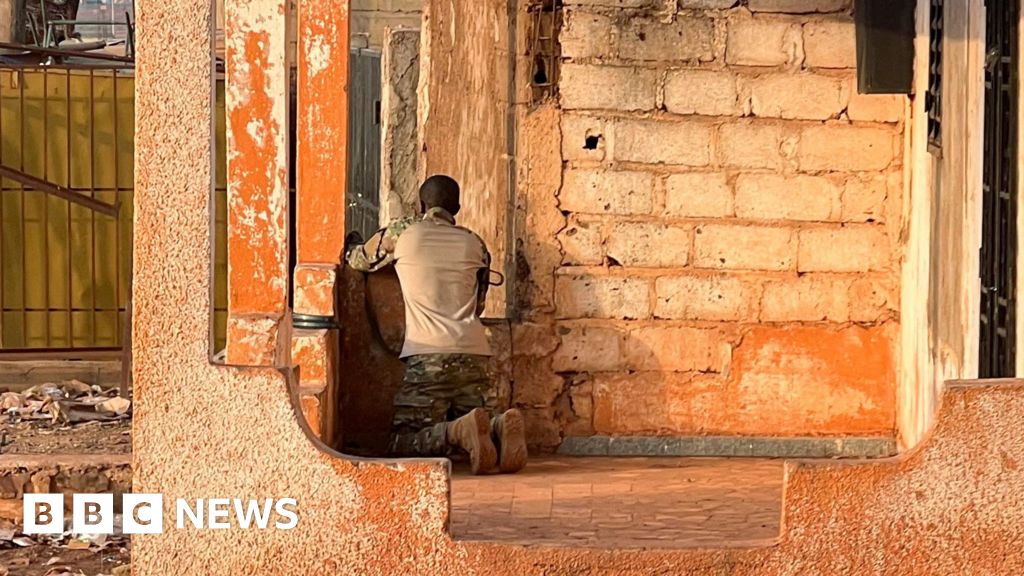
Explosions and sustained gunfire have been reported in Mali's capital, Bamako, as armed groups launched co-ordinated attacks across the country, apparently having decided that Saturday evening was the perfect time for some coordinated chaos.
Mali's military said on Saturday evening that efforts to repel the attacks were under way, and some militants had already fled - presumably to avoid being caught in the crossfire of their own making.
Fighting has also been reported around Kati, home to a major military base outside the capital, as well as in Gao and Kidal in the north, and the central cities of Sevare and Mopti. One analyst described it as the largest jihadist attack in years, which is really saying something for a country that's been plagued by insurgencies for years.
Reports suggest the assault by the separatist Azawad Liberation Front (FLA) - which seeks a breakaway ethnic Tuareg state - was primarily focused on northern cities, while the jihadist group Jama'at Nusrat al-Islam wal-Muslimin (JNIM) had staged simultaneous attacks on multiple locations across the country. Because why settle for one attack when you can have a two-for-one special?
"We had been working on this operation for a long time, in a well-planned manner, and in fact, in alliance with [JNIM]," Mohamed Elmaouloud Ramadane, spokesman for the FLA, told the BBC. "It is difficult to find any solution without their participation, and there was co-ordination."
Mali's military said it was fighting what it described as "terrorist groups", which had been "routed" with "several hundred" killed. The BBC has not been able to independently verify this claim, and there are indications that fighting continues in areas - so take that victory lap with a grain of sand.
"We are in Kidal and it has not fallen completely," Ramadane said. "There are still elements of the Malian army and Russian mercenaries there. All of Gao's gates have fallen, but the camps of the army have not."
In Bamako, checkpoints have been established on roads leading to the airport and vehicles are being searched, according to reports. A curfew has been imposed from 21:00 to 06:00 local time for the next three nights - because nothing says "we're in control" like telling everyone to stay indoors.
Ulf Laessing, head of the Sahel programme at the Konrad Adenauer Foundation in Mali, told the BBC the incident appeared to be the "largest co-ordinated jihadist attack on Mali for years". Mahmoud Ali Youssouf, chair of the African Union Commission, said he was following the situation with "deep concern," adding in a statement on X that he "strongly condemns these acts which risk exposing civilian populations to significant harm". The US State Department's Africa bureau also strongly condemned the attacks.
Mali is currently ruled by a military junta led by Gen Assimi Goïta, who first seized power in a coup in 2020, promising to restore security and push back armed groups. The junta had popular support when it took power, promising to deal with the long-running security crisis prompted by the Tuareg rebellion in the north, which was then hijacked by Islamist militants. UN peacekeepers and French forces deployed to deal with the escalating insurgency left after the junta took over, and the military government hired Russian mercenaries to help tackle the insecurity. However, the jihadist insurgency has continued and large parts of the north and east of the country remain outside government control - proving that hiring mercenaries isn't always the silver bullet it's cracked up to be.
The Good Times
News in your inbox.
One sardonic roundup, delivered on your schedule. Free. Unsubscribe whenever your tolerance for wit runs out.
Already subscribed but we never reach your inbox? Check your spam folder and hit 'Not spam' (or 'Remove from spam') to bust us out of junk-mail purgatory. You'll be helping everyone else too.
Don't open any of our emails for a month and you'll be automatically removed from the mailing list.
Rewrite Article
Select parts to regenerate with a fresh AI pass. Translations will be updated automatically.
Generate AI Image
Creates a sardonic version of the article image using OpenAI.