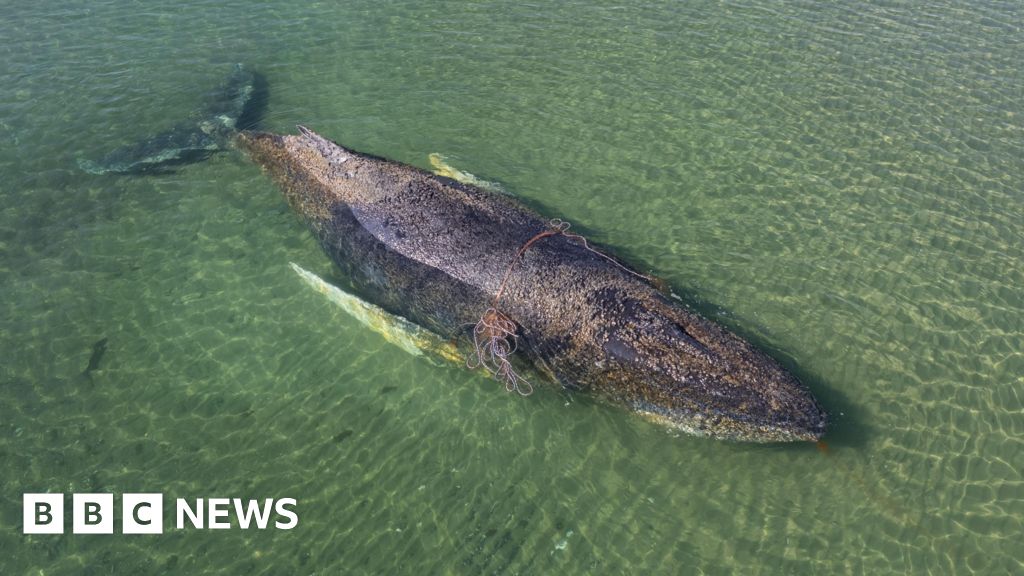
Humpback Whale Rescued in High-Profile, Privately Funded German Operation Promptly Dies Near Denmark
A privately rescued humpback whale, dubbed Timmy or Hope, dies near Denmark after a controversial, high-cost operation - proving that even the best-funded optimism can't outswim reality.
A humpback whale that became the subject of a privately funded, highly publicized rescue mission in Germany has been found dead near a Danish island, proving once again that nature doesn't always read the press releases.
The whale, nicknamed "Timmy" or "Hope" by rescuers and German media - because nothing says optimism like giving a stranded animal two names - first beached itself on 23 March off the island of Poel on Germany's Baltic coast. After briefly freeing itself and getting stuck again several times, German authorities eventually gave up. Enter entrepreneurs Karin Walter-Mommert and Walter Gunz, who funded a private rescue operation involving a water-filled barge named Fortuna B, which coaxed the whale into the North Sea in early May.
The rescue spurred intense public debate, with critics suggesting it would only cause the animal distress. Turns out, the critics were onto something. A whale carcass was reported on Thursday off the Danish island of Anholt, between Denmark and Sweden. Authorities couldn't immediately confirm it was the same whale, but by Saturday, the Danish Environmental Protection Agency verified its identity and retrieved its tracking device.
The agency told AFP there are "no concrete plans to remove the whale from the area or to perform a necropsy," adding that it is "not currently considered to pose a problem." However, they warned people not to approach the whale because it might carry diseases transmissible to humans - or, you know, explode due to internal gas buildup from decomposition. Nothing says "successful rescue" like a potential whale bomb.
Till Backhaus, environment minister of Mecklenburg-Vorpommern, had hailed the operation as an "example for Germany of what can be done." Wildlife groups were less impressed. The German Oceanographic Museum warned the whale was at risk of drowning because it was so weak. Whale and Dolphin Conservation was especially downbeat, noting the whale had no long-term chance of survival and had suffered skin damage from low salinity in Baltic waters. So, a noble effort, but apparently the whale's skin was as unprepared for the Baltic as most tourists.
The Good Times
News in your inbox.
One sardonic roundup, delivered on your schedule. Free. Unsubscribe whenever your tolerance for wit runs out.
Already subscribed but we never reach your inbox? Check your spam folder and hit 'Not spam' (or 'Remove from spam') to bust us out of junk-mail purgatory. You'll be helping everyone else too.
Don't open any of our emails for a month and you'll be automatically removed from the mailing list.
Rewrite Article
Select parts to regenerate with a fresh AI pass. Translations will be updated automatically.
Generate AI Image
Creates a sardonic version of the article image using OpenAI.